
DI PLASTIC SURGERY · SEOUL
Forehead Reduction
Explore forehead reduction at DI Plastic Surgery in Seoul, including forehead proportions, hairline assessment and surgical planning.
Medically reviewed by: JUNG YUN IKReviewed on: Content updated:

01
Overview
What is forehead reduction?
A high forehead is shortened to suit overall facial balance, with a rounded forehead curve in profile and balanced proportions from the front for a refined appearance.
Surgery at a glance
- Surgery duration
- 1 hour
- Anesthesia
- Sedation
- Hospital admission
- Not usually required
- Initial recovery
- 1 week
- Suture removal
- Required
Published procedure information is a guide. Your surgeon confirms the method, anesthesia, recovery and follow-up for your individual plan.
DI PROCEDURE GUIDE
Anatomy & planning
A simplified illustration for understanding the area discussed. It shows anatomy in broad terms and is not a surgical placement guide or a prediction of results.

- 01
- Forehead tissue
- 02
- Eyebrow
01
DI Forehead Reduction Three treatment goals
DI Forehead Reduction Three treatment goals 01 Hairline refinement Adjust the hairline to suit the individual face. 02 Balanced proportions Plan forehead height in relation to the rest of the face. 03 Overall harmony Consider how the hairline and forehead affect the overall appearance. Illustrations are explanatory. Outcomes and recovery vary.
02
Forehead Proportions Planning for facial harmony
Forehead Proportions Planning for facial harmony Upper face : Midface : Lower face Illustrative reference: 1 : 1 : 0.8 A high forehead can affect the perceived balance of the face. Individual planning DI assesses each person's facial shape, considering both the frontal proportions and the forehead curve in profile. This ratio is a planning illustration, not a universal ideal or a guaranteed surgical result. Diagram labels: Upper third (hairline to brows), Middle third (brows to nose base), Lower third (nose base to chin). Illustrations are explanatory. Outcomes and recovery vary.
03
DI Forehead Reduction Cases
M-shaped hairline
A broad forehead with an M-shaped hairline
Concave hairline
A hairline that curves inward
Convex hairline
A hairline protruding toward the forehead
Angular hairline
A straight, angular hairline
04
DI Forehead Reduction Two key features
DI Forehead Reduction Two key features 01 Follicle-preserving incision An oblique incision is planned to limit injury to hair roots. Hairline growth over around six months may help conceal the surgical site; healing varies. 02 Secure closure without fixation devices Triple-layer suturing reduces tension and supports the incision. No fixation device is placed in the forehead bone, avoiding device-related prominence or foreign-body sensation. Illustrations are explanatory. Outcomes and recovery vary.
05
Who may consider this procedure?
People concerned about a high forehead
People seeking forehead reduction without hair transplantation
People concerned about a masculine impression
People seeking attractive forehead proportions
03
Before & after
Original DI clinic photographs. Results and recovery vary. Cases may include combined procedures; the listed treatment and follow-up refer to that individual case.
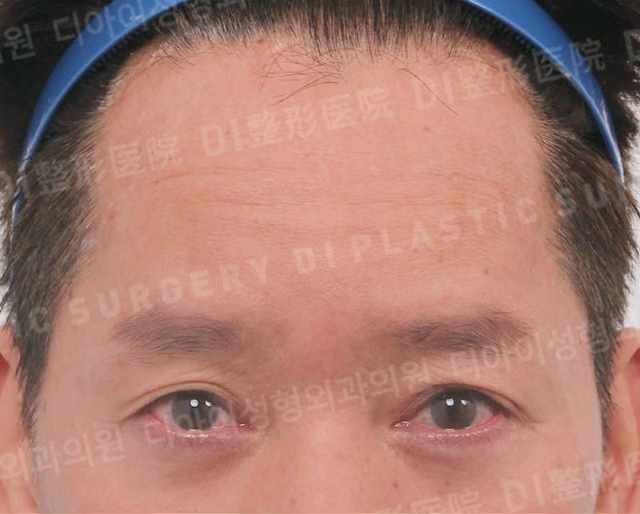

Drag left or right to compare
Forehead lift · Forehead reduction
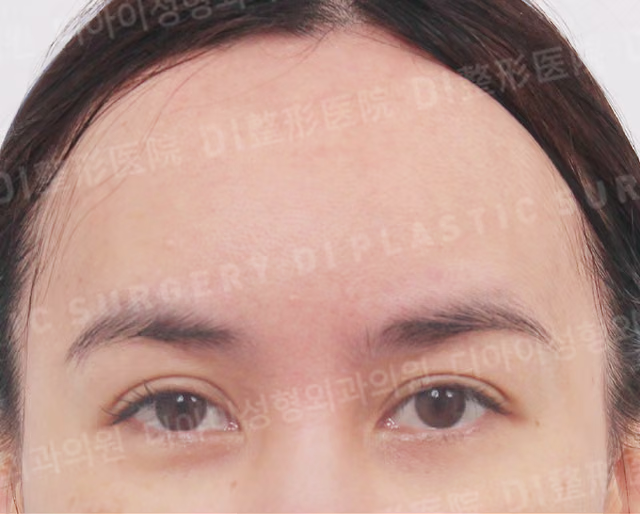

Drag left or right to compare
Forehead reduction · Forehead lift · Fat grafting
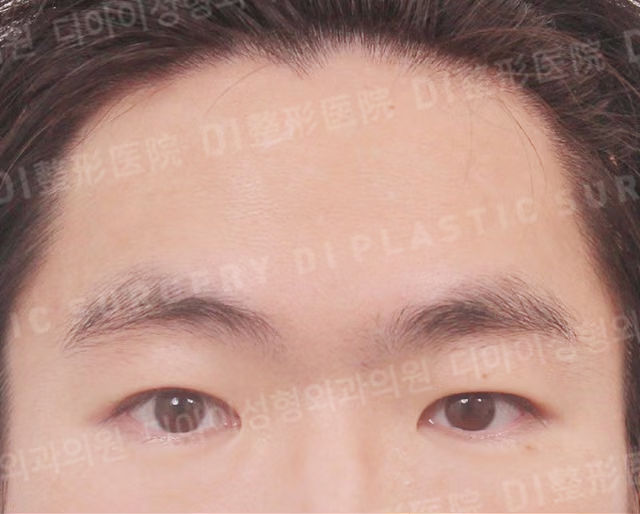
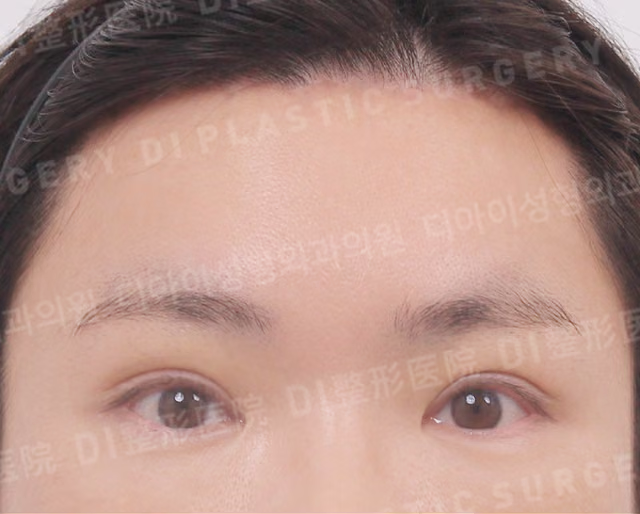
Drag left or right to compare
Forehead lift · Forehead reduction · Incisional double-eyelid surgery · Ptosis correction


Drag left or right to compare
Forehead reduction
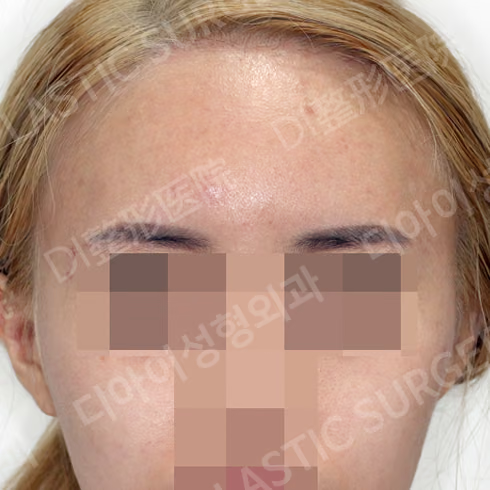
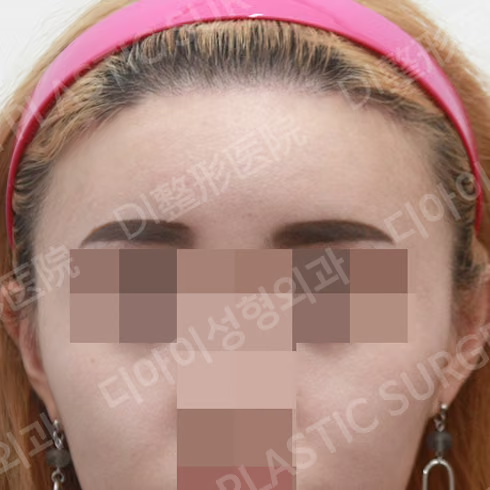
Drag left or right to compare
Forehead lift · Forehead reduction
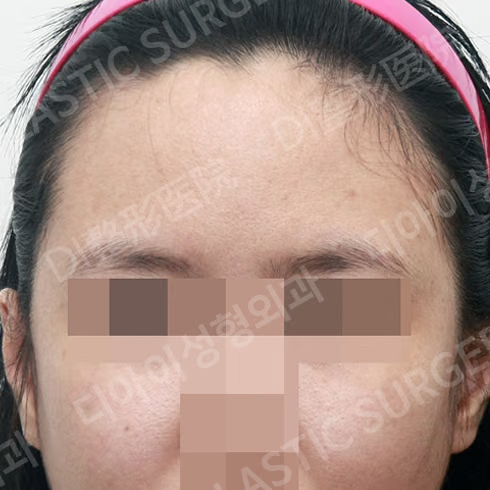
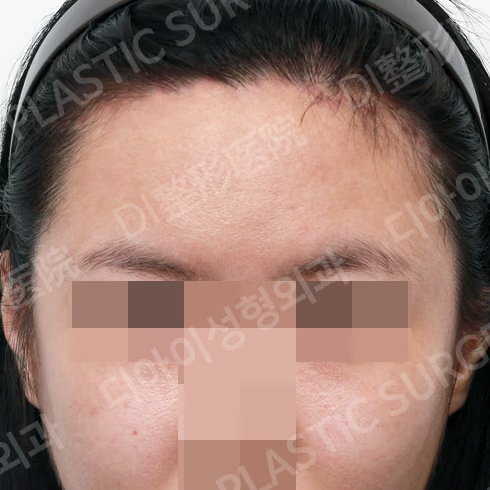
Drag left or right to compare
Forehead reduction
04
Recovery & care
Forehead Reduction Precautions
Follow your surgical team’s individual instructions. Recovery and follow-up schedules vary.
Incision care and hair washing
If sutures are present, keep the surgical area dry and clean until removal. Shampooing is possible after 3 days; preferably visit a salon and ask for gentle hair washing. Do not bend forward to wash your hair yourself.
Cold and warm compresses
Use cold compresses for the first 3 days after surgery, then warm compresses from day 4. Cold compresses help reduce bleeding and swelling; warm compresses support circulation and help bruising and swelling subside.
Prescribed medication
Take the medications prescribed by the clinic after surgery.
Activity during recovery
For about one week, avoid bending your head down, lifting heavy objects, or other actions that increase pressure in the face.
Alcohol, smoking and strenuous activity
Do not drink alcohol or smoke for one month. Avoid strenuous exercise, stress, and saunas.
Complications may include bleeding, infection, inflammation, bruising, swelling, and pain. Satisfaction with surgery varies by individual.
This is an initial recovery estimate, not a guarantee of complete healing. Your recovery and return to activities depend on the procedure and your condition; follow your surgical team’s instructions.
Treatment suitability, recovery and results vary by individual. Your doctor will explain the expected benefits, limitations and possible risks.
CONTINUE YOUR RESEARCH
Questions to discuss before surgery
Before deciding on a procedure, meet Dr. Jung Yun Ik and review his published training. Your consultation should address the proposed approach, alternatives, risks and expected follow-up.
For travel planning, read about recovery and travel planning. These general guides do not establish your personal recovery schedule. Understand the factors behind a plastic surgery estimate and learn how the consultation process works before sending an inquiry or booking travel.
DI PLASTIC SURGERY
Discuss your options
Tell us the procedure you are interested in, your preferred language and your planned visit dates.