


DI PLASTIC SURGERY
DI Facial Contouring Implants
#ProtrusiveMouthImprovement #FacialDimension #NoBoneReduction
What are facial contouring implants?
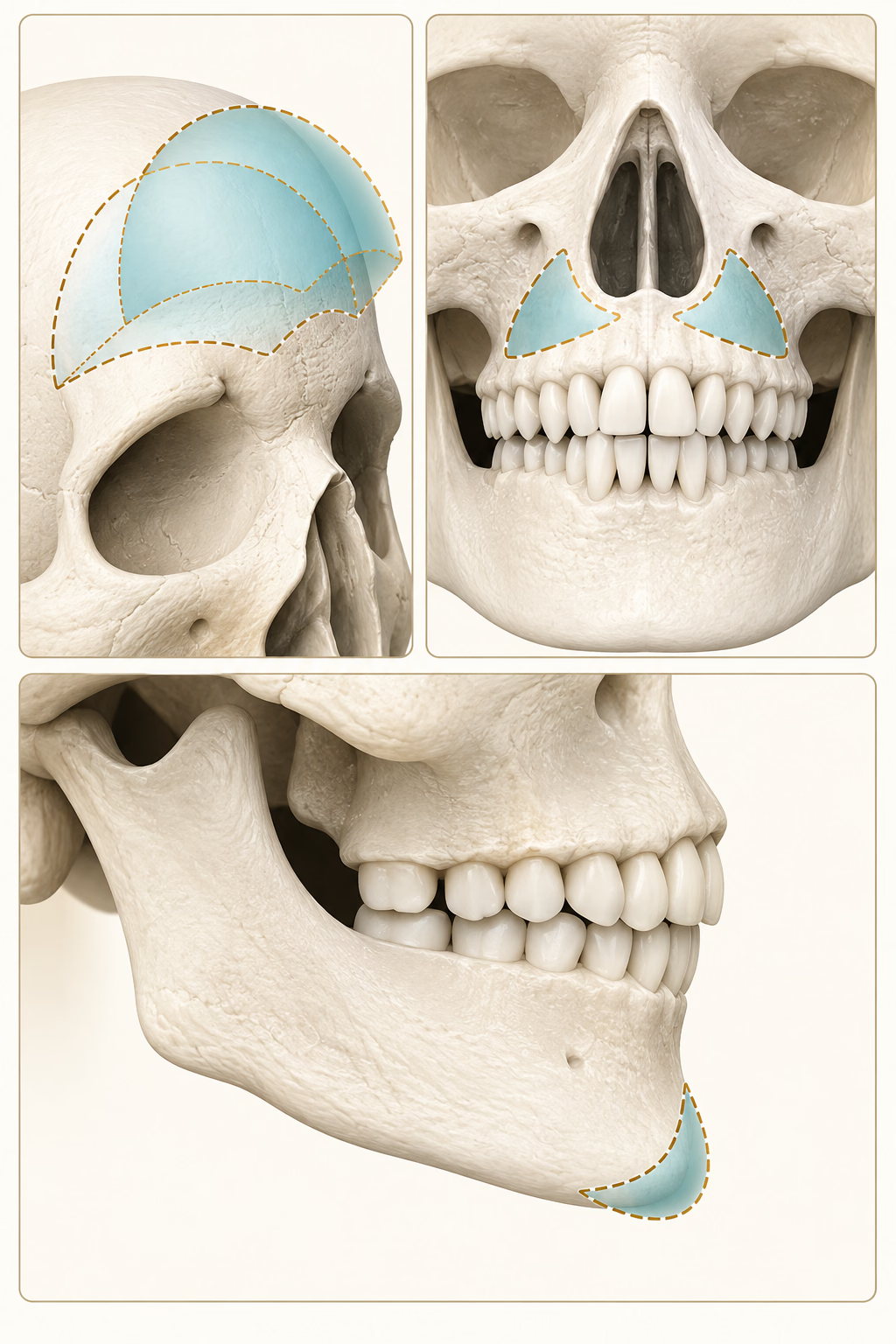
For flat-looking facial areas, implants are placed at the forehead, chin, or nasolabial area without cutting bone, adding facial dimension.
Surgery information
- Surgery duration
- Within 30 minutes
- Anesthesia
- Local anesthesia / sedation
- Hospital admission
- Not usually required
- Recovery period
- 1 week
- Suture removal
- None
- Follow-up visits
- 1–2 visits
Complications may include bleeding, infection, inflammation, bruising, swelling, and pain. Satisfaction with surgery varies by individual.
DI PLASTIC SURGERY
Types of DI Facial Contouring Implants
Forehead implant An individually fitted implant is created, with a concealed scalp incision.
Paranasal implant Volume is added at the appropriate nasolabial location to improve nasolabial folds and a protrusive mouth together.
Chin implant Compared with bone contouring surgery, this simpler correction method is designed for overall facial harmony.

DI PLASTIC SURGERY
01. Forehead Implant
Considering the profile from forehead to chin, smooth forehead volume adds dimension without uneven contours.
Candidates
People whose prominent brow bone makes the forehead look hollow
People with an uneven forehead contour
People with a narrow forehead
People with a sloping or flat forehead

DI PLASTIC SURGERY
DI Plastic Surgery's
Facial Contouring Implants
Individually fitted implants for each patient
Semi-permanent volume that is not absorbed or deformed
An inconspicuous scar through a scalp incision
Facial contouring through a relatively simple procedure
likes 340,525

DI PLASTIC SURGERY
Paranasal Augmentation
Improving nasolabial folds and a protrusive mouth together Defined, refined facial contours
Candidates
People whose face looks hollow or flat
People whose deep nasolabial folds create an older appearance
People whose nasolabial hollows make the mouth appear protrusive
People seeking a more permanent effect than fillers or fat grafting

DI PLASTIC SURGERY
DI Plastic Surgery's
Paranasal Augmentation
The patient's own rib cartilage can be used instead of an implant
Semi-permanent volume that is not absorbed or deformed
Adding nasolabial volume improves the appearance of a protrusive mouth
Can complement rhinoplasty when performed together
likes 340,525

DI PLASTIC SURGERY
Chin Implant
Adding volume at an indistinct chin–neck junction creates greater definition from the front and side.
Candidates
People seeking to improve a dull appearance caused by a receding chin
People whose mouth appears protrusive or who seem to have excess chin fat
People concerned about a short chin
People with a short, recessed chin

DI PLASTIC SURGERY
DI Plastic Surgery's
Chin Implant
Individually fitted implants for each patient
Improves the appearance of a receding chin, protrusive mouth, and double chin
An inside-mouth incision conceals the scar
Facial contouring through a relatively simple procedure
likes 340,525

DI PLASTIC SURGERY
Facial Contouring Implants
Why consider DI?
Individual facial form and characteristics guide customized surgery according to the internal nasal shape. Surgery is performed according to this plan.
Incisions inside the mouth or scalp reduce concern about visible scarring.
Implants can provide permanent contour correction.
Detailed diagnostic analysis guides surgical planning and performance.
Precautions After Facial Contouring Surgery
Follow your surgical team’s individual instructions. Recovery and follow-up schedules vary.
- 01
Washing with tape or drains
Until facial tape and drains are removed, wash only unaffected parts of your face, even if inconvenient.
- 02
Changes in sensation
Pain, itching, altered sensation, or numbness may occur near the surgical area. These symptoms gradually improve within 6 months; recovery speed varies.
- 03
Swelling and compresses
Swelling increases for 3–5 days after surgery. Cold compresses help during this period. Begin warm compresses after 3 days.
- 04
Protect your face from impact
Avoid impact for one month. After cheekbone surgery, do not press on or strike the cheekbones.
- 05
Diet and mouth care
Have a liquid diet for 1–2 days; a normal diet is possible after 3–4 days. Food debris can collect around sutures inside the mouth, allowing bacteria to grow. Dilute 15 mL of Hexamedine gargle with an equal amount of water. Rinse gently for 30 seconds to 1 minute, then spit out.
- 06
Toothbrushing
Resume toothbrushing after 2 weeks. Use a child's toothbrush if opening your mouth is difficult.
- 07
Walking and exercise
Light walking during the first month helps swelling subside. From 2 months, exercise is allowed except activities that could injure the jaw.