
A wide lower face is a finding, not a diagnosis
When researching square jaw reduction in Korea, the useful first question is not how much bone can be removed. It is what actually contributes to the lower-face width you want to discuss. The jawbone, the masseter chewing muscles and the surrounding soft tissues are different structures, and a photograph cannot establish which treatment, if any, is appropriate.
Describe your concern in the front, three-quarter and side views. Tell the surgeon about chewing discomfort, difficulty opening your mouth, a changing bite or previous jaw treatment as well as your appearance goals. DI’s published page discusses bone, muscle and cheek fullness; a consultation should explain which of those factors is relevant to you. Suitability, effect, price and recovery require individual evaluation.
Separate angle reduction from reducing frontal width
DI describes selected jawbone reduction from the angle below the ear toward the chin and discusses the change in the side contour. Its page separately describes cortical bone reduction, which thins part of the outer jawbone. Ask whether your proposed plan addresses the angle, bone thickness, or both, and what difference is intended in each view.
More removal is not automatically a better result. DI’s planning information emphasizes preserving necessary bone and considering nerve pathways. Ask what contour and support would be retained, how existing asymmetry affects the proposal, and where further reduction would create an unacceptable trade-off. A generic V-line label or a promised amount of narrowing is not a substitute for that explanation.
Ask why any muscle or fat treatment is proposed
The official page describes muscle reduction and buccal fat reduction as additional options in a square-jaw plan. These should be discussed as separate decisions rather than assumed requirements for every person with a broad jaw. Ask which examination findings support each option, what it is intended to change, and what the bone-only or no-surgery alternatives would leave unchanged.
The masseter is a chewing muscle. If a procedure involving it is proposed, ask about effects on function, mouth opening and the surrounding contour, not just width. A published case report describes restricted mouth opening, altered sensation and a secondary angle after combined angle and partial masseter reduction. It does not establish a DI complication rate, but it is a reason to discuss the added procedure’s risks explicitly.
Published case report on complications after combined jaw and masseter reduction

Understand what imaging can and cannot decide
DI discusses 3D CT, multiple-view planning and assessment of bone thickness, width and relevant nerve locations. Ask whether imaging is indicated in your case, what it will answer, and how the surgeon relates it to the physical examination. Bring details of previous imaging rather than assuming that another scan is automatically needed.
A scan or a planning model is not a promise of your postoperative appearance. Request an explanation of the proposed change in plain language, including uncertainty and alternatives. If your main concern involves how your teeth meet or jaw function, ask whether a separate dental or maxillofacial assessment is needed. Do not infer that an aesthetic contour-reduction plan addresses a bite problem.
Discuss sensation, contour and other surgical risks
A published mandibuloplasty review reports numbness, infection and bleeding among observed complications. Persistent changes in sensation were also recorded. This research concerns another surgeon’s historical series, including combined operations; it is not DI’s outcome data or a personal percentage. Discuss the possibility of temporary or lasting sensory changes around the lower lip, chin or mouth with your surgeon.
Ask about asymmetry, uneven or excessive reduction, soft-tissue changes, restricted mouth opening, pain, swelling, infection, bleeding and anesthesia-related risks for the actual proposal. The consultation should explain how concerns are assessed and what further care might be necessary. A technique, scan or safety slogan cannot eliminate every complication.
Provide your medical and dental history, allergies, previous facial procedures, medicines, supplements and nicotine use. Do not stop prescribed treatment based on an article. Confirm the operating surgeon, anesthesia arrangements and emergency response for your own surgery.
Do not bundle the chin or cheekbones into the decision
Jaw-angle reduction, chin surgery and cheekbone reduction address different structures. If a consultation proposes a combined plan, ask why each part is included and what the additional surgery changes about risks, expense and follow-up. A menu category is not a clinical indication.
You can request a comparison with a jaw-only plan and time to decide. Facial liposuction addresses another treatment question and is not equivalent to bone reduction. No single combined procedure establishes a universally desirable face shape.
Explore the separate chin-surgery information

Get written mouth-care and review instructions
DI’s published care page discusses oral incisions, cleaning, diet, swelling, tape or drains, and changes in sensation. Ask which of those apply to the proposed technique, and obtain individualized instructions for rinsing, brushing, food texture, medicines and activity. Do not adopt a generic rinse recipe or return-to-normal diet date without confirmation from the treating team.
Ask how mouth opening and sensation will be reviewed, whether sutures or drains require removal, and which appointments must take place before you leave Seoul. The overview’s initial recovery estimate and typical visit count are not complete-healing guarantees or permission to fly. Ask what would change the schedule if healing is slower or symptoms develop.
The original one-month case is not a final-result timetable
The unchanged pair below is designated gallery case 342, labelled Square-jaw reduction, Front, 1 month after surgery. The gallery does not display calendar capture dates, a pretreatment interval, the exact bone technique or whether muscle treatment was used. Those details have not been inferred.
This is one observed case, not a prediction of your result or proof of completed healing at one month. Original privacy masking and markings are retained. Individual results and recovery vary. The three explanatory images elsewhere in this article are AI-generated and are not patient evidence.
A useful consultation ends with a specific, revisable plan
Before deciding, you should understand which structure is being treated, which changes are not intended, what alternatives remain and how complications would be handled. Request an itemized estimate separating surgery, anesthesia, assessments, follow-up and optional treatment. There is no verified universal fee in this article.
For an initial inquiry, share your main question, preferred language and tentative Seoul dates. Leave room for examination and a decision rather than treating the first available date as a commitment. Coordinate departure with the treating team; postoperative stability, a planned review and personal travel risk matter more than a generic recovery headline.
Information that helps us prepare a useful reply
When contacting the clinic, tell us the procedure or concern you would like to discuss, your preferred language, whether you have had related treatment before and the dates you could visit Seoul. International patients may also wish to include their arrival and departure dates so the team can explain when an in-person consultation and follow-up may fit into the trip.
Please do not send passport numbers, payment information or complete medical records through an initial website inquiry. A coordinator can explain which health information or photographs are relevant and how they should be shared. Online guidance is preliminary; suitability, technique and the final treatment plan are determined only after an appropriate medical assessment.
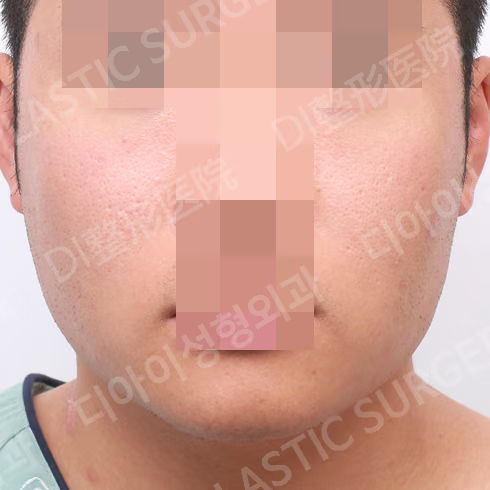 Before
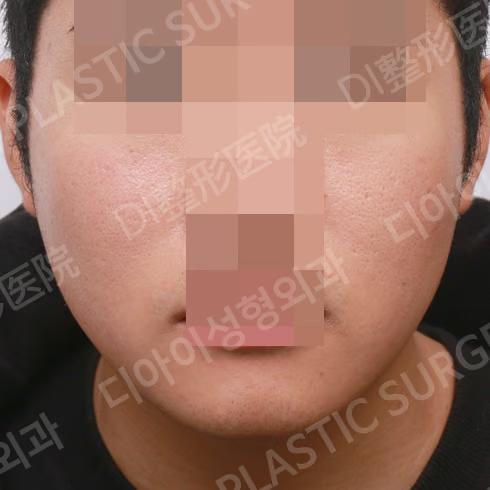 After
After