
Start with the question you want answered
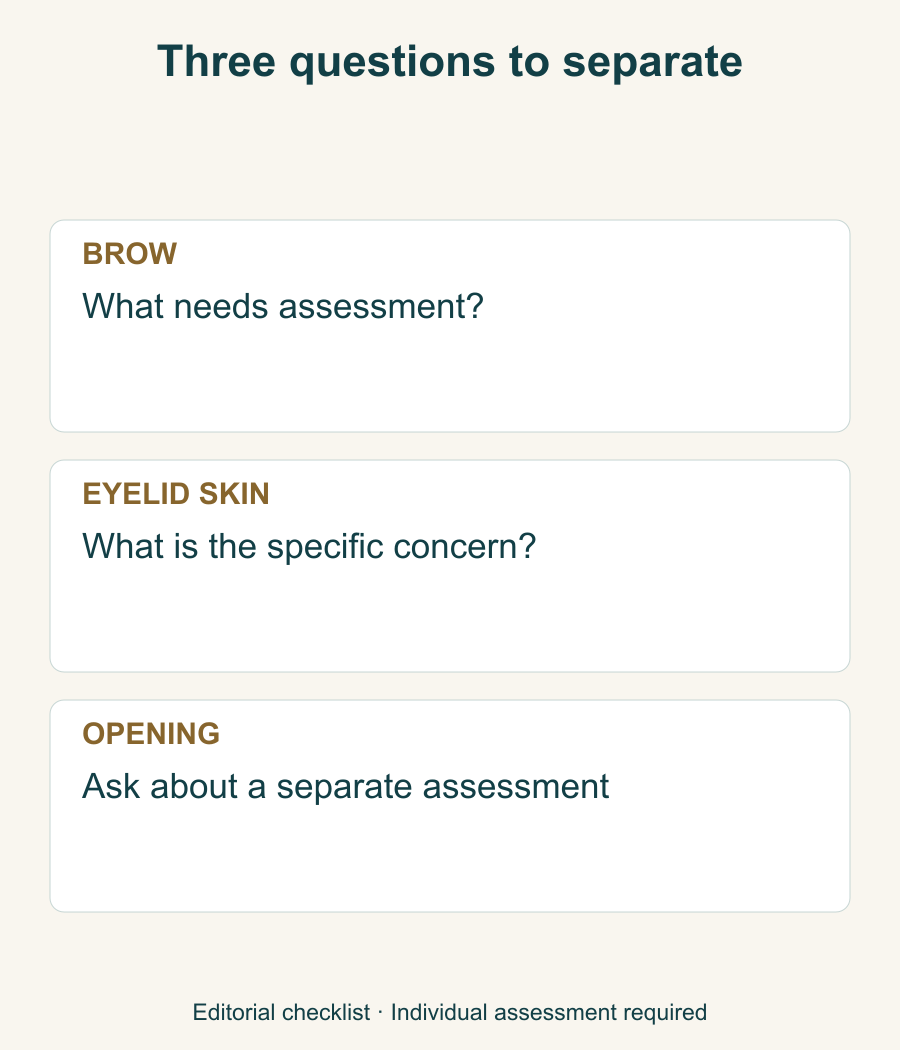
Which part of the concern needs assessment: brow position, upper-eyelid skin, eyelid opening, or more than one? You do not need to decide that yourself before a consultation. Start with a plain description of what you notice, when it matters and what you hope to understand. Ask the clinician to explain which observations are relevant and which require examination rather than choosing several procedure names in advance.
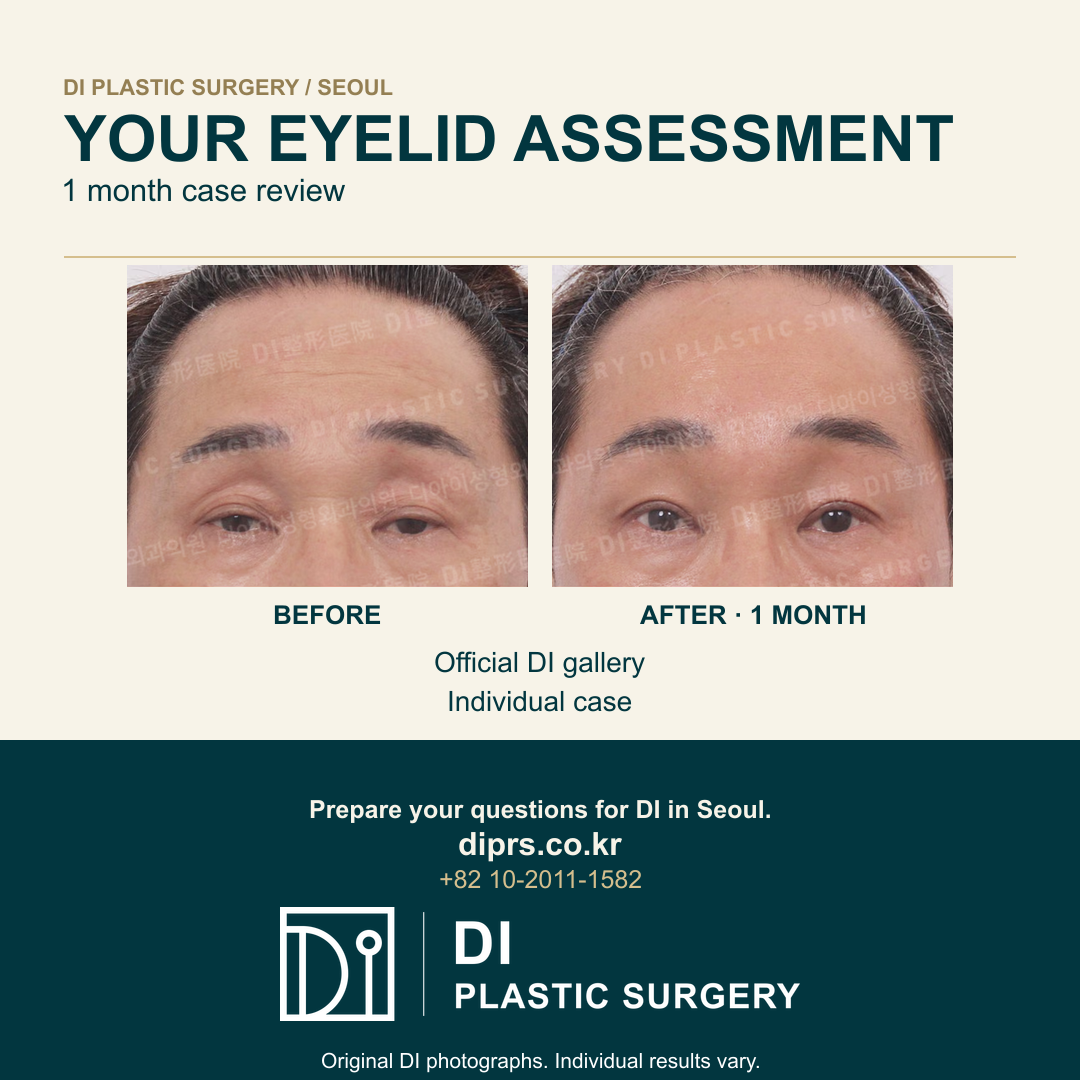
DI's official gallery labels case 032 as “Forehead lift · Upper blepharoplasty · Ptosis correction · Upper-eyelid fat repositioning” and states “1 month” after surgery. Keep that complete label with the original photographs. It does not show that every component is needed by another person, identify a diagnosis from appearance, or establish the separate contribution of each procedure. Individual results vary.
Separate an observation from an explanation
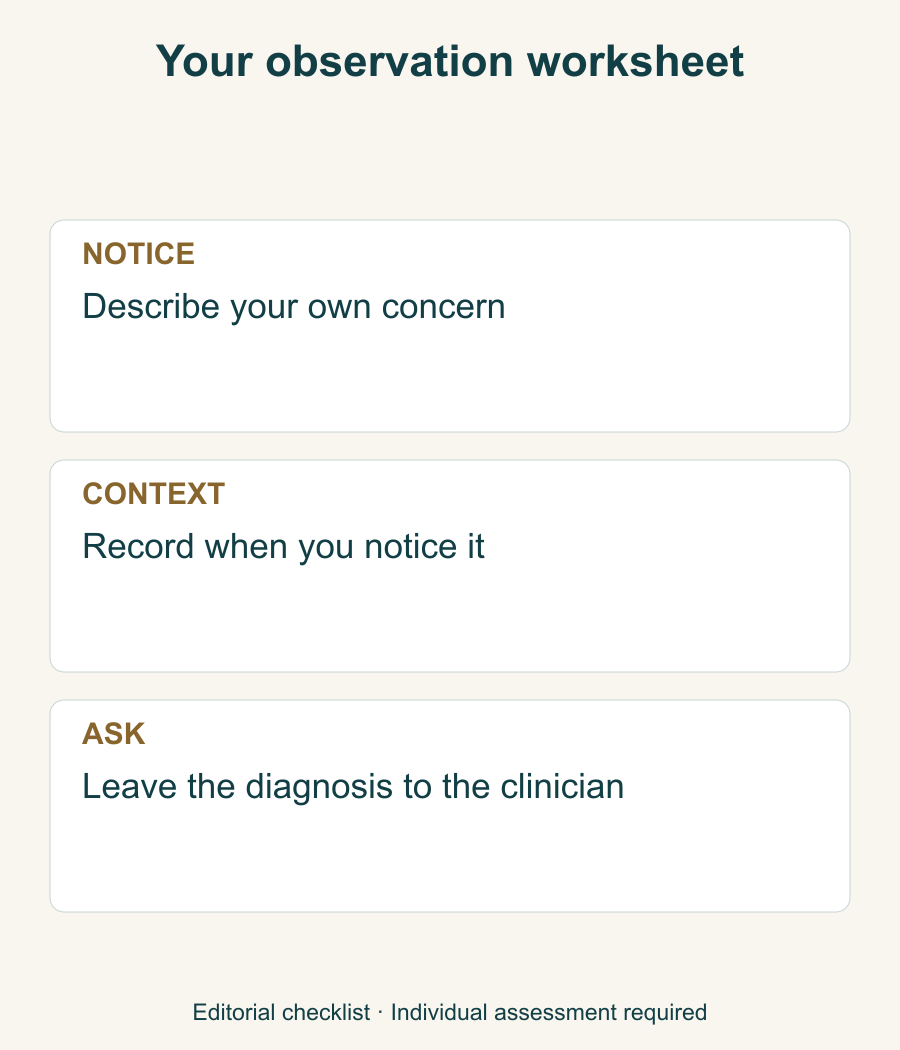
For an observation, write what you can actually describe: the part of the face that concerns you, whether it is mainly an appearance question or something you notice during ordinary activities, and how long you have noticed it. If the pattern changes, record the context without assigning a cause. An example of a question is, “I am unsure whether my concern relates to my brow, skin or eyelid opening; how will you assess this?”
Keep your own words distinct from a previous clinician's diagnosis or recommendation. If you have a document, identify who wrote it and when. If you only remember a term, mark it as recollection. Do not perform internet self-tests, manipulate the eyelids for a supposed diagnostic photograph or treat a comparison image as an examination. These notes organize a conversation; they do not determine medical suitability.
A worksheet you can complete before the visit
Fill the first two columns with your observations and questions; leave the final column for the clinician's explanation. “Not known” is a useful entry. Use one main concern per row so that uncertainty about a broad phrase such as “tired eyes” does not become an automatic request for several operations. The examples below are prompts, not diagnoses.
| Observation to record | Question to bring | Answer to obtain in consultation |
|---|---|---|
| Brow position concerns | What will you assess about the brow and surrounding area? | The assessed concern, alternatives and limits |
| Upper-eyelid skin concerns | How will you distinguish this from other eyelid questions? | What the examination can and cannot establish |
| Eyelid-opening concerns | Does this need a separate functional assessment? | The clinician’s findings and next steps |
| Previous eye or facial treatment | Which records would help you understand the history? | A confirmed record-sharing route |
| Your main goal | What change is reasonable to discuss, and what may remain? | An explanation without an outcome guarantee |
Use the case photograph without turning it into a prescription
A combined-procedure photograph cannot isolate the effect of one component. Case 032's one-month label records the gallery's stated follow-up time; it does not establish a final result, a standard recovery period or an individual's travel clearance. Ask how the source case differs from your concerns and what an examination would add. Do not infer operative details, measurements or a result percentage from the image.
Upper-eyelid fat repositioning is the term used in this case label. It must not be silently replaced by under-eye fat repositioning, which refers to a differently named procedure in DI's directory. If a translated name is unclear, ask the clinic to explain the intended area and scope. Keep the original English name alongside the translation until its meaning is confirmed.
Ask for a reason for every proposed component
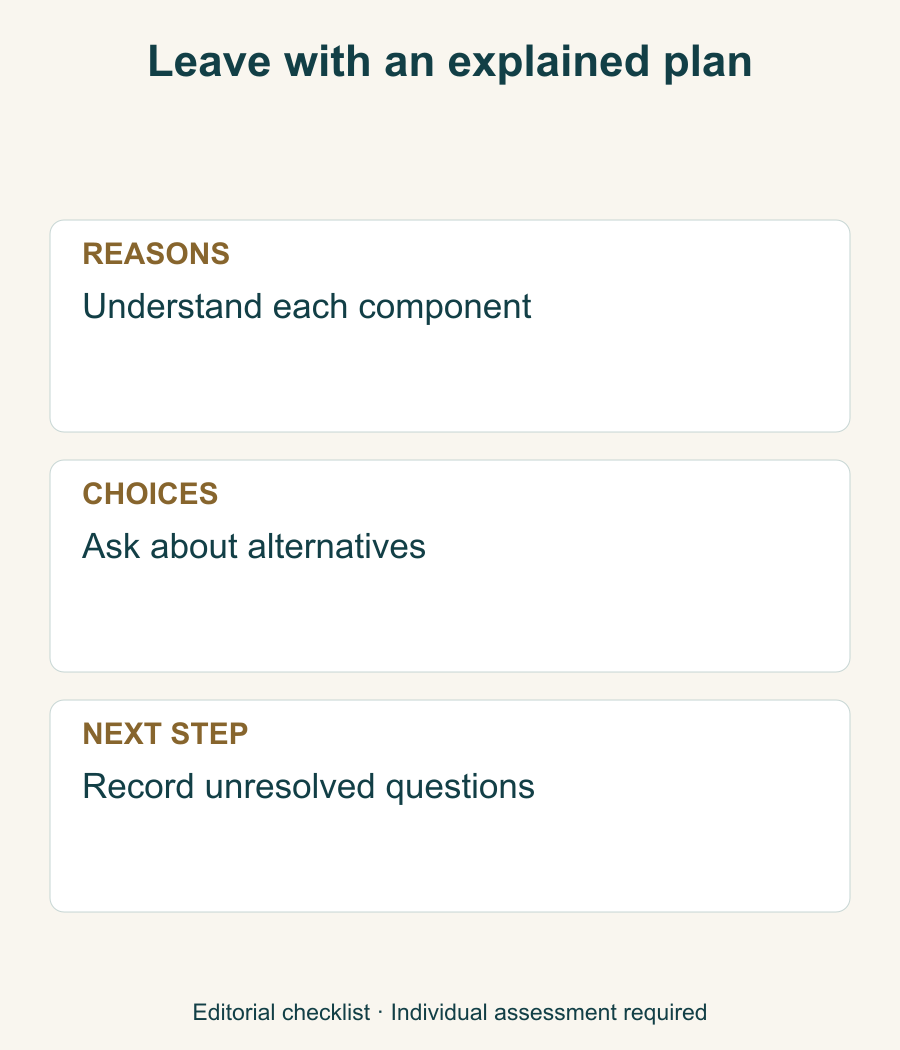
If a combined plan is proposed, ask what question each component addresses, why it is being considered and what reasonable alternatives exist. Ask what might be different if you chose a more limited plan, postponed treatment or did not proceed. The point is to receive an understandable explanation, not to negotiate a procedure count or demand that a gallery combination be copied.
Use the ASPS brow lift and eyelid consultation resources as question prompts alongside DI's procedure pages. They do not assess your case or verify exactly how case 032 was performed. Ask the named clinician to distinguish assessment findings, an optional treatment idea and the final agreed plan. If an explanation introduces an unfamiliar term, write it down and request clarification before deciding.
Convert the conversation into a usable next-step note
After the visit, summarize the answers in your own words and ask the team to correct misunderstandings. Keep the proposed procedure names, alternatives discussed, unresolved questions and the next appointment or investigation the team recommends. A written note is most useful when it distinguishes what has been assessed from what remains undecided.
Confirm the current consultation charge, any separate examination or language-arrangement charges, and the scope of a written treatment estimate. An online inquiry does not confirm a free consultation, an appointment, surgery or a final quotation. If you will visit Seoul, discuss follow-up and the assessment needed before travel; do not borrow case 032's one-month date as your own schedule.
A short checklist before you make a decision
Check that you can name your main concern, distinguish your observations from the clinician's findings, and explain why each proposed component is being discussed. Confirm who will assess and treat you, what alternatives and limitations were explained, and which questions remain open. Bring this list back if you cannot explain the plan without relying on a before-and-after photograph.
For a visit to DI in the Gangnam Station area, use the official medical-team, consultation and directions pages. Confirm the appointment and your preferred consultation language directly. This is an editorial preparation worksheet, not a new medical review, a personal diagnosis or an instruction to undergo any procedure.
Information that helps us prepare a useful reply
When contacting the clinic, tell us the procedure or concern you would like to discuss, your preferred language, whether you have had related treatment before and the dates you could visit Seoul. International patients may also wish to include their arrival and departure dates so the team can explain when an in-person consultation and follow-up may fit into the trip.
Please do not send passport numbers, payment information or complete medical records through an initial website inquiry. A coordinator can explain which health information or photographs are relevant and how they should be shared. Online guidance is preliminary; suitability, technique and the final treatment plan are determined only after an appropriate medical assessment.