
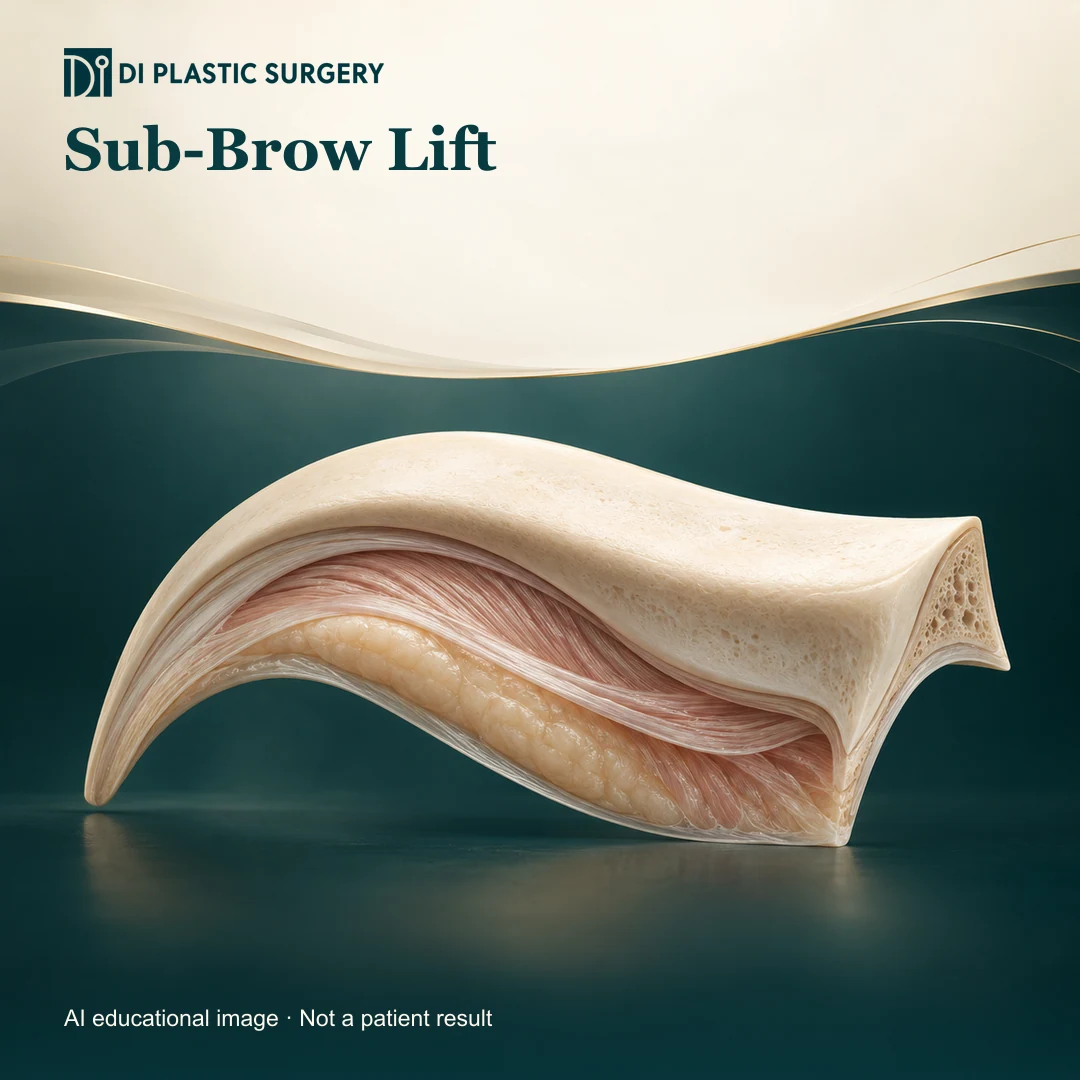
Identify the reason for upper-eye heaviness first
DI Plastic Surgery describes a sub-brow lift as an approach involving an incision below the eyebrow for selected upper-eye skin concerns. The procedure name alone cannot show whether it suits you. A heavy-looking upper eye can reflect excess eyelid skin, brow position, eyelid muscle function or more than one factor. Ask the surgeon which findings are present and whether an eye specialist should assess any functional or vision complaint.
A sub-brow approach is not interchangeable with upper blepharoplasty, ptosis correction or a forehead/brow lift. The American Society of Plastic Surgeons notes that brow position and upper-lid skin should be assessed together before selecting treatment. If the concern is primarily eyelid closure, dryness or a changing visual field, describe the symptom rather than requesting a particular cosmetic technique.
Understanding sub-brow lift
A sub-brow lift addresses selected excess upper-eyelid skin through an incision placed beneath the eyebrow. It should be distinguished from a forehead or brow lift and from surgery to correct a low eyelid margin. The position of the brow and the amount of upper-lid skin are assessed separately.
The surgeon discusses how much skin can be safely adjusted while preserving eye closure and a suitable relationship between the brow and eyelid. Existing crease design, brow hairs and prior scars can influence the incision and the appearance of the healing scar.
Ask whether the proposed operation changes the crease itself, whether a ptosis or brow-position problem remains untreated, and how the incision will be cared for. A scar hidden near brow hairs is still a scar; its visibility and maturation vary.
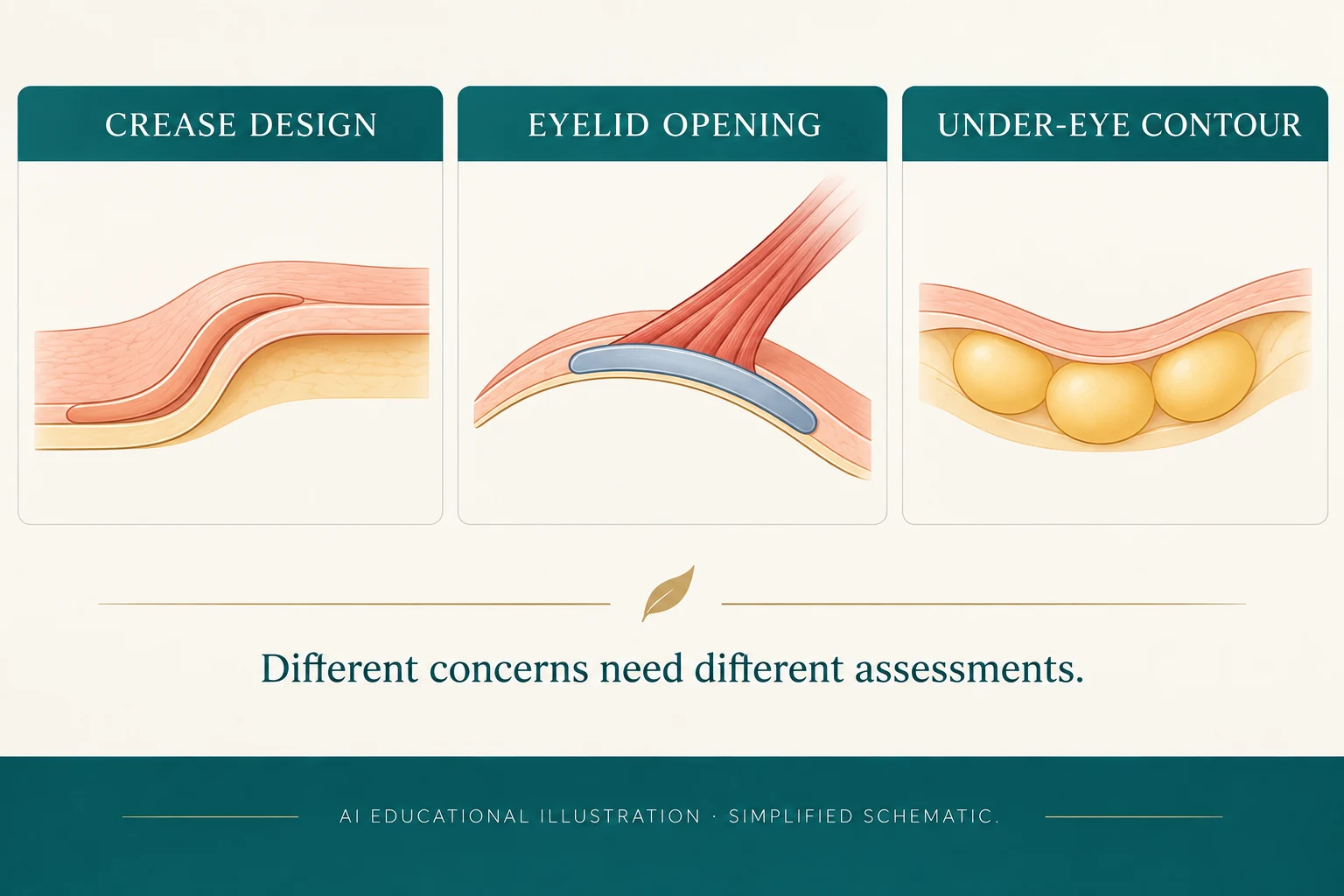
What does DI say about its sub-brow approach?
DI’s published procedure page describes an incision close to the lower edge of the eyebrow and removal of selected skin and muscle after individual design. It presents possible benefits such as addressing sagging upper-eye skin while aiming to limit changes to the eyelid fold. These are descriptions of the clinic’s approach, not a guarantee of a hidden scar, preserved expression or a particular result.
Ask where the incision would be in your case, how brow hair and skin characteristics affect scar visibility, what amount of tissue would be removed, and why this technique is preferred to alternatives. A visible scar, asymmetry or an insufficient or excessive change remain possible. The exact plan should follow examination and a discussion of your priorities.

Review eye comfort, medical history and risks
Bring information about dry eyes, contact lenses, previous eyelid or brow procedures, vision changes, medicines and supplements. The surgeon should review eye closure, brow and lid position, general health and anesthesia options. Published timing or recovery estimates on a procedure page are not personal clearance for surgery or travel.
General brow-lift patient information from the American Society of Plastic Surgeons and NHS hospitals discusses bleeding, infection, scarring, numbness, asymmetry, eye irritation and the possibility of further treatment. The risk profile of a specific sub-brow plan may differ. Ask the treating surgeon to explain which complications apply to you, warning signs that need prompt review and how complications would be managed.
What the proposed procedure should specify
Compare a sub-brow skin approach with blepharoplasty or a brow lift according to the actual source of heaviness, not just the location of a photograph’s shadow.
Before consent, ask the clinician to name the operation and alternatives, explain the main objective and limitations, and confirm the person responsible for treatment and postoperative review. A schematic, a price item or a case video cannot establish suitability for an individual patient.
Build a flexible Seoul itinerary
For an overseas visitor, an online inquiry can help organize records, concerns, language needs and tentative travel dates, but it cannot confirm suitability, surgery date or the final quotation. Before booking non-refundable travel, ask when an in-person examination is needed, whether any additional eye assessment is appropriate and who will provide postoperative reviews.
DI’s procedure page includes general aftercare and a follow-up outline. Your actual wound care, suture review, activity limits and permission to fly depend on the examination, treatment and healing. Leave time in Seoul for the reviews the treating team recommends and arrange a way to contact the clinic if pain, vision or eye closure changes unexpectedly.

Verified DI price guide: KRW, VAT excluded
Source: DI 2026 English Price Guide, dated 11 September 2026, page 2; checked on 7 October 2026. The guide labels these as general prices in Korean won with VAT excluded.
These rows are different procedures, packages or add-ons. An add-on is not the full operation price. The guide’s price does not establish which anesthesia, materials, tests, medicines, aftercare or additional procedures are included in your case. Request an itemized current quote before booking.
| Verified item | KRW, VAT excluded | Price scope |
|---|---|---|
| Sub-brow lift | KRW 1,500,000 | Listed procedure fee |
Questions to take into the consultation
Ask: Is my concern mainly brow descent, upper-lid skin, eyelid position or a combination? What alternatives—including no surgery—are reasonable? Where would the incision sit and what scar might be visible? How will the plan affect eyelid closure and eye comfort? What results are realistic, and what limitations should I expect?
Also ask about anesthesia, the written estimate, warning signs, follow-up in Seoul and care after returning home. DI’s gallery includes sub-brow cases combined with other procedures. Because a combined case cannot show the isolated effect of a sub-brow lift, this article does not reproduce before-and-after photographs. Individual outcomes and recovery vary.
Preparation, aftercare and travel milestones
Before treatment, describe dry-eye symptoms, contact-lens use, previous eye procedures, medicines and allergies. Ask which examinations and anesthesia assessment are needed. Do not stop prescribed medicines on the basis of a blog; obtain instructions from the prescribing and treating clinicians.
After treatment, obtain the clinic’s instructions for wound care, eye care, prescribed medicines, sleep position, activity and makeup or contact-lens restrictions. Confirm whether there are removable sutures and when the first examination is due. An initial-recovery estimate does not mean that scars or swelling have fully settled.
For travel, leave time for required in-person review and suture care. Ask the surgeon when flying and strenuous activities are appropriate for your own procedure. Keep the clinic’s contact and emergency instructions available after returning home.

Risks and symptoms to discuss before consent
Discuss bleeding, infection, scarring, asymmetry, dry eyes, difficulty closing the eye and possible revision. Eyelid surgery can also affect lid position or vision. A sudden visual change or severe unexpected eye pain requires urgent medical assessment.
Ask which risks are most relevant to your examination, how complications would be handled, and what alternatives include postponing or not having treatment. Obtain written instructions from the treating team; a general article cannot replace them.
Information that helps us prepare a useful reply
When contacting the clinic, tell us the procedure or concern you would like to discuss, your preferred language, whether you have had related treatment before and the dates you could visit Seoul. International patients may also wish to include their arrival and departure dates so the team can explain when an in-person consultation and follow-up may fit into the trip.
Please do not send passport numbers, payment information or complete medical records through an initial website inquiry. A coordinator can explain which health information or photographs are relevant and how they should be shared. Online guidance is preliminary; suitability, technique and the final treatment plan are determined only after an appropriate medical assessment.