

Crease design and technique are different decisions
A double-eyelid consultation involves both the shape of the proposed fold and how it could be created. DI's double-eyelid overview introduces these as separate questions. A preferred style is a starting point for discussion, not proof that a particular operation is suitable.
Bring a clear description of what you want to discuss and any reference photographs. Dr. Jung Yun Ik can assess your eyelid anatomy and explain what is feasible after an in-person medical evaluation. A photo inquiry cannot confirm the final plan or predict a result.
Describe the fold you want to discuss
DI's overview uses tapered or in-fold, in-out, parallel and semi-parallel terminology. These labels describe the relationship between the fold, the inner corner and the rest of the eyelid. Ask how a proposed crease would relate to your own features rather than treating a style label as a universal ideal.
Discuss the starting point, height and visibility of the crease, including existing asymmetry. A reference image should help explain a preference; it does not establish that another person's design can be reproduced.
Ask why a method is being considered
Natural-adhesion and incisional double-eyelid surgery are approaches to discuss with the surgeon, not synonyms for a particular crease shape. Ask which examination findings support the proposed method, what it cannot achieve, and what alternatives or reasons not to proceed should be considered.
An eyelid-function concern requires its own assessment. Ptosis correction is not interchangeable with crease creation. If the consultation raises that issue, ask the surgeon to distinguish each proposed procedure and its purpose.

Bring the information needed for assessment
Prepare details of previous eyelid surgery, eye symptoms, medical conditions, allergies, prescribed medicines and supplements. Explain your priorities and any concern about existing asymmetry. Share medical records through the clinic's designated process; do not stop prescribed medication on the basis of general online information.
Ask how language assistance will be arranged for the examination, consent discussion and postoperative instructions. An initial consultation is an opportunity to make an informed decision and does not require a commitment to surgery.

Interpret a gallery case in context
The designated DI gallery displays case 277 as incisional double-eyelid surgery with a follow-up photograph taken 1 month after surgery. The unchanged front-view Before and After pair is included as one example of that named procedure, not as a comparison with another method.
Results vary between patients. A one-month photograph is not a guarantee of a final result, a standard recovery deadline or evidence that the procedure is appropriate for you. Check the case number, named procedure and follow-up time when reviewing any result photograph.
Discuss limitations, risks and follow-up
The consultation should include bleeding, infection, dry or irritated eyes, difficulty closing the eyes, asymmetry, scarring and possible further treatment, as well as rare serious visual complications. Risks depend on the specific procedure and individual health. The treating surgeon should explain the relevant risks and alternatives.
For overseas patients, ask which examinations and postoperative reviews must take place in Seoul, how later concerns will be assessed and whom to contact urgently. The appropriate procedure, outcome, price, recovery and return-to-flight advice require individual assessment; no universal travel timetable is promised.
Plan your consultation
Use the DI consultation page to share your questions and preferred language. Review the medical-team page and the individual natural-adhesion, incisional and ptosis pages for background, then ask the surgeon to explain which information applies to your case.
This article provides general educational preparation, not a diagnosis or patient-specific recommendation. Its AI-generated illustrations show fictional scenes and do not represent actual patients, medical records or surgical results.
Information that helps us prepare a useful reply
When contacting the clinic, tell us the procedure or concern you would like to discuss, your preferred language, whether you have had related treatment before and the dates you could visit Seoul. International patients may also wish to include their arrival and departure dates so the team can explain when an in-person consultation and follow-up may fit into the trip.
Please do not send passport numbers, payment information or complete medical records through an initial website inquiry. A coordinator can explain which health information or photographs are relevant and how they should be shared. Online guidance is preliminary; suitability, technique and the final treatment plan are determined only after an appropriate medical assessment.
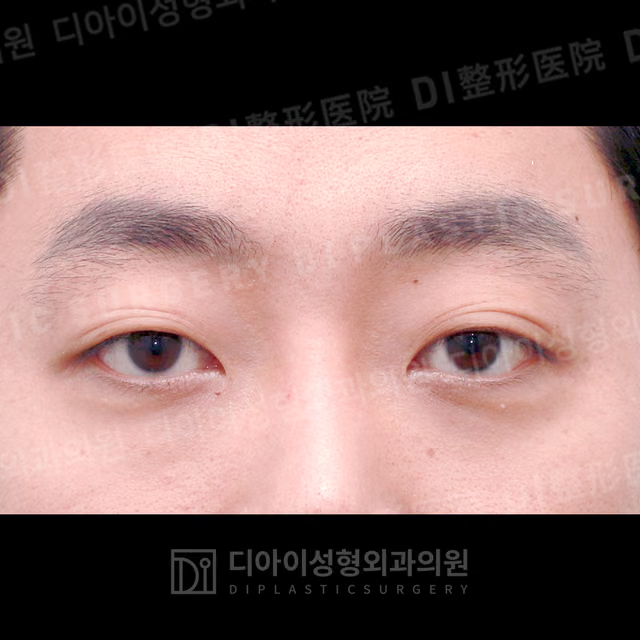 Before
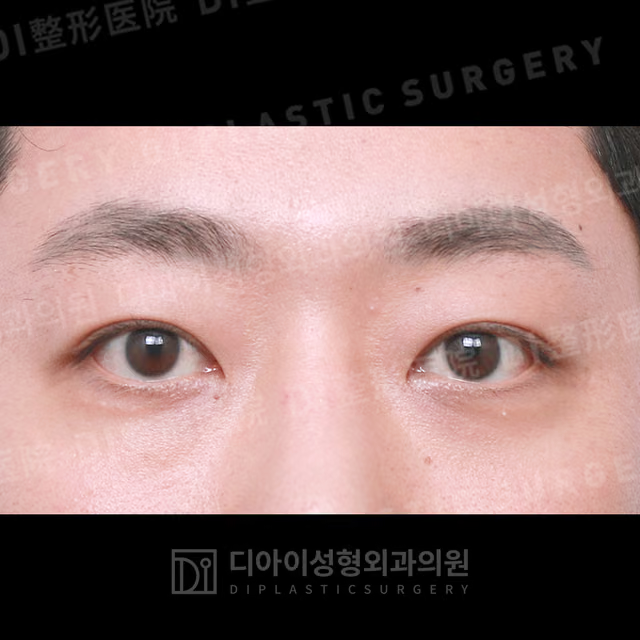 After
After