
A list of names is the beginning of an explanation
What should you check when a proposed eye plan includes several procedures? Ask for a list you can understand, with a reason and alternatives for each component, the limits and risks to discuss, and the documents that record your decision. You should also know what is still being assessed. A long procedure list is not, by itself, informed consent or proof that a larger plan is appropriate.
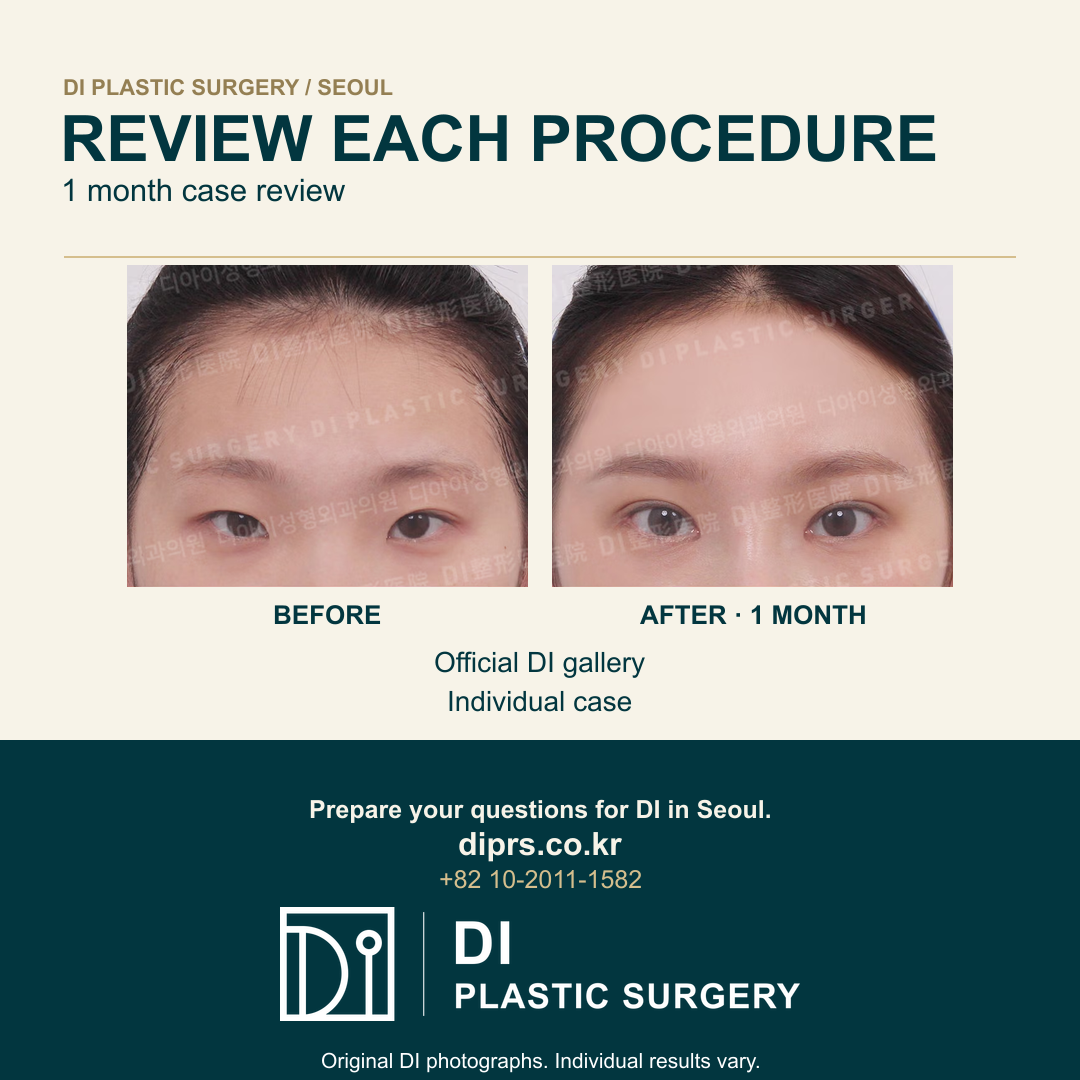
Case 033's original gallery label is “Forehead lift · Incisional double-eyelid surgery · Ptosis correction · Medial canthoplasty · Dual canthoplasty”, with a one-month follow-up. Preserve those terms and the original clinical photographs. This article uses the case as a prompt for organizing a conversation, not as evidence that you need the same combination or that each named component produced an identifiable part of the result.
Keep one current version of the proposed plan
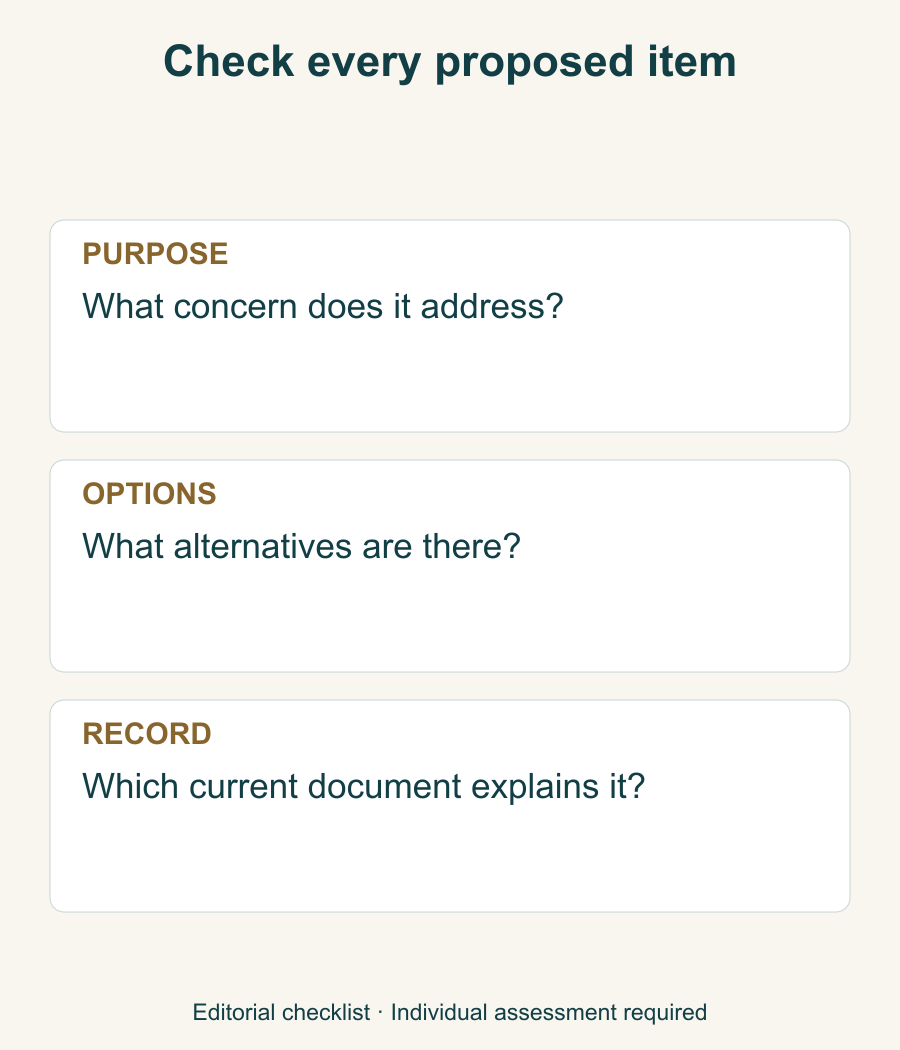
At consultation, ask which document contains the current proposed procedure names and treated areas. If several messages or quotations use different wording, ask the clinic to reconcile them before you decide. Note the document date and who explained it. A social-media caption, booking message and clinical plan may serve different purposes; do not assume that matching prices or similar names make their scope identical.
Create one row per proposed component. Record whether it is still under discussion or part of the agreed plan, and ask how an optional component is identified. If a name is translated differently, keep the original term next to the translation and request a plain-language explanation. Do not fill the gap with a definition from another clinic's marketing.
A component-by-component consent checklist
Use this comparison table for the actual proposal, not for deciding whether to copy case 033. Write the treating clinician's explanation rather than treating the sample questions as medical advice. Leave a row unresolved if the team has not answered it. A coordinator can help organize documents, but clinical questions need an explanation from the appropriate clinician.
| Item to check | Question for each proposed component | What to record |
|---|---|---|
| Purpose | Which of my concerns is this intended to address? | The clinician’s explanation in plain language |
| Alternatives | What other reasonable options, including no surgery, should I consider? | Alternatives and their relevant limitations |
| Scope and limits | What will this component not address? | Unresolved concerns and realistic limits |
| Risks and consent | Which specific issues should I understand before agreeing? | Questions answered and the agreed consent documents |
| Cost | Is this item included, optional or separately charged? | The corresponding itemized quotation |
| Follow-up | Which individual instructions or reviews will be needed? | The clinic’s confirmed plan and contact route |
Clarify eye-corner terminology without guessing the technique
Case 033 includes both “Medial canthoplasty” and “Dual canthoplasty”. Those names should remain attached to the source case; they do not establish an exact operative technique, incision or treatment scope for another person. Ask the surgeon to identify what is proposed in your own plan, why, and how the terms are being used. Do not turn a translation into an assumed surgical instruction.
The same caution applies to the remaining components. Ask how the proposal distinguishes forehead or brow concerns, eyelid crease design and eyelid-opening assessment. Case photographs cannot measure the contribution of each component, confirm your suitability or establish that a procedure will solve a functional concern. The original one-month label is a follow-up date, not proof of a final result. Individual results vary.
Identify who answers which follow-up question
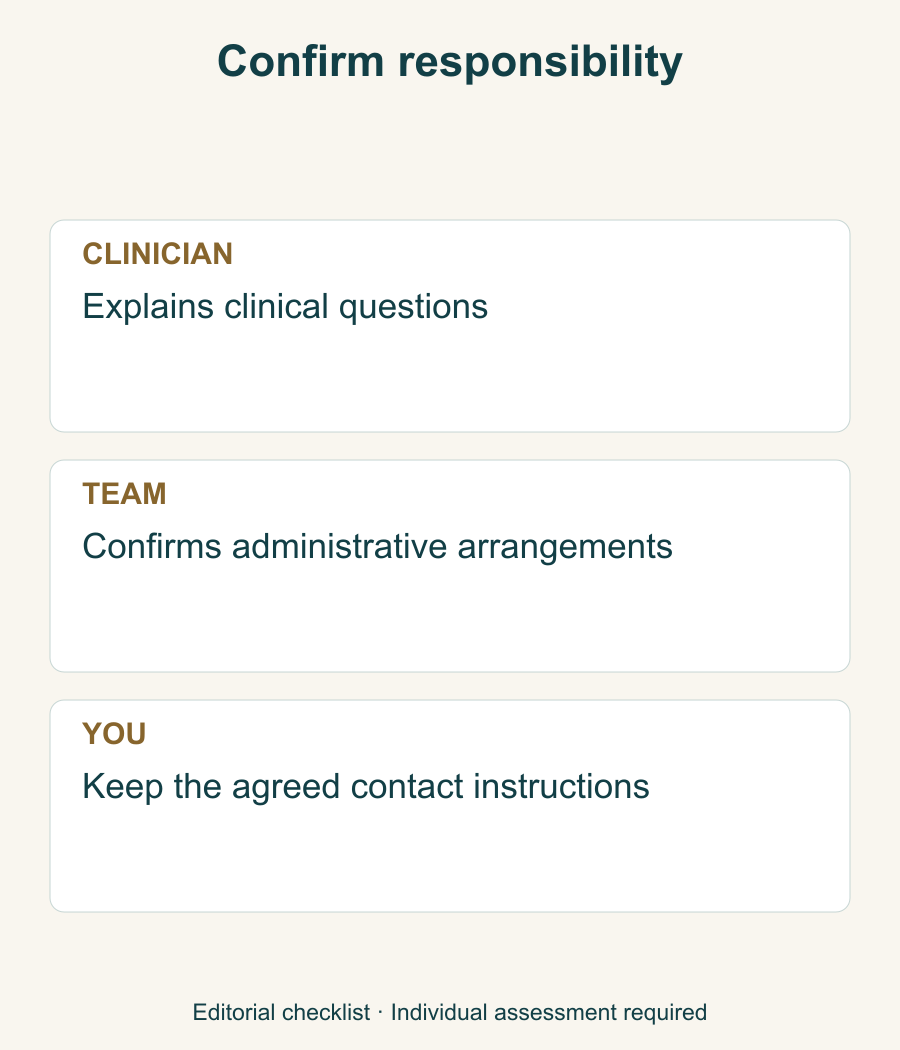
Before treatment, ask who explains your individual postoperative instructions, who receives routine messages and what needs a clinical review. Record the actual contact route and the team's instructions for concerns that cannot wait for a reply. Do not assume that a website, chat account or translated page guarantees continuous monitoring, immediate replies or a consultation in your preferred language.
Use ordinary examples to make the arrangements clear: an appointment change, a question about a written instruction, or a concern the team says requires examination. Ask which person or service is responsible for each. This guide does not provide a symptom-triage protocol; obtain instructions for your own care and local urgent help from the treating team.
Check what happens when a proposal changes
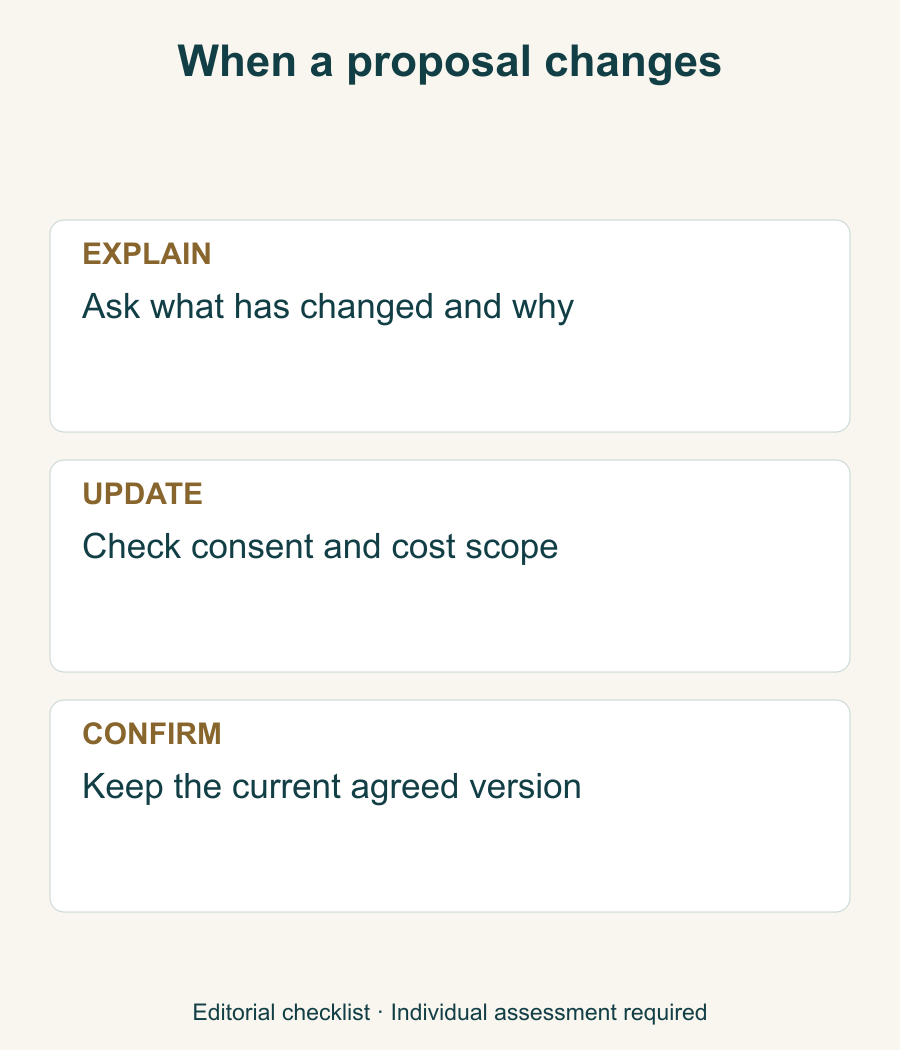
If a component is added, removed or renamed before treatment, ask for an updated explanation and the relevant documents. Confirm how the change affects the quotation, consent, expected care and follow-up. Keep the earlier version for your records, but identify the current version clearly. A verbal mention should not leave you guessing which plan or price scope you are considering.
For travel to Seoul, confirm actual appointments and the assessments needed before departure. Ask about additional visits, what the written estimate includes and what could be charged separately. Neither a one-month photograph nor a prearranged itinerary determines your own recovery or permission to fly. The final plan depends on an individual assessment.
Use the consultation to close gaps, not to complete a package
Before deciding, try explaining the proposal back to the clinician: the concern linked to each component, alternatives, limitations, cost scope and follow-up arrangements. If your explanation depends on “it is included in the package” or “the other patient had it”, return to the unanswered question. You can ask for more explanation or choose not to proceed.
DI's procedure, medical-team, consultation and cost pages provide background for this discussion. The ASPS consultation resources are additional question prompts, not confirmation of the plan in case 033. This is an editorial consent-preparation checklist. It does not create a new physician review, recommend a personal operation or confirm an appointment, fee or result.
Information that helps us prepare a useful reply
When contacting the clinic, tell us the procedure or concern you would like to discuss, your preferred language, whether you have had related treatment before and the dates you could visit Seoul. International patients may also wish to include their arrival and departure dates so the team can explain when an in-person consultation and follow-up may fit into the trip.
Please do not send passport numbers, payment information or complete medical records through an initial website inquiry. A coordinator can explain which health information or photographs are relevant and how they should be shared. Online guidance is preliminary; suitability, technique and the final treatment plan are determined only after an appropriate medical assessment.