

Describe when the nasal tip looks low
If you are considering long nose correction in Korea, start by describing the feature that concerns you: overall nose length, a downward-pointing tip, or a change when you smile. These observations help explain your goals; they do not establish the cause or the operation you need.
DI’s procedure page discusses long nasal shape and downward tip position, including tip changes associated with smiling. Ask the surgeon to assess your concern at rest and during expression. Describe what you want to preserve as well as what you hope to change. A preferred photograph is a conversation aid, not a result guarantee.
Separate length, tip position and the bridge
A consultation should distinguish the part of the nose being discussed. A bridge contour concern is not automatically the same as a tip-position concern. Ask which structures the surgeon believes contribute to your appearance and whether a proposed change is directed at length, tip orientation, support or more than one component.
DI’s page describes cartilage reduction and repositioning among possible approaches. This is not a prescription for every visitor. Ask how the proposed method fits your anatomy, what would remain unchanged and what trade-offs deserve attention. There is no universal ideal tip angle or amount of shortening.
Ask about support and any additional work
Before consenting, ask whether cartilage would be repositioned, removed or added, and why. DI’s official page describes autologous-tissue options, but that does not mean you need a graft or a particular donor site. If a graft is proposed, ask about its source, the reason for using it and any additional donor-site care.
Explain any previous nasal surgery, implants, grafts or injections. Tell the surgeon about breathing symptoms separately; cosmetic tip work should not be assumed to treat an airway concern. Ask whether any additional procedure is necessary, optional or unrelated to your main goal. Request an itemized written estimate rather than comparing an unspecified package price.

Discuss limits and risks, not just a profile photograph
Rhinoplasty risks can include anesthesia complications, infection, altered sensation, breathing difficulty, healing or scarring problems, swelling, dissatisfaction with appearance and further surgery. Ask which risks matter particularly for your proposed plan and what would happen if a complication occurred.
Suitability, expected effect, price and recovery require individual assessment. Consider alternatives, including no operation. A consultation should leave room to decide without relying on a travel deadline or a promise of a particular appearance.
Read Case 678 as an individual follow-up
The original front-view pair below is from DI’s designated Before & After gallery: Case 678, labelled “Long-nose correction”, with the displayed follow-up “2 months after surgery”. The label does not disclose a detailed surgical technique, graft choice or complete medical history; none is inferred here.
Two months identifies the photographed follow-up, not a guaranteed healing endpoint or a recommended length of stay in Seoul. Original photographs and privacy masking are preserved without cropping, retouching or overlays. Results and recovery vary, and this case cannot predict your result.
Prepare questions before travelling to Seoul
Bring your medical history, current medicines and supplements, allergies and information about earlier procedures. Make a short list of priorities: resting tip position, changes with smiling, features to preserve and breathing concerns if present. Review the medical team and confirm the language needed for informed discussion.
DI’s procedure overview lists suture removal and follow-up visits, with recovery varying by individual. Confirm your own appointment schedule, aftercare instructions, warning signs and contact arrangements before booking a return flight. Ask the treating team about travel clearance and restrictions on pressure, glasses and activity.
Information that helps us prepare a useful reply
When contacting the clinic, tell us the procedure or concern you would like to discuss, your preferred language, whether you have had related treatment before and the dates you could visit Seoul. International patients may also wish to include their arrival and departure dates so the team can explain when an in-person consultation and follow-up may fit into the trip.
Please do not send passport numbers, payment information or complete medical records through an initial website inquiry. A coordinator can explain which health information or photographs are relevant and how they should be shared. Online guidance is preliminary; suitability, technique and the final treatment plan are determined only after an appropriate medical assessment.
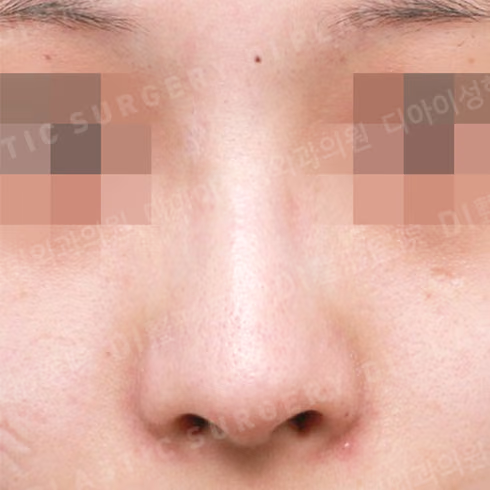 Before
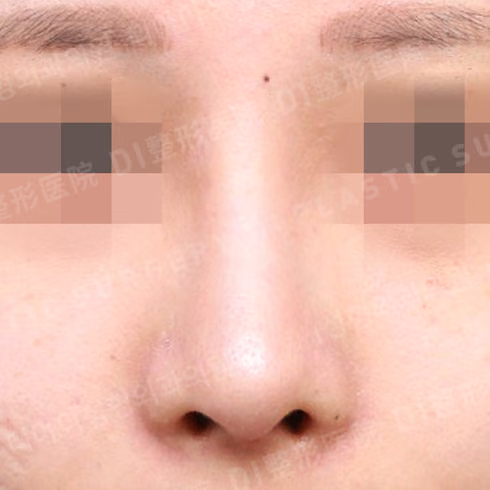 After
After