
Describe what feels heavy before choosing a procedure
A heavy-looking upper eye is not, by itself, a diagnosis. If you are considering a forehead lift in Korea, describe the change you notice: brow position, a forehead crease, upper-lid skin or asymmetry. Ask which finding explains your concern and which findings the proposed operation would not address.
A brow or forehead lift is not interchangeable with an eyelid operation. DI lists forehead lifting separately from sub-brow lifting, upper blepharoplasty and ptosis correction. Choosing among them requires an examination rather than an age threshold or a reference photograph. Report dryness, difficulty closing an eye or changing vision so the clinician can assess whether another evaluation is needed.
Ask how brow position and hairline will be considered together
Describe the brow shape and expression you want to preserve, not simply how much higher you want the eyebrows. Ask the surgeon to explain the intended direction of adjustment, the limits of symmetry and how your forehead height and hairline affect planning.
DI’s procedure page describes an endoscopic approach through a small incision above the hairline. Have the actual number and locations of your incisions explained. A general website measurement is not your confirmed surgical plan. Discuss scar visibility, hair styling and any personal history of hair loss or poor scar healing.
Understand the endoscope without treating it as a guarantee
DI describes Full HD endoscopic visualization and fixation to the periosteum in its published technique overview. Ask how visualization, dissection and fixation would be used in your case, and whether the proposed approach differs from that general description.
Equipment terminology does not establish that an operation is risk-free, scar-free or permanent. Ask what material, if any, is used for fixation, why it is proposed and what limitations or further treatment could arise. DI’s general description should not replace a written explanation of your own plan.

Separate the brow plan from an eyelid plan
Ask the clinician to explain whether the concern is primarily brow position, upper-lid skin, eyelid lifting function or a combination. If a separate eyelid procedure is recommended, request its indication, alternatives, additional risks and cost separately.
A forehead lift should not be assumed to correct every eyelid concern or vision complaint. It is reasonable to ask about a more limited option, non-surgical care or no procedure. Do not book a combined operation solely because it appears in another patient’s photographs.
Discuss hairline, eye and nerve risks explicitly
Bring your medical history, allergies, medicines, supplements, prior procedures and nicotine use to the assessment. Do not stop prescription medication on the basis of an online article. Confirm the treating surgeon and anesthesia arrangements.
Possible risks include bleeding, infection, unfavorable scarring, hair loss near incisions, a raised hairline, altered sensation, eye irritation or dryness, asymmetry and nerve injury. Poor healing, persistent pain, anesthesia complications and further surgery are also possible. This is not a complete risk list or your personal risk estimate.
Ask what findings would make the clinician advise against surgery and how an unexpected problem would be managed after you return home. Suitability, effects, price and recovery require individual assessment.
Resolve aftercare details before arranging your return flight
Request written instructions for dressings, washing your hair, wound care, medicines, head position and activity. Confirm whether sutures or clips need removal and when your own reviews should occur. A generic appointment count does not establish a safe departure date.
Published compress advice is not uniform: DI’s general page mentions cold and warm compresses, while ASPS brow-lift guidance says not to use ice or heat on the operated area. Do not improvise from either summary. Ask your treating team to resolve the difference and give clear instructions for your exact technique.

Read case 035 as an early observation, not a final result
The designated DI Before & After gallery labels case 035 as Forehead lift, photographed 10 days after surgery in the front view. The original pair is reproduced below with its existing markings unchanged. The gallery does not provide a calendar date or the complete operative record; no technique or fixation material has been inferred from the photographs.
Ten days is an early follow-up, not evidence of complete healing, a lasting result or fitness to fly. Photographs cannot show all risks, symptoms or later changes. This single case does not predict your outcome. The other images in this article are AI-generated explanatory illustrations and are not patient records.
Take a short decision checklist into consultation
Before committing, check that you understand the concern being treated, the proposed brow adjustment, hairline and incision implications, alternatives, risks, price and aftercare. Ask for unclear details to be explained in your preferred language.
An overseas inquiry can begin with your concern, previous relevant treatment and tentative Seoul dates. An in-person assessment may lead to a different plan or a decision not to operate.
Information that helps us prepare a useful reply
When contacting the clinic, tell us the procedure or concern you would like to discuss, your preferred language, whether you have had related treatment before and the dates you could visit Seoul. International patients may also wish to include their arrival and departure dates so the team can explain when an in-person consultation and follow-up may fit into the trip.
Please do not send passport numbers, payment information or complete medical records through an initial website inquiry. A coordinator can explain which health information or photographs are relevant and how they should be shared. Online guidance is preliminary; suitability, technique and the final treatment plan are determined only after an appropriate medical assessment.
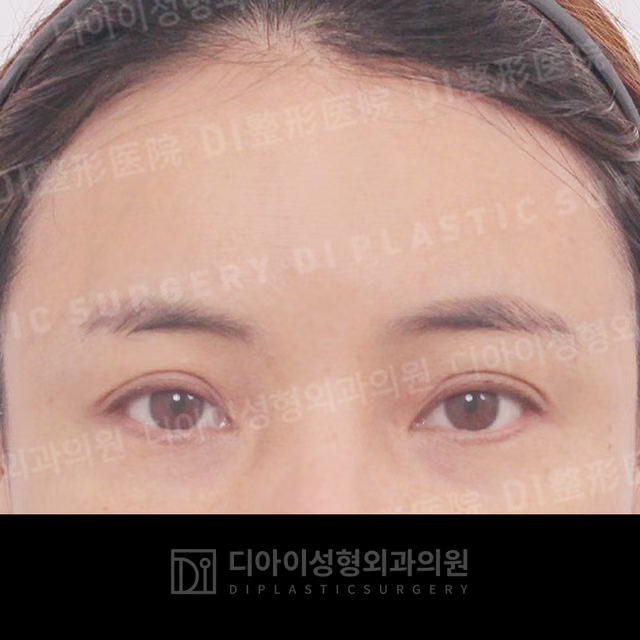 Before
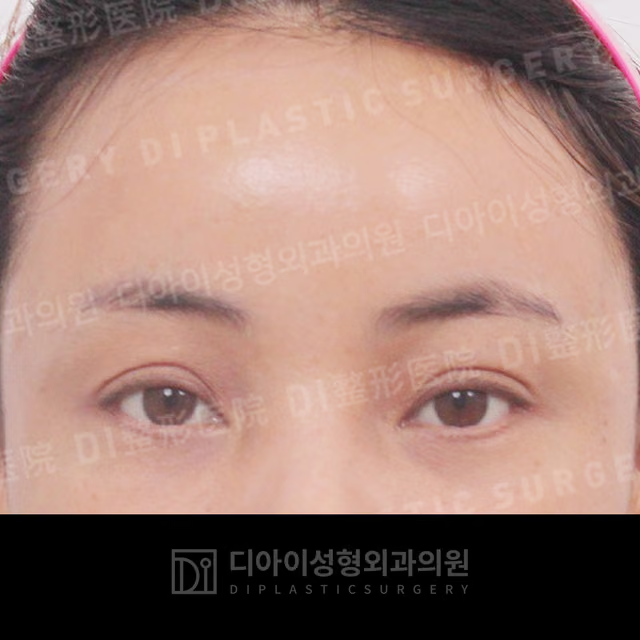 After
After