
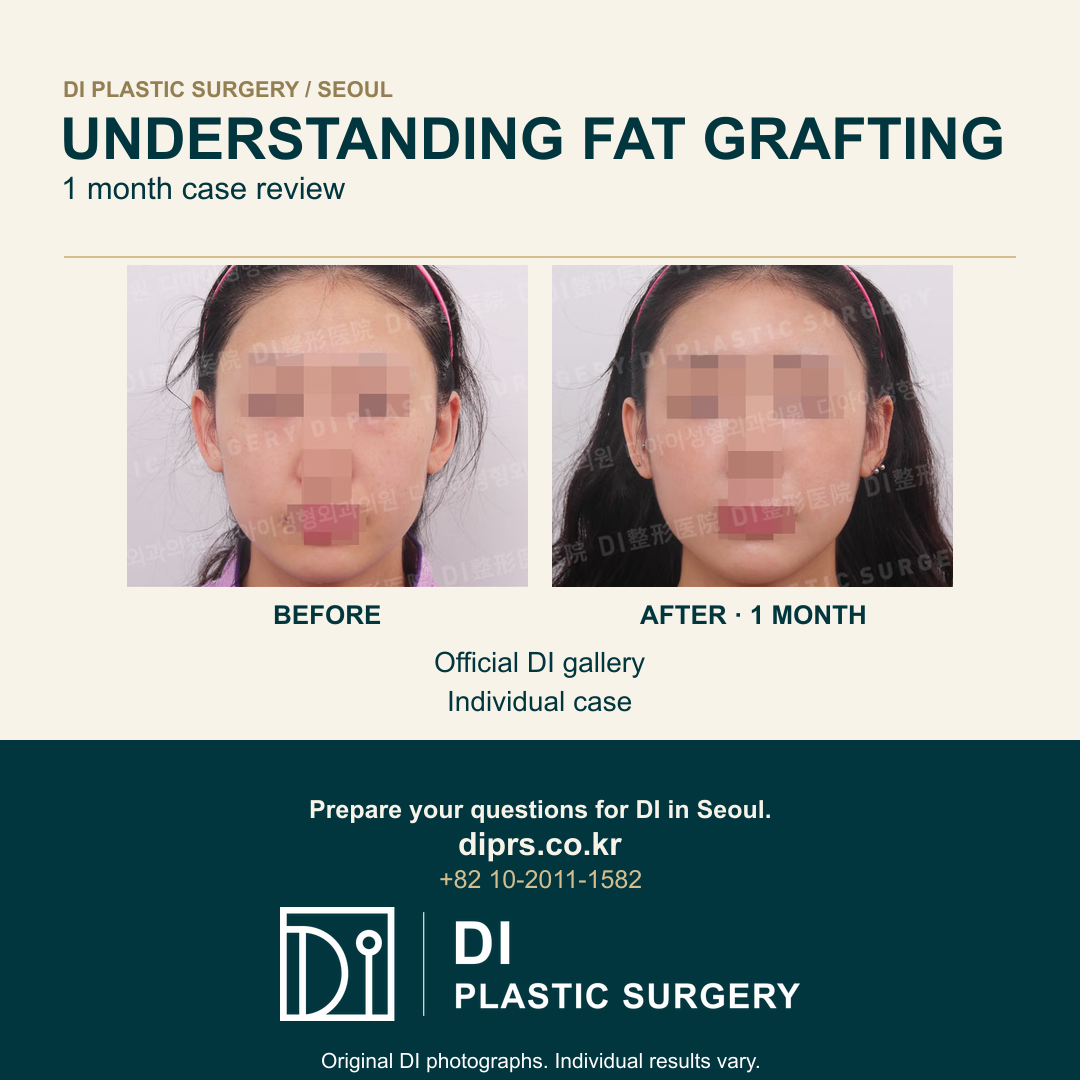
One month is an observation, not a retention measurement
DI's official gallery identifies case 031 as fat grafting and labels its follow-up at one month. The cover reproduces the same individual's original photographs, with masking and watermarks retained. It shows appearance at the documented visit. It does not provide a measured retention rate, the injected volume, a final result or a forecast for another patient. Individual results vary.
This guide focuses on interpreting evidence about retention, rather than deciding where you need more facial volume. A before-and-after pair can help you form questions, but cannot establish what caused every visible difference or how the appearance will change later. Those questions need the treatment record, the surgeon's assessment and appropriate follow-up.
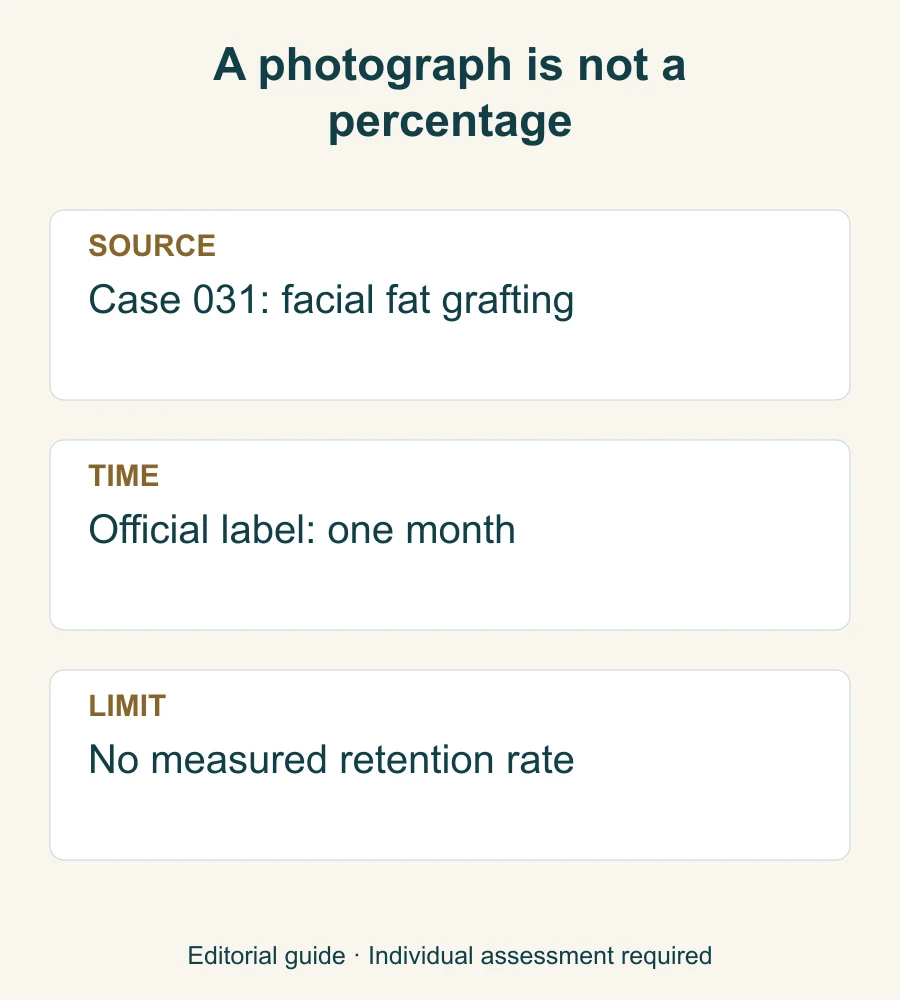
Why a fixed percentage can be misleading
The public description of an ASPS EdNet review explains that autologous fat retention is variable and involves biological and technical factors. It discusses tissue characteristics, blood supply, donor factors and aspects of the grafting process. This supports asking about uncertainty; it does not supply a universal retention percentage or prove which method was used in a particular DI case.
Ask what a quoted percentage refers to: an individual prediction, a published study, a clinician's own measured data or a general explanation. Then ask about the method of measurement, the follow-up interval and the population being described. A number without those details should not be treated as a personal guarantee. The public course description is not a substitute for reading a study's full methods and results.
Keep the treatment record separate from the image
Ask which areas were treated and how the surgeon documents the plan and follow-up. Do not infer the harvested site, transferred volume, injection technique or additional procedures from a front-view photograph. DI's procedure page describes using a patient's own fat for facial grafting, but the general page does not establish every detail of case 031 or the plan appropriate for you.
If you are reviewing your own progress, ask the team what information it needs beyond photographs and when examination is appropriate. A picture cannot determine whether a symptom is expected, identify a complication or authorize a change in care. Follow the treating team's instructions and obtain clinical advice for concerns rather than trying to calculate retention from image comparisons.
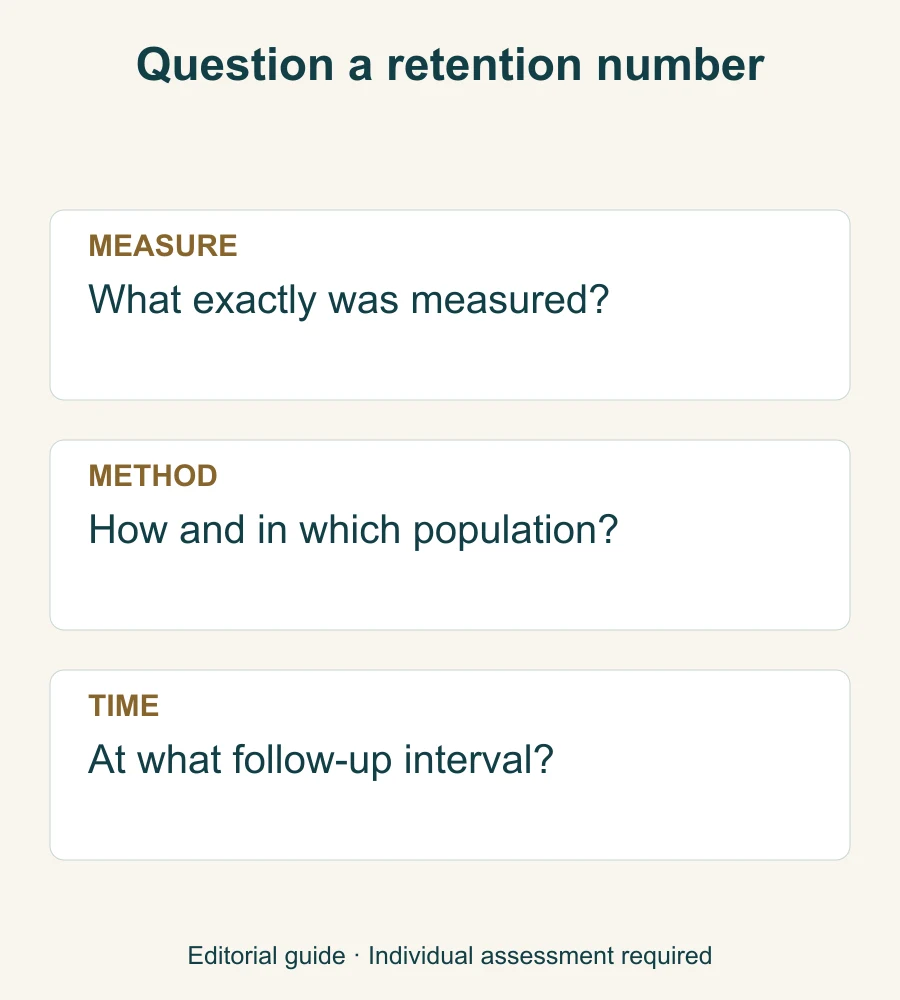
Questions that make retention claims easier to evaluate
The questions below distinguish an image, a measurement and a decision about further care. They are a discussion aid, not a method for measuring your result at home.
| Evidence or claim | Question to ask | Limit to remember |
|---|---|---|
| One follow-up photograph | When was it taken and what treatment is documented? | Appearance at one visit is not a retention rate |
| A retention percentage | What was measured, how and at which interval? | A general number is not an individual prediction |
| A published study | Does its population and treatment match this discussion? | Results cannot automatically transfer to another person |
| A change in appearance | How will the treating team assess it? | Photographs alone cannot diagnose its cause |
| Further treatment | What findings and alternatives inform that decision? | A touch-up is not automatically necessary or guaranteed |
Agree what follow-up is meant to establish
Ask the surgeon what they will assess at each planned review and how it distinguishes an early observation from a later evaluation. Request an explanation of the uncertainty rather than a date at which every patient is expected to have a final result. The one-month label in this gallery cannot set your follow-up schedule.
You can also ask how the team wants photographs documented if it uses them in follow-up. Consistent recording can make a discussion clearer, but even standardized images are not automatically a measured volume study. Ask which conclusions can reasonably be drawn and which need another examination or more information. Do not change a photograph to make a comparison appear more favorable.
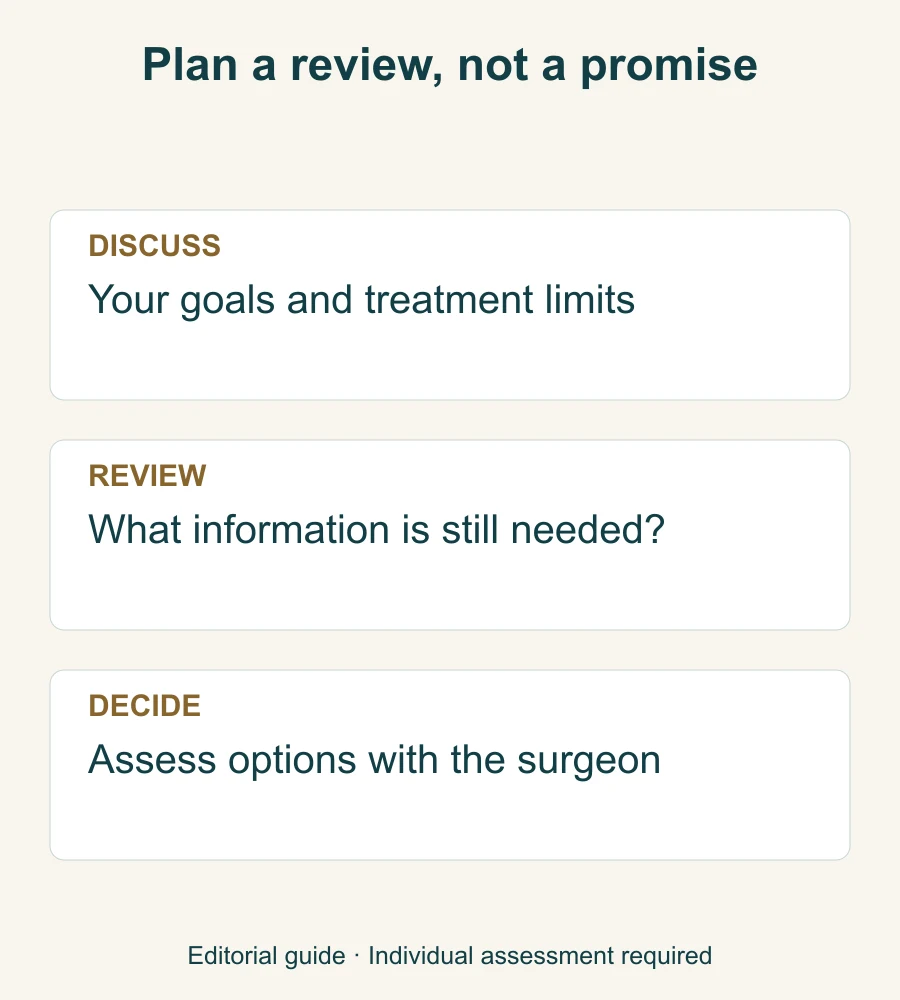
Discuss limits, risks and alternatives before deciding
Using your own fat does not mean that treatment is free of risk. DI's published procedure information lists possible complications including bleeding, infection, inflammation, bruising, swelling and pain. Ask the surgeon about risks relevant to the proposed sites, the donor area and your individual circumstances, as well as alternatives and the option of not proceeding.
If later treatment is being discussed, ask what concern it is intended to address and why the team recommends that approach at that stage. Clarify its limitations, risks and costs. Do not assume that a change in appearance means graft failure, that another procedure is necessary or that a second treatment will produce a guaranteed result.
Prepare a specific consultation question list
Bring questions about the proposed treatment areas, the purpose and limits of fat grafting, how progress will be reviewed and who to contact with concerns. Confirm appointment availability and language arrangements before travelling to Seoul. An online inquiry can help arrange a discussion, but cannot establish suitability, a personalized recovery schedule or travel clearance.
Request an individual written estimate identifying the actual scope and services, applicable VAT and any separate follow-up or further-treatment charges. Keep the difference between a public example and your own plan clear. This editorial guide does not evaluate the patient in case 031 or prescribe aftercare. It cannot replace an individual consultation.
Information that helps us prepare a useful reply
When contacting the clinic, tell us the procedure or concern you would like to discuss, your preferred language, whether you have had related treatment before and the dates you could visit Seoul. International patients may also wish to include their arrival and departure dates so the team can explain when an in-person consultation and follow-up may fit into the trip.
Please do not send passport numbers, payment information or complete medical records through an initial website inquiry. A coordinator can explain which health information or photographs are relevant and how they should be shared. Online guidance is preliminary; suitability, technique and the final treatment plan are determined only after an appropriate medical assessment.