
Prepare a history, not a diagnosis from a photograph
How can you prepare for facial fat-grafting consultation when you do not remember every previous treatment? Record what you know, separate documented facts from recollection, and ask the original provider for missing records when possible. Tell the clinician what remains unknown. You do not need to identify an injected material from appearance, and an online photograph cannot establish the appropriate next treatment.
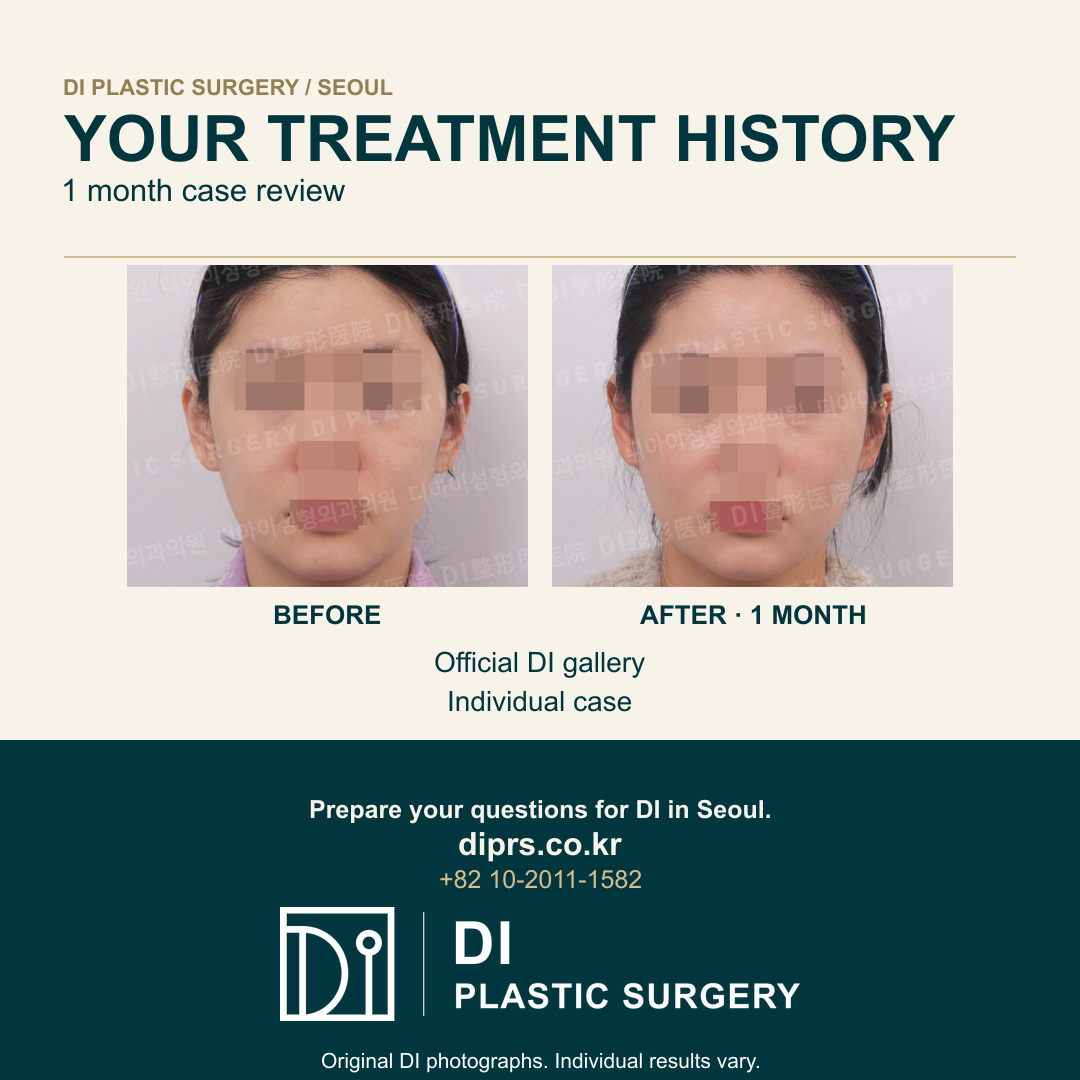
The official DI gallery describes case 034 as “Full face · Fat grafting”, photographed one month after surgery. That label does not identify a previous filler or surgery history, treatment material, transferred volume or retention percentage. Nothing in this guide attributes such a history to the person shown. The original case illustrates only its stated procedure label and follow-up; individual results vary.
Make a timeline with facts you can trace
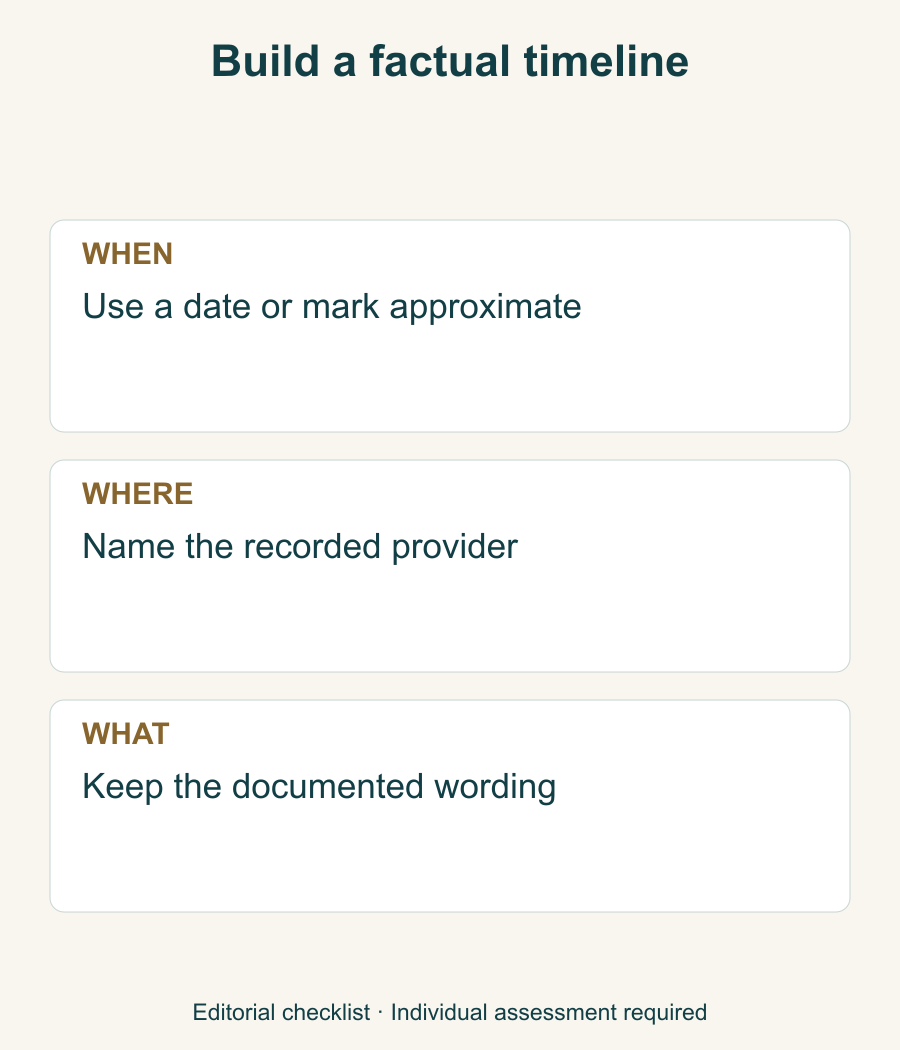
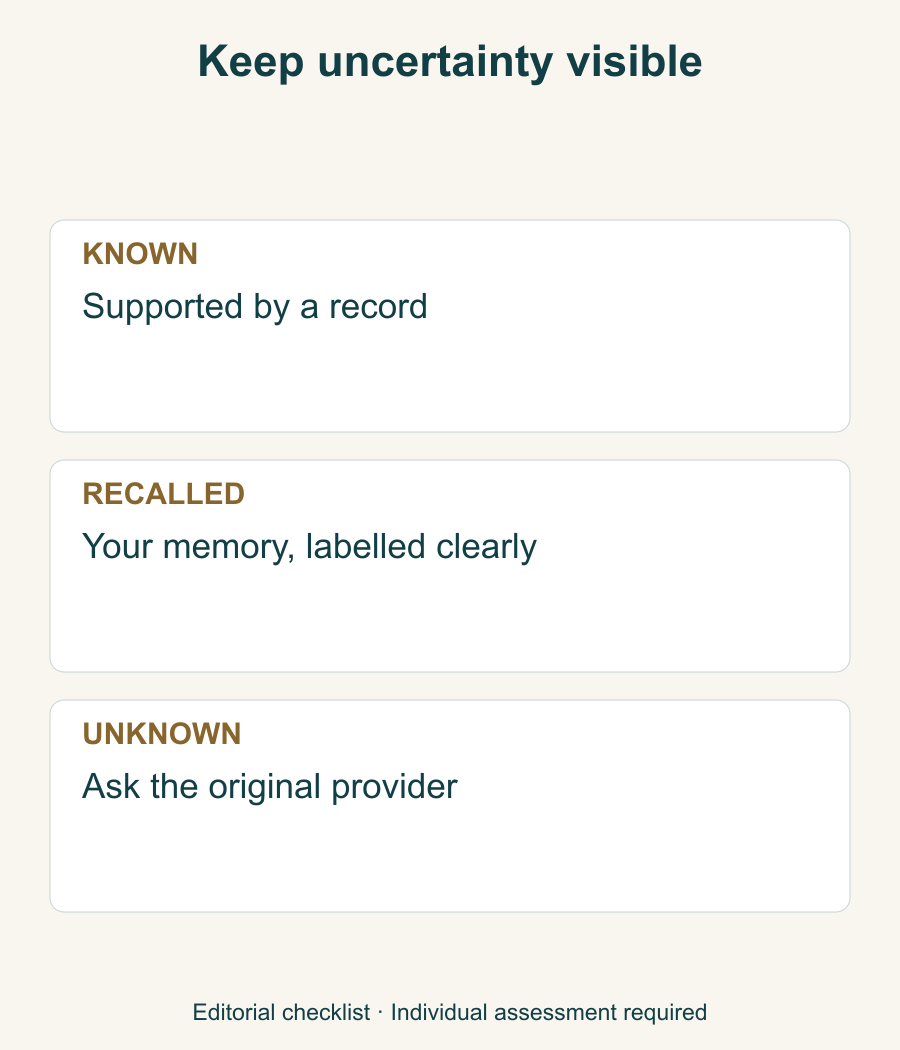
Start with the approximate order of previous facial procedures, even if exact dates are missing. Record the clinic or clinician, the area treated and the name used at the time. When a record supplies a date or product name, note that it came from the record. If the date is approximate or the name is something you remember, label it accordingly instead of converting it into a confirmed fact.
A useful entry might read, “Around 2022; cheek area; clinic name known; injection name uncertain; record requested.” This example is a way to record uncertainty, not a diagnosis or advice to undergo another treatment. Include relevant previous surgery and any available operation summary as well as injection records. Let the assessing clinician decide which documents matter to the current discussion.
Use a record worksheet instead of guessing missing details
The worksheet below helps organize a request to the previous provider and a consultation with the new team. Do not manufacture a product name, quantity or exact treatment site to complete every cell. Keep “unknown”, “approximate” and “record requested” visible. A photograph, receipt and treatment record may contain different kinds of information; identify the type of document rather than treating them as interchangeable.
| Field | What you can enter | How to mark uncertainty |
|---|---|---|
| Date or sequence | Documented date or approximate year | Use “approximate” when the exact date is unknown |
| Provider | Clinic or clinician shown on your record | State if the provider cannot be identified |
| Area and procedure | The wording in the treatment record | Keep your recollection separate from the documented wording |
| Product or material | Only the name actually documented | Write “unknown”; do not infer from appearance |
| Available records | Treatment record, operation summary or other document | Note what you have requested and what is still missing |
| Questions since treatment | Your own concerns or changes to discuss | Describe them without assigning a cause |
Ask for missing records through the original provider
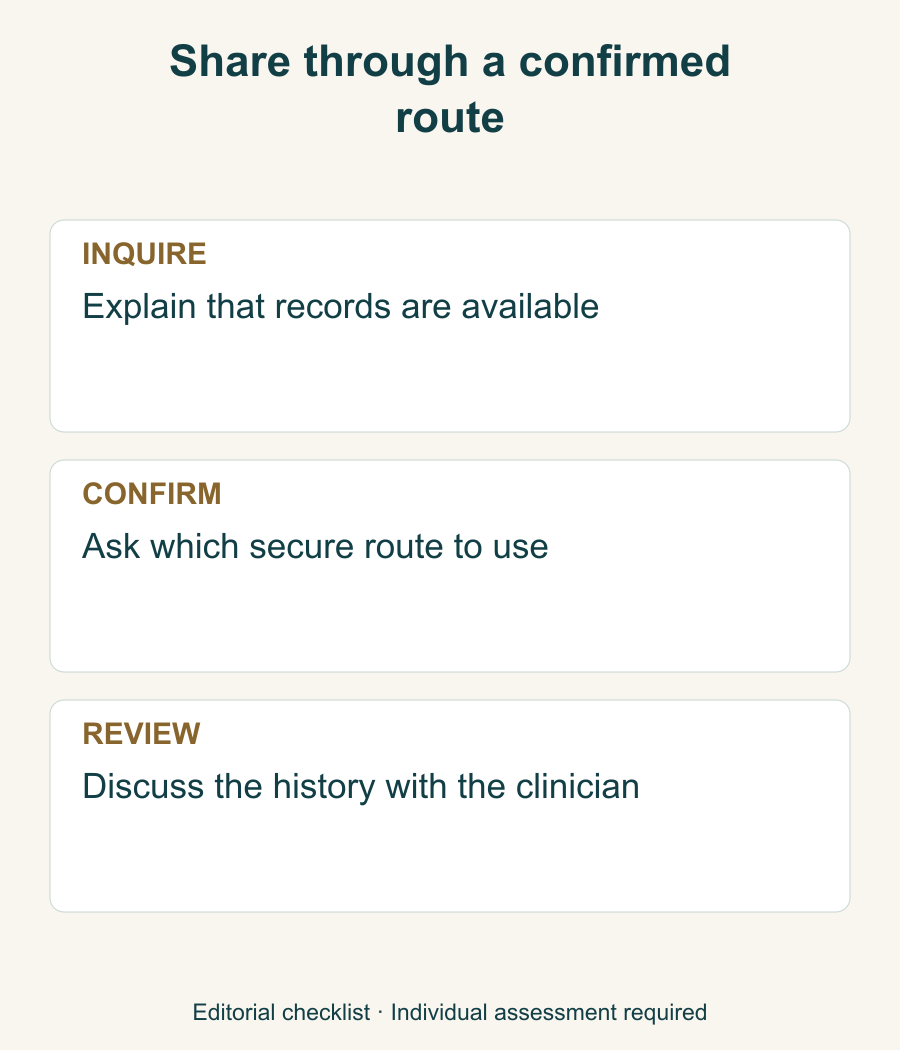
Contact the original clinic using an established route and ask what record-access procedure applies. Identify the treatment period and the records you are seeking as accurately as you can. Ask how they verify identity and deliver documents securely; do not place passport details or full medical records in a public comment or an unsolicited message. Access requirements, fees and timing need confirmation with that provider.
If the original provider cannot supply a record, keep that limitation in the timeline. Ask the assessing clinician what can reasonably be discussed now and what requires additional information or an examination. Do not obtain an internet “identification” of filler from a facial image or use a guessed brand as the basis for treatment. This article does not advise dissolving, removing or replacing anything.
The FDA's patient information distinguishes filler products and advises discussing the specific patient labeling with a health care provider. That is a reason to seek reliable records, not to identify an earlier material from a photograph. This US source does not establish Korean product authorization or which product, if any, DI or a previous clinic used.
Bring a clear question about the current proposal
Tell the clinician your present concern separately from the treatment history. Ask how the documented and uncertain parts of that history affect the assessment, what options may be considered and what remains unresolved. Previous treatment does not by itself answer whether fat grafting, another approach, waiting or no treatment is appropriate. That requires an individual clinical evaluation.
DI's fat-grafting page and the linked consultation resources provide background for a conversation. The source case's “full face” label is not a list of treatment areas suitable for you. Ask the team to explain the proposed recipient areas and any donor-site questions in your actual plan, but keep those questions distinct from this article's purpose: organizing existing records without inventing a prior history or recommending a procedure.
Confirm the sharing route before sending sensitive information
An initial inquiry can state your procedure interest, preferred language, possible visit dates and the fact that you have previous treatment records. Ask the clinic which documents it wants and how to submit them securely. Confirm the intended recipient and follow the clinic's instructions. A record uploaded or sent somewhere has not necessarily been reviewed by a surgeon.
For translated records, retain the original alongside any translation and identify uncertain terms. Ask which language arrangements are available rather than assuming a multilingual website guarantees interpretation. Do not edit a record to make names or dates look certain. Keep a copy of what you sent and the administrative confirmation, while recognizing that delivery confirmation and medical assessment are separate steps.
A practical checklist for the consultation
Before the visit, check that you have a dated or approximate timeline, a list of available and missing records, your current concerns and questions for the clinician. Ask who will assess you, whether any consultation or record-review charge applies, and what further steps may be necessary before a treatment proposal can be explained. A first message does not confirm an appointment or quotation.
After the conversation, keep a note of what has been assessed, what is still unknown and what the team has asked you to obtain. The one-month photograph in case 034 does not resolve those uncertainties or predict your result. This is an editorial records-preparation guide, not a medical review, a diagnosis of previous injections or a treatment-removal protocol.
Information that helps us prepare a useful reply
When contacting the clinic, tell us the procedure or concern you would like to discuss, your preferred language, whether you have had related treatment before and the dates you could visit Seoul. International patients may also wish to include their arrival and departure dates so the team can explain when an in-person consultation and follow-up may fit into the trip.
Please do not send passport numbers, payment information or complete medical records through an initial website inquiry. A coordinator can explain which health information or photographs are relevant and how they should be shared. Online guidance is preliminary; suitability, technique and the final treatment plan are determined only after an appropriate medical assessment.