
What this patient reel shows
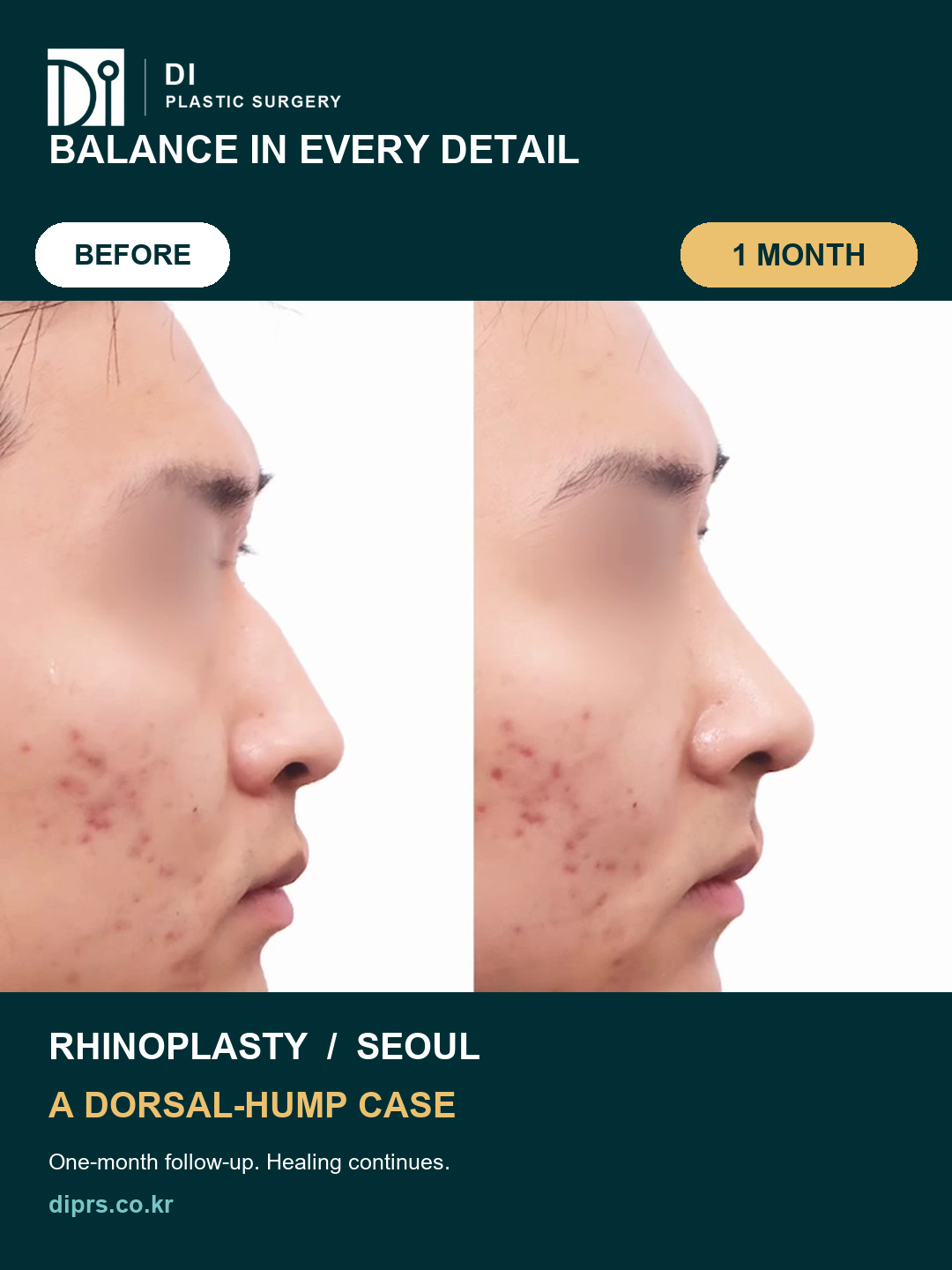
The English reel uses the original DI Plastic Surgery patient footage. It begins with a side-by-side profile comparison, then shows the preoperative view and a view labeled one month after surgery. The closing comparison brings the two moments together. The patient’s nose and face have not been synthetically reshaped for this English edition; only the branding, stage labels and safety text were added.
This is one person’s early follow-up, not a promise about the degree of change another patient can expect. Photographs and video can differ in angle, distance and lighting. They do not reveal the patient’s full medical history, breathing function, technique or longer-term healing. The one-month appearance should not be presented as the final surgical result.
What to ask about a dorsal hump
A dorsal hump is a raised contour along the nasal bridge. A useful consultation considers the entire nose and facial proportions, not the bridge in isolation. Ask the surgeon how the bridge, tip and breathing function will be assessed and which changes are realistic for your anatomy. Prior trauma, earlier operations, skin and cartilage conditions may affect the discussion.
This reel does not establish exactly which technique was used for the featured patient. A surgeon may discuss different approaches and their limitations after an individual examination. If you are considering surgery in Seoul, review DI’s dorsal hump reduction information and bring your questions to an in-person consultation rather than choosing a method from a short video.
Recovery is more than a one-month image
Rhinoplasty healing changes over time. Swelling and temporary differences in the nasal contour can remain at an early follow-up, and the recovery plan varies by procedure and patient. Ask your treating team when you should return for review, what symptoms need prompt medical attention, and how travel dates should be planned around follow-up care.
All operations involve risks. The NHS lists possible rhinoplasty complications including bleeding, infection and breathing difficulty. Your surgeon should explain the risks and alternatives that apply to you, alongside anesthesia and aftercare arrangements. A one-month reel is a conversation starter, not a substitute for informed consent or medical advice.
Information that helps us prepare a useful reply
When contacting the clinic, tell us the procedure or concern you would like to discuss, your preferred language, whether you have had related treatment before and the dates you could visit Seoul. International patients may also wish to include their arrival and departure dates so the team can explain when an in-person consultation and follow-up may fit into the trip.
Please do not send passport numbers, payment information or complete medical records through an initial website inquiry. A coordinator can explain which health information or photographs are relevant and how they should be shared. Online guidance is preliminary; suitability, technique and the final treatment plan are determined only after an appropriate medical assessment.