
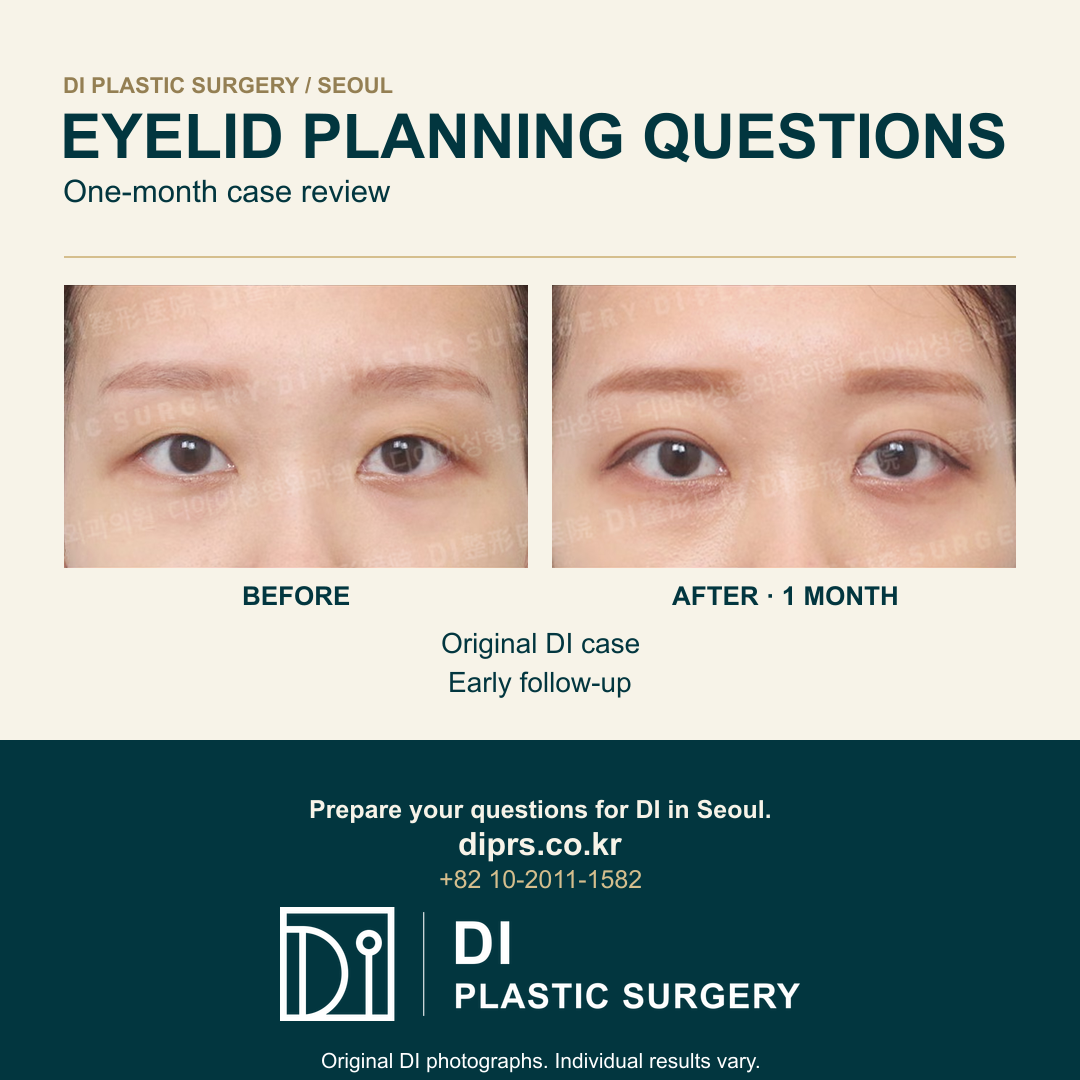
What the official case documents
The official DI gallery lists three procedures for case 009: incisional double-eyelid surgery, ptosis correction and upper-eyelid fat repositioning. The photographs are labelled one month after surgery. This is a combined-treatment comparison; it cannot identify how much each procedure contributed to the appearance.
Only black presentation bands were cropped from a derivative. The complete clinical region, original privacy masking and photographic watermark remain. No anatomy or outcome was generated or retouched. Individual results vary.
Ask what each part of the plan is intended to address
A useful consultation explains each proposed component in plain language. Ask what concern is being assessed, which part of the plan relates to it, and what would change if a component were not performed. The gallery label is not an examination of your eyelids and cannot establish that you need the same combination.
Distinguish the photograph from a functional assessment
The image shows a front-view comparison of one documented case. It cannot establish a diagnosis, measured eyelid movement, symptoms, the exact operative method or a suitable crease design for another visitor. Ask which examination findings and previous records the surgeon needs to explain your options.
Early follow-up and questions about risk
Early recovery can involve swelling, bruising, irritation or dryness. Follow the treating team’s own eye-care instructions and ask when activity and follow-up should be discussed. The one-month photograph is not a deadline for healing or a final-result guarantee.
Discuss relevant risks, including dry eyes, difficulty closing the eyes, infection, scarring and possible revision. ASPS also identifies potential vision changes among eyelid-surgery risks. Ask the surgeon to explain the risks and contact instructions relevant to your proposed operation.
Connect the case with a practical Seoul consultation
If you are researching plastic surgery in Seoul or plastic surgery in Gangnam, use this case to organize questions rather than choose a result from a photograph. Confirm the named surgeon, clinic location, appointment availability and preferred consultation language before arranging travel. A translated website does not guarantee a clinician or interpreter speaking that language.
Request a current written estimate for the plan that is actually assessed. Ask what is included and whether materials, anaesthesia, tests, follow-up and VAT are addressed. This article does not supply a case-specific price or confirm an appointment.
A short checklist to take to the clinic
Keep your notes focused on three things: what the official case documents, what the photographs leave unknown and what your own assessment needs to establish. Ask for time to discuss alternatives, limitations and follow-up before deciding.
Information that helps us prepare a useful reply
When contacting the clinic, tell us the procedure or concern you would like to discuss, your preferred language, whether you have had related treatment before and the dates you could visit Seoul. International patients may also wish to include their arrival and departure dates so the team can explain when an in-person consultation and follow-up may fit into the trip.
Please do not send passport numbers, payment information or complete medical records through an initial website inquiry. A coordinator can explain which health information or photographs are relevant and how they should be shared. Online guidance is preliminary; suitability, technique and the final treatment plan are determined only after an appropriate medical assessment.