
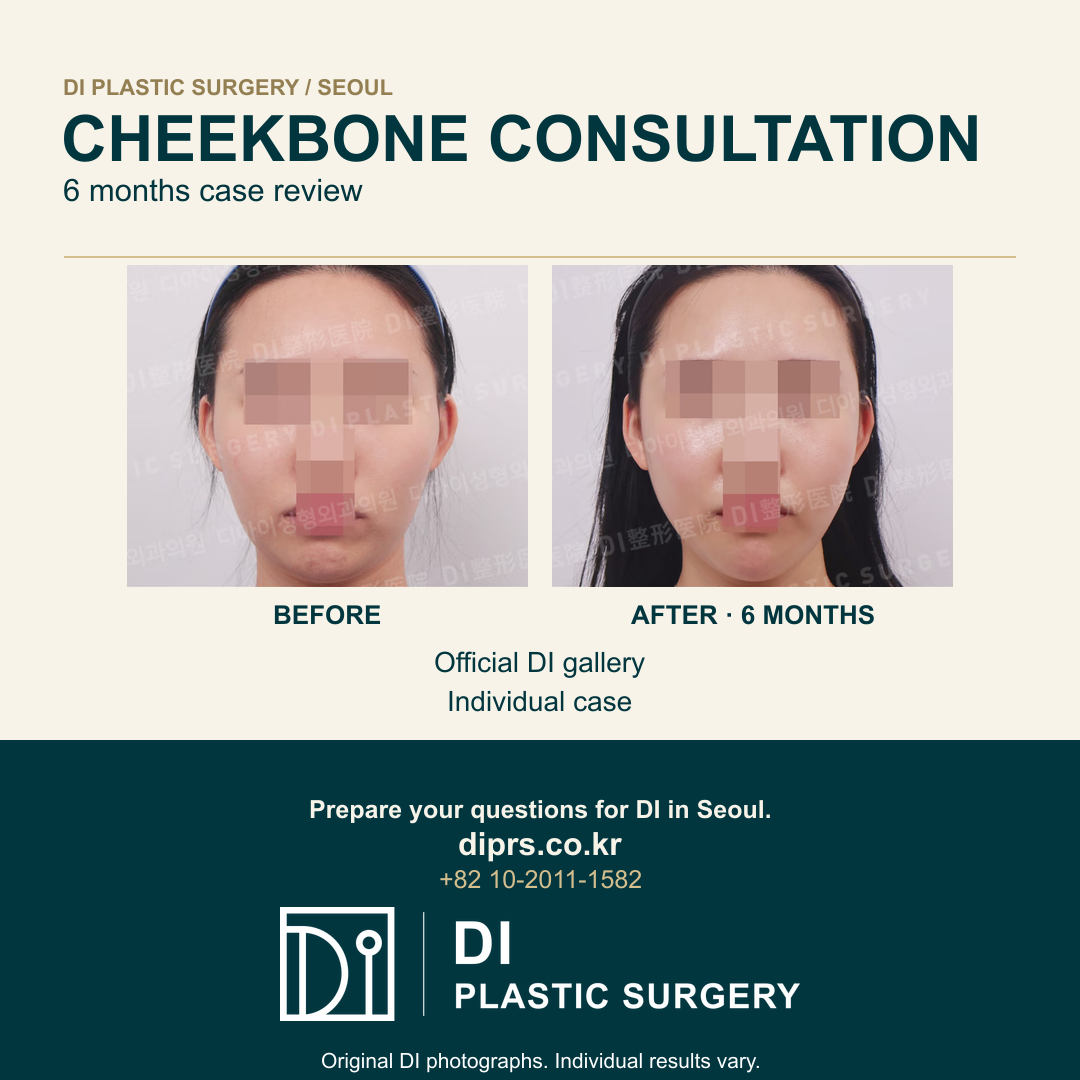
What this six-month case can—and cannot—answer
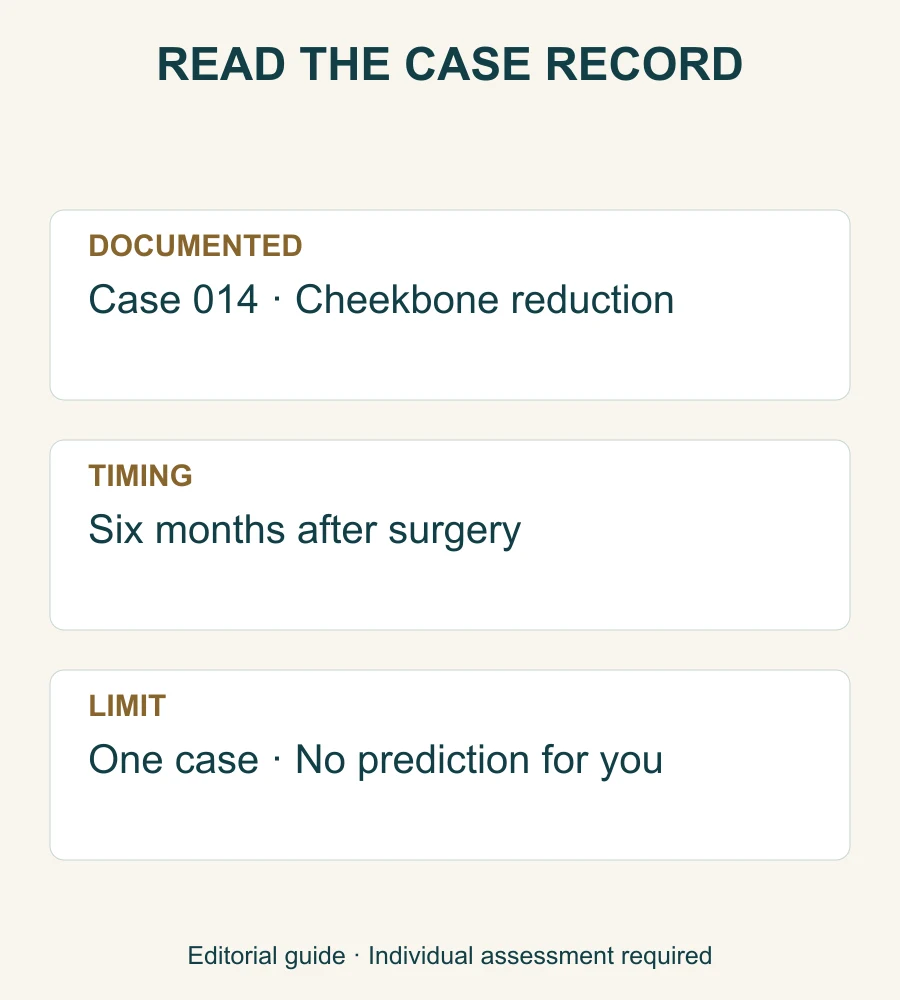
DI’s official gallery identifies case 014 as cheekbone reduction and labels the follow-up six months after surgery. It provides front and angled views of this individual case. The cover here retains the original clinical photographs, masking and watermark. It is a record to discuss, rather than a prediction of how another face will look.
The gallery does not disclose this person’s operative report, measurements, reasons for choosing surgery or day-by-day recovery. A six-month label does not establish a universal healing deadline. Before comparing photographs, identify your own concern and ask the surgeon what an examination can establish and what remains uncertain.
Separate the bony contour from other questions
DI’s procedure page describes assessment of cheekbone prominence, facial proportions and surrounding tissues. Its explanation includes bone repositioning and fixation. That description explains the published service; it does not prove which exact method, extent or fixation was used in case 014.
A useful consultation distinguishes the area you want assessed from the treatment proposed for it. Ask the surgeon to show which structure the plan addresses, how the front and angled views contribute, and whether imaging is appropriate for your situation. Photographs alone cannot determine whether a concern arises from bone, soft tissue, posture or another factor.
| Question | What to ask the clinician |
|---|---|
| Area of concern | Which part of my facial contour are we assessing? |
| Proposed change | What is the intended scope and what will remain unchanged? |
| Evidence needed | Do you need an examination, imaging or previous records? |
| Alternatives | What other options, including no surgery, should I consider? |
Ask for an understandable plan, including its limits
Ask the clinician to explain any proposed operation in plain language, including the incision, the planned bone work, fixation, anesthesia and the people responsible for your care. If an additional treatment is discussed, ask for its separate purpose. Do not assume that combining more procedures necessarily gives a better outcome.
The official DI information discusses fixation and possible complications. Ask specifically how risks such as bleeding, infection, discomfort, altered sensation, contour concerns or a need for further care relate to your proposed operation. The photograph cannot show the probability of those risks or replace an individualized consent discussion. If something is unclear, request clarification before deciding.

Use consistent views without treating the image as a measurement
Front and angled photographs may help you describe what you are noticing, but framing, expression, lighting and timing can affect a comparison. The source images should remain intact, including their privacy masking. We have not calculated a reduction in millimetres, an improvement percentage or a predicted facial width from this case.
When you meet the surgeon, explain the change you hope to discuss without asking for another person’s exact face. Ask what can realistically be assessed, what cannot be promised and how follow-up will evaluate your individual progress. Individual results vary.
Plan the visit around the clinical follow-up plan
For a visit to Seoul, obtain the clinic’s proposed follow-up arrangements before making inflexible travel commitments. Ask which appointments require attendance, how care is coordinated after you leave, and who to contact about an unexpected change. A gallery interval of six months is not a recommendation to stay in Korea for six months, or permission to leave after a fixed number of days.
Confirm the consultation fee and written estimate separately from travel and accommodation costs. Clarify what the estimate includes, whether proposed additions have separate charges, and how changes are handled. DI’s location is 12F, Seosan Building, 441 Gangnam-daero, Seocho-gu, in the Gangnam Station area. Verify your appointment and directions with the clinic.

Bring a short decision checklist
Prepare a concise description of the concern, your previous procedures if any, questions about alternatives, and practical limits on travel or follow-up. Use the clinic’s approved consultation channel to ask what records are appropriate; do not post private medical documents publicly.
Before proceeding, you should understand the proposed purpose, limitations, relevant risks, estimate and follow-up responsibilities. It is reasonable to take time to decide or not proceed. This article is an editorial case-reading guide based on published sources; it is not a new medical review, a personal diagnosis or an endorsement of a particular operation for you.
Information that helps us prepare a useful reply
When contacting the clinic, tell us the procedure or concern you would like to discuss, your preferred language, whether you have had related treatment before and the dates you could visit Seoul. International patients may also wish to include their arrival and departure dates so the team can explain when an in-person consultation and follow-up may fit into the trip.
Please do not send passport numbers, payment information or complete medical records through an initial website inquiry. A coordinator can explain which health information or photographs are relevant and how they should be shared. Online guidance is preliminary; suitability, technique and the final treatment plan are determined only after an appropriate medical assessment.