
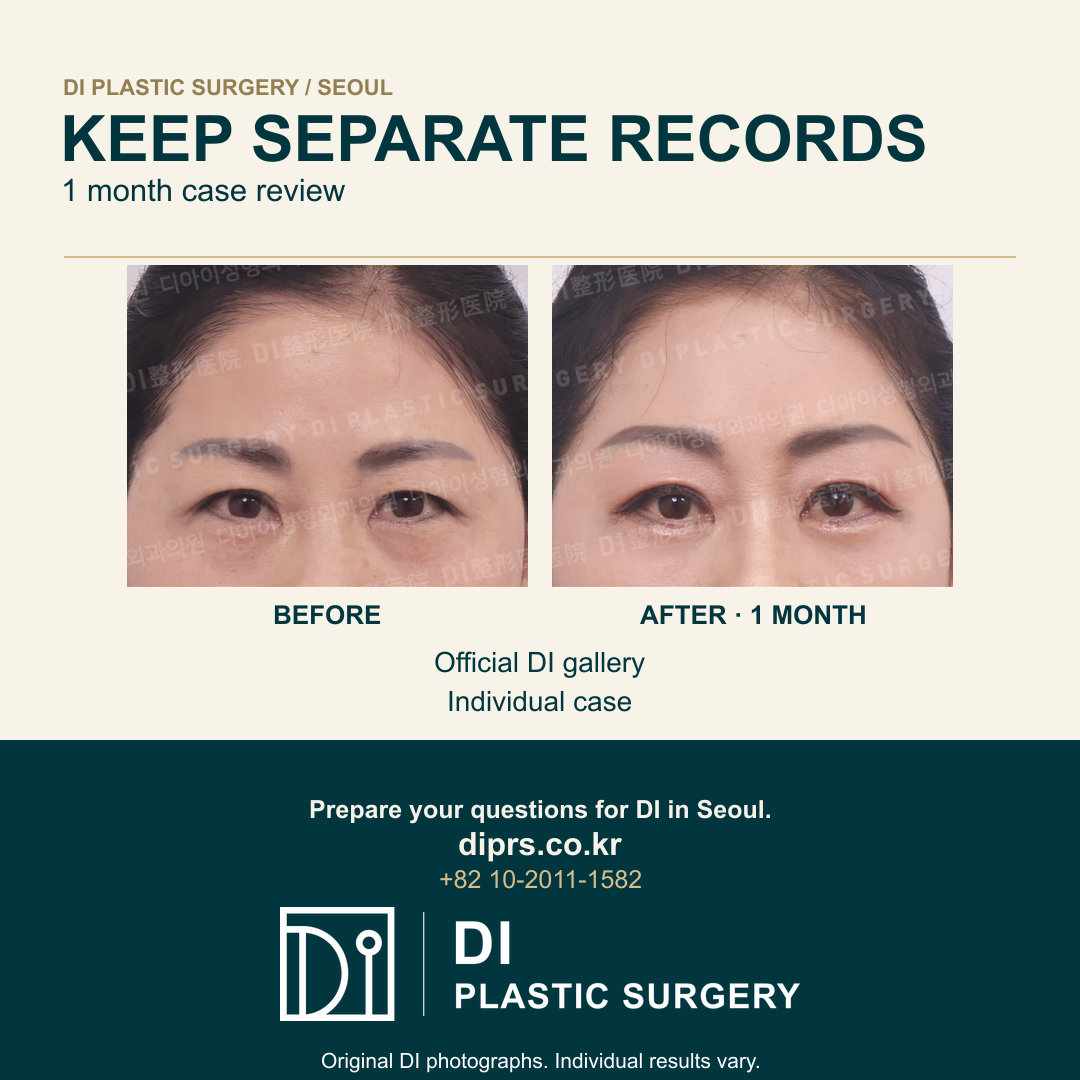
Keep the full combined-procedure label
The official case 036 label names both forehead lift and lower blepharoplasty and gives a one-month interval. Keep both procedures attached to the comparison. The image is not evidence that lower eyelid surgery alone produced the visible change, nor that a brow lift would produce the same appearance on another face. Individual results vary.
This distinction matters when preparing a consultation. A patient may have a question about brow position and a separate question about the lower eyelid. Ask what each proposed procedure is intended to address, what it cannot address and whether combining or staging procedures changes the assessment, care or follow-up plan.
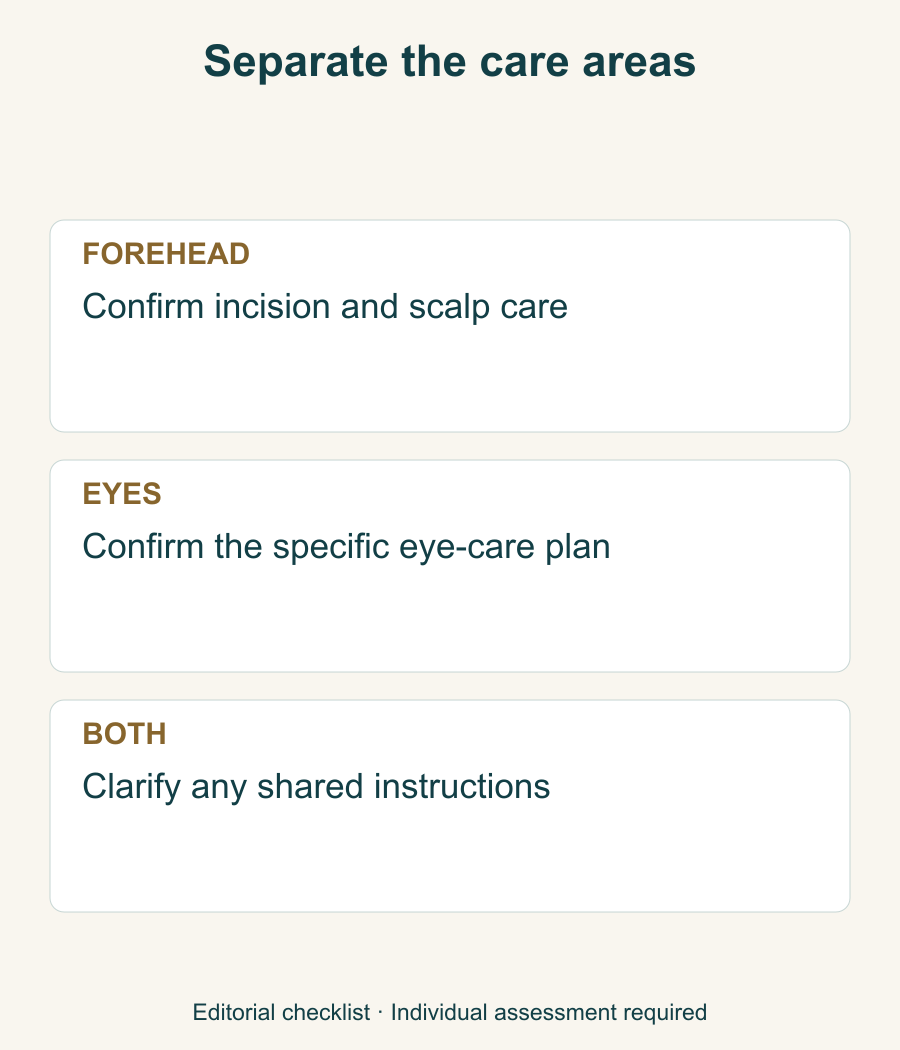
Why a single compress instruction can be misleading
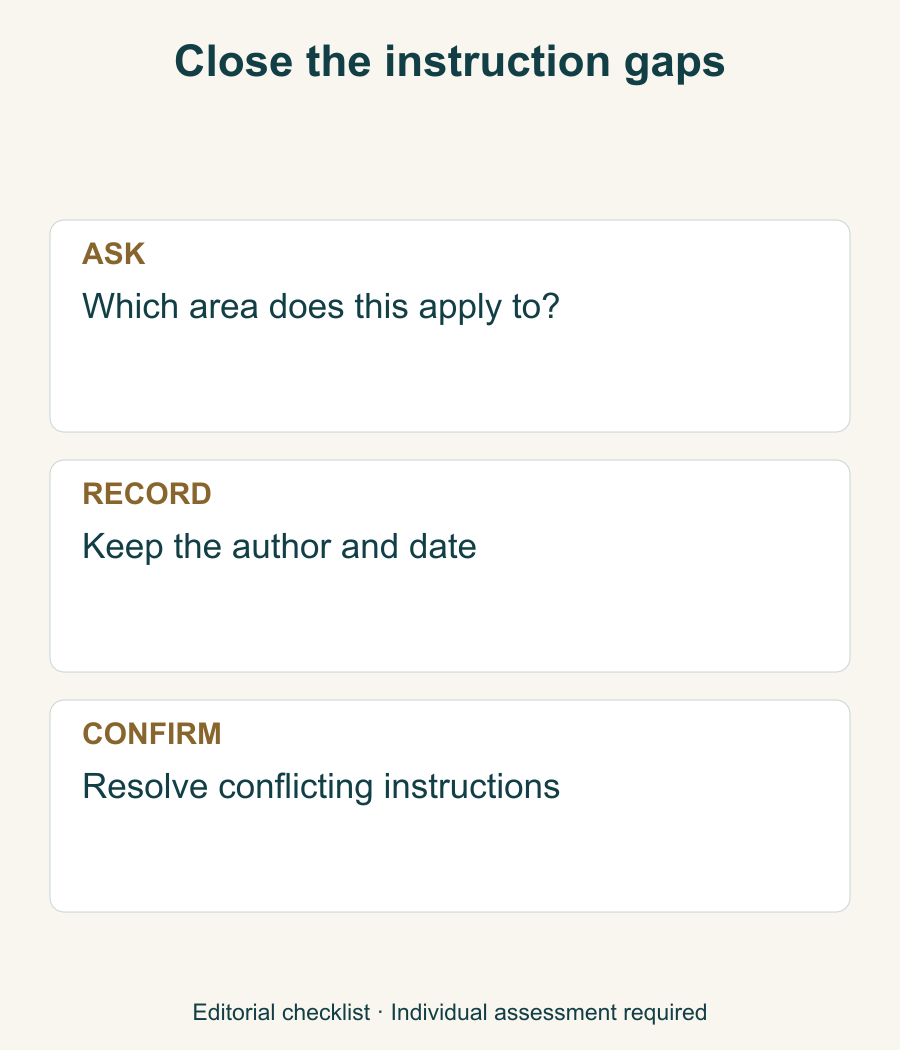
The ASPS brow-lift recovery page advises against ice or heat on the operated area, while its eyelid-recovery page describes cold compresses among measures that may be used. Those are procedure-specific summaries, not a combined prescription. They illustrate why a general instruction such as “apply this to the face” needs clarification after more than one procedure.
Ask the treating surgeon to identify the permitted treatment area, method and restrictions in your own written plan. Do not resolve different internet instructions by choosing whichever sounds easier, applying an eye instruction to the forehead, or extending a recommendation to both areas. This article does not prescribe compresses or wound care.
Build a two-column care checklist
For the forehead column, ask about the incision, dressing, scalp care and activity restrictions that apply. For the eye column, ask about eye care, any prescribed products, symptoms to report and the review schedule. Place a third line below both columns for medication instructions that the clinician says apply to the overall plan.
For each instruction, record who gave it and the date. Ask what to do if two written documents seem inconsistent. Keep a clinician’s instruction separate from a general website explanation or advice from another patient. A shared operation date does not mean every treatment area reaches the same recovery stage together.
Track observations without assigning a cause
At follow-up, explain what changed, where and when. For an eye concern, describe it directly rather than deciding from a photograph whether it is swelling, dry eye or a lid-position issue. The ASPS safety list includes dryness, difficulty closing the eyes and lower-eyelid position changes among potential risks; it does not diagnose the individual case.
Ask in advance how the team wants a new concern reported and which changes require prompt assessment or urgent care. Do not wait for a scheduled social-media reply to resolve a time-sensitive medical issue. Protect your privacy by using the clinic’s agreed private contact route and sharing only what the clinical team requests.
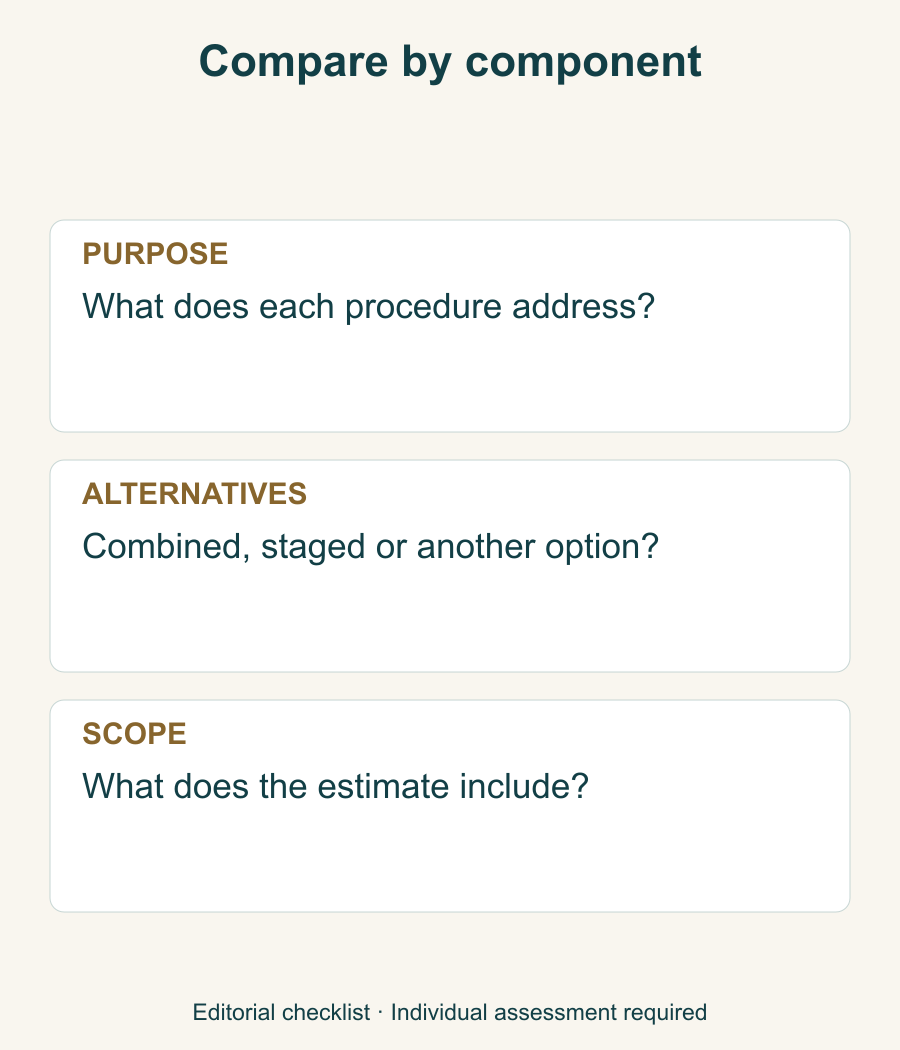
Compare plans and quotations by component
A useful comparison separates the intended purpose of each procedure, alternatives, anesthesia arrangements, expected limitations, follow-up responsibility and what is included in the estimate. It should not simply compare a combined photograph with a single operation’s advertised amount. Ask the clinician to explain which parts of the plan are essential, optional or not indicated for you.
DI’s dated price schedule lists individual procedures and separate add-ons or services. Confirm the current quotation rather than adding website figures into a presumed all-inclusive package. Also confirm appointment fees, language arrangements, review timing and any travel-related handover before making commitments.
What the evidence can and cannot establish
The DI gallery establishes the case label and recorded interval. The ASPS pages provide general information about distinct procedures, recovery questions and risks. Neither source establishes a personal indication or a universal aftercare schedule for combined surgery.
This editorial worksheet was prepared on 29 October 2026 and does not claim a new medical review. Take the complete case context to an individual consultation, and obtain a plan that identifies both treatment areas, their separate care instructions and the person responsible for follow-up.
Information that helps us prepare a useful reply
When contacting the clinic, tell us the procedure or concern you would like to discuss, your preferred language, whether you have had related treatment before and the dates you could visit Seoul. International patients may also wish to include their arrival and departure dates so the team can explain when an in-person consultation and follow-up may fit into the trip.
Please do not send passport numbers, payment information or complete medical records through an initial website inquiry. A coordinator can explain which health information or photographs are relevant and how they should be shared. Online guidance is preliminary; suitability, technique and the final treatment plan are determined only after an appropriate medical assessment.