
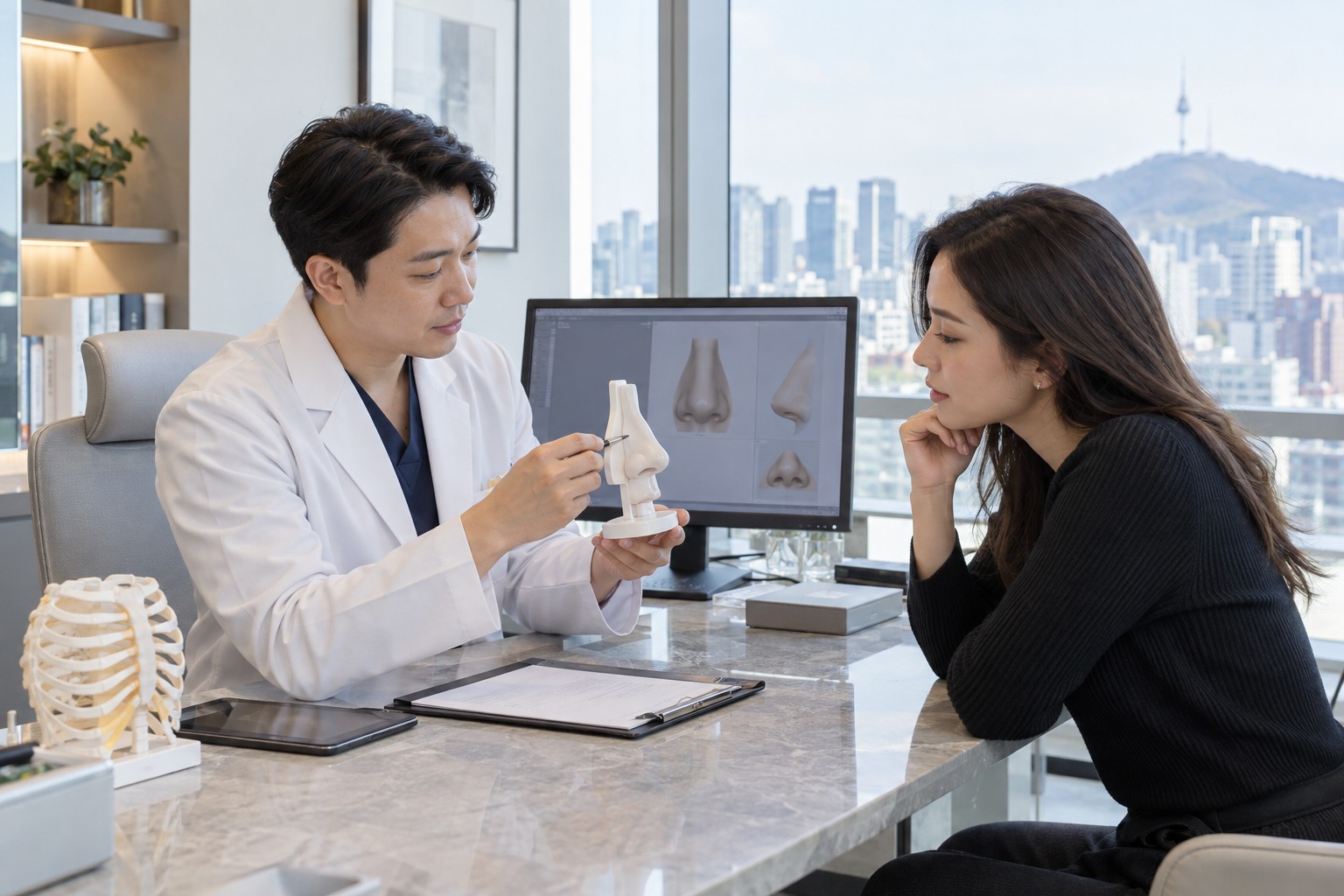
Why might a surgeon discuss your own rib cartilage?
Autologous means tissue taken from your own body. In rhinoplasty, a surgeon may consider rib cartilage when the nose needs structural support or when septal or ear cartilage is limited. It can be discussed for a first operation, a revision or a reconstructive plan. That does not mean every patient needs a rib graft: the amount and quality of available tissue, the shape and function of the nose, previous procedures and the patient’s goals all matter.
DI Plastic Surgery’s published procedure page describes its approach to harvesting and shaping the patient’s rib cartilage. It also explains that cartilage may be placed in different parts of the nose according to anatomy. This article helps you prepare questions; it cannot determine which material, technique or result is appropriate for you.
A consultation should compare the alternatives
Ask what problem the graft is intended to solve. Is the discussion about the bridge, tip, internal support, breathing or a combination? The surgeon should explain why septal cartilage, ear cartilage, a different material or no operation may or may not be suitable. A revision consultation also needs to account for prior grafts or implants and changes caused by earlier surgery.
Bring previous operative reports and imaging if available, plus a clear account of breathing symptoms, injuries and the changes you hope to discuss. DI describes assessing nasal bone and cartilage with examination and, where appropriate, 3D-CT. Imaging informs a plan; it does not guarantee a particular appearance. The final recommendation follows an in-person medical assessment.
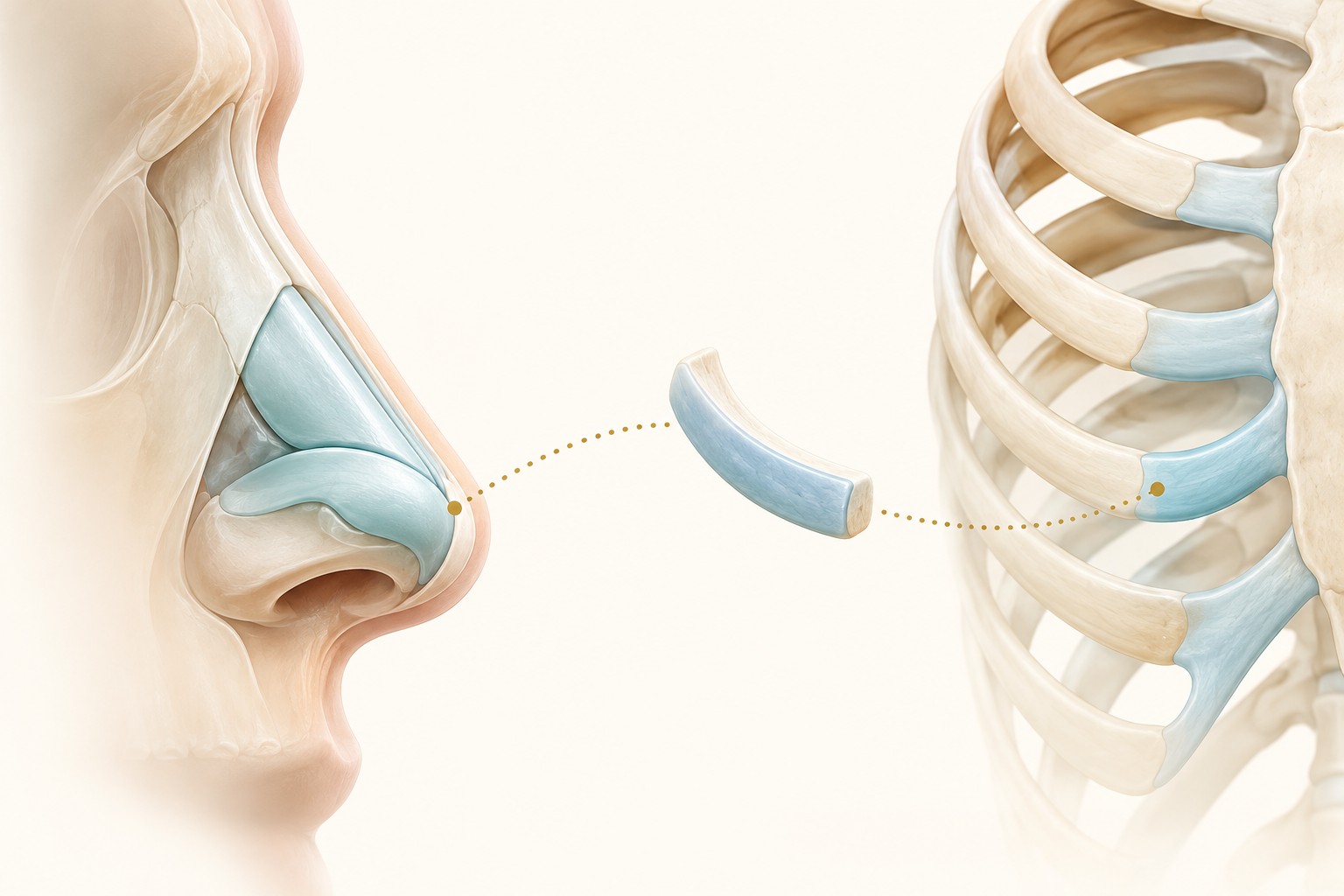
Remember that a donor site is part of the operation
Taking cartilage from the chest adds a separate surgical site. Ask where the incision would be, what scar and discomfort to expect, how that area will be cared for and whether any individual health factor changes the plan. The surgeon should explain possible complications at both the nose and donor site, alongside anesthesia-related risks and what the team would do if a problem occurs.
The DI procedure page lists bleeding, infection, inflammation, bruising, swelling and pain among possible issues and notes that outcomes vary. General rhinoplasty information from the NHS also describes the possibility of breathing difficulty, nosebleeds and anesthesia-related complications. A balanced conversation includes the limits of surgery, not just hoped-for changes.
Plan the Seoul stay around assessment and follow-up
For patients travelling to Korea, the first online inquiry can cover the concern, previous operations, preferred language and tentative travel dates. It is not a confirmed surgical plan or price. Ask which in-person examinations are needed, who provides anesthesia, whether an accompanying adult is required, and when the clinic expects to review the nose and chest donor site after surgery.
DI’s published surgery information mentions follow-up visits, but your actual schedule can change with the procedure and healing. Keep accommodation and return travel flexible until your treating team gives individualized guidance. A splint removal or early photograph is not a final result; swelling can continue to change the appearance over time.

Questions to take to your rhinoplasty consultation
Ask: What finding makes rib cartilage worth considering in my case? What alternatives are available, including postponing surgery? Where would the graft come from and where might it be used? What are the likely scars, limitations, donor-site effects and complications? How will breathing function be assessed? Who will provide anesthesia and postoperative support?
Also ask for a written explanation of the planned follow-up, warning signs, travel clearance process and the components of the quotation. Cost can change with complexity, revision status, anesthesia and the individual plan. Compare a complete medical plan rather than relying on a headline price or an online image.
Make a decision based on your own examination
Autologous rib cartilage can be one option for nasal support, but it is not a universal upgrade. The appropriate choice may be another graft, a different procedure, a later date or no operation. Review the surgeon’s reasoning and take time to ask what a realistic result and recovery would mean for your anatomy and circumstances.
DI Plastic Surgery is in Gangnam, Seoul. You can review its detailed procedure information and medical-team profile before contacting the clinic. No website article, generated illustration or other patient’s experience can replace an individual consultation with the treating surgeon.
Information that helps us prepare a useful reply
When contacting the clinic, tell us the procedure or concern you would like to discuss, your preferred language, whether you have had related treatment before and the dates you could visit Seoul. International patients may also wish to include their arrival and departure dates so the team can explain when an in-person consultation and follow-up may fit into the trip.
Please do not send passport numbers, payment information or complete medical records through an initial website inquiry. A coordinator can explain which health information or photographs are relevant and how they should be shared. Online guidance is preliminary; suitability, technique and the final treatment plan are determined only after an appropriate medical assessment.