
Does alar reduction change the whole nose?
Alar reduction, also called alar base reduction or alarplasty, addresses the width or flare around the nostril base. The tip and bridge are separate parts of the nose. Ask your surgeon to point to the feature driving your concern, because a wider-looking tip does not necessarily mean the nostril base should change.
DI’s official price list has separate entries for incisional and non-incisional alar reduction. Those labels do not describe the exact method for an individual. Ask what tissue would be changed, how the method is carried out, and what trade-offs it has for your anatomy.
Separate width, symmetry and breathing before choosing an option
Bring views of the nose at rest and, if useful, when smiling, and explain the concern you want assessed. Do not assume a cosmetic change will improve nasal obstruction. Report trouble breathing through either side, prior nasal procedures and any history of difficult healing.
| Concern | Question for the surgeon |
|---|---|
| Flare or width | Is the concern at the nostril base, tip, or another part of the nose? |
| Existing asymmetry | What difference may remain even if the base is narrowed? |
| Scar visibility | Where would a scar be expected? What can and cannot be concealed? |
| Blocked airflow | How will breathing be evaluated before making a cosmetic plan? |
What does research say about scar placement?
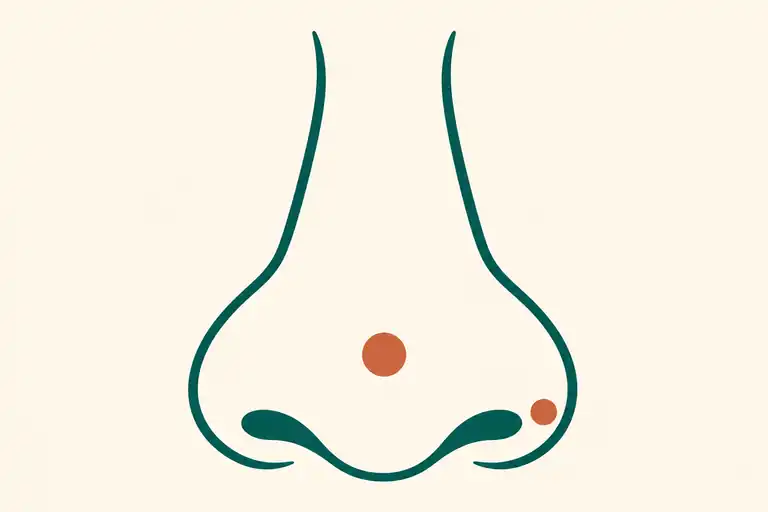
A published retrospective study compared two incision locations in 70 patients at one hospital. It found no statistically significant differences between the two groups on its reported objective or subjective scar assessments. The authors discuss how the natural crease might conceal a scar in some anatomies.
This small observational study does not establish that one approach is best for everyone. It also does not verify DI’s individual techniques. Ask what scar location the proposed approach could leave, how healing will be reviewed and what changes would need an in-person assessment.

Discuss what might not improve
Visible scars, residual asymmetry, changes in nostril shape and breathing concerns deserve a direct conversation before surgery. Ask whether the proposed change could affect the nostril opening and how the team checks airflow. If you already have an obstruction, ask whether a separate functional evaluation is needed. No procedure should be chosen from a gallery photo.
How to read the one-week case and plan a visit
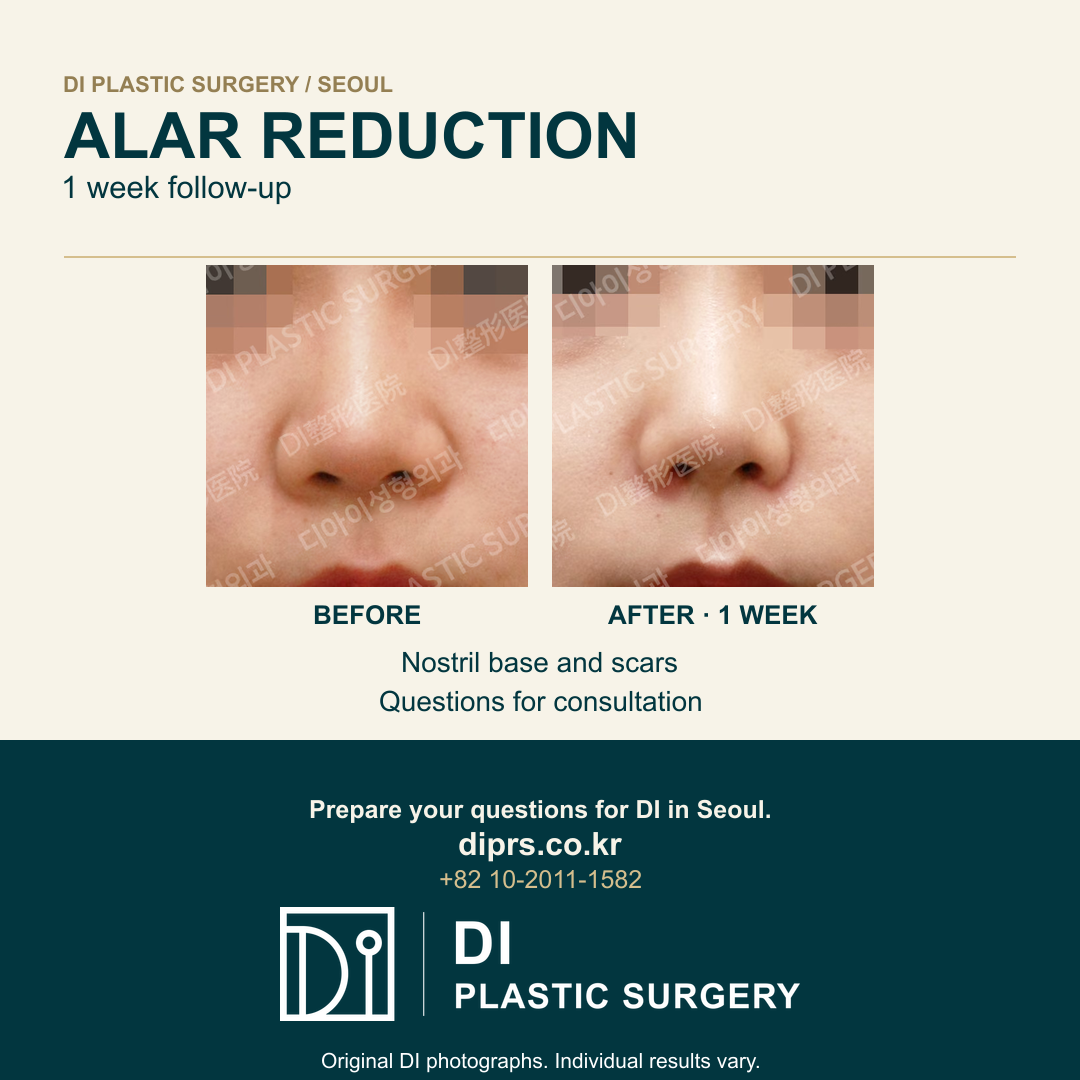
DI gallery case 639 lists alar reduction and shows a front view one week after surgery. The gallery does not specify whether the method was incisional or non-incisional. An early photo does not show a mature scar or measure nasal airflow.
For a visit to Seoul, ask for written follow-up dates, contact details for urgent issues, and individual travel advice. DI is near Gangnam and Sinnonhyeon stations on the 12th floor of Seosan Building, 441 Gangnam-daero, Seocho-gu.
#AlarReduction #Alarplasty #DIPlasticSurgery

Information that helps us prepare a useful reply
When contacting the clinic, tell us the procedure or concern you would like to discuss, your preferred language, whether you have had related treatment before and the dates you could visit Seoul. International patients may also wish to include their arrival and departure dates so the team can explain when an in-person consultation and follow-up may fit into the trip.
Please do not send passport numbers, payment information or complete medical records through an initial website inquiry. A coordinator can explain which health information or photographs are relevant and how they should be shared. Online guidance is preliminary; suitability, technique and the final treatment plan are determined only after an appropriate medical assessment.