

Ask what a thread lift would address in your face
A useful thread-lift consultation starts with a specific concern, such as a change around the cheek or jawline, rather than a promise of a younger appearance. Ask the clinician to identify the tissue involved, the proposed treatment area and the amount of change that is realistically possible. A photograph cannot establish whether threads are appropriate.
DI lists Thread Lift separately from its other lifting procedures. The name does not mean that every concern about loose skin, facial volume or deep folds can be treated with threads. Discuss alternatives, including no treatment, and what the proposed method would leave unchanged.
Understand the published PDO description without assuming your plan
DI’s procedure page describes MINT thread lifting using absorbable polydioxanone (PDO) threads and a barbed design intended to engage tissue. Its explanation describes temporary support and gradual breakdown of the thread material. This is a published overview, not confirmation of the product or technique that would be used for you.
Ask for the exact product name, material, intended use and the reason it is proposed. Have the clinician explain the insertion route, treatment area and any fixation in plain language. Do not select a treatment by the number of threads alone: the number does not tell you whether the location, method or medical judgment is appropriate.
Absorbable does not mean risk-free, and temporary support should not be described as a permanent lift. Ask how the clinician will evaluate the result over time and what could lead to further treatment. This article does not promise a duration of benefit or treat a device-related regulatory claim as proof of a particular cosmetic outcome.
Separate threads from surgical lifting and combined procedures
If a recommendation includes both threads and another treatment, ask for a separate explanation of each component. Confirm which concern each is intended to address, whether either can be declined, and how the combination changes risks, cost and follow-up. A combined plan is not automatically better.
DI has separate information for facelift surgery and named lifting approaches such as Point Lifting. Do not assume that these procedures are interchangeable with thread lifting or that the same recovery instructions apply. If you are comparing them, bring your priorities to an examination rather than choosing from marketing names.

Discuss risks before scheduling treatment
Thread lifting can involve bruising, swelling, discomfort, infection, thread extrusion, persistent pain and an unfavorable result. Temporary difficulty opening the mouth and anesthesia-related risks are also topics to discuss. Ask what a problem would look like, who would assess it and whether adjustment or another intervention might be needed. This is not a complete list or an estimate of your personal risk.
Share previous facial treatments or implanted materials, relevant medical conditions, allergies, medicines, supplements and nicotine use. Do not stop prescribed medicines on your own. Confirm the practitioner, anesthesia plan and how language support will work during consent and follow-up. Suitability, effects, price and recovery all require individual assessment.
Get written aftercare for the actual technique
Request instructions for entry-site care, medicines, face washing, sleeping position, mouth movement, exercise and pressure on the treated area. Ask which restrictions apply to you and for how long. Instructions for a different lifting procedure should not substitute for your own plan.
DI’s general lifting-care page warns that reduced skin sensation can increase the risk of burns from hot or cold compresses. Ask your treating team whether compress care is appropriate and exactly how it should be done. Do not improvise temperatures or timing from a travel blog.
Arrange the required review appointments before leaving the clinic. Ask how the team will distinguish expected early changes from a symptom needing examination, and obtain a clear contact route. Online advice is not a substitute for urgent local medical care when needed.
Do not turn a short appointment into a fixed travel timetable
A brief treatment or no planned admission does not establish that you can fly immediately, resume strenuous activities or skip follow-up. Share your arrival date, tentative departure and any long-distance travel so the clinician can assess the practical constraints.
Ask whether you need someone to accompany you after the planned anesthesia, when you must return for review and what might delay departure. Keep bookings flexible until the clinician has assessed you. The final plan may differ from an online inquiry, and treatment may be postponed or not recommended.

Read the original case as an early observation, not a forecast
The original patient comparison below is designated DI gallery case 037. The displayed procedure label is Thread lift, the selected angle is 45°, and the follow-up label is 1 week after surgery. The gallery does not display a calendar capture date for either photograph, an exact pretreatment interval, the thread product or the number used. These details have not been inferred.
One week is an early observation, not evidence of a stable final result, a standard recovery period or what another patient will achieve. The images are reproduced unchanged with their original privacy masking. Individual results and recovery vary. The three separate explanatory images in this article are AI-generated and must not be confused with this patient case.
Bring a focused question list to consultation
What finding explains my concern? Why this material and method? What change is unlikely? What risks and alternatives apply to me? Which reviews must I complete before leaving Seoul? Request a written quotation stating the proposed treatment, anesthesia, follow-up and any possible additional charges rather than relying on a generic price.
An initial inquiry can describe your main concern, previous treatments, preferred language and tentative visit dates. It is preparation for an individual assessment, not a booking guarantee or diagnosis.
Information that helps us prepare a useful reply
When contacting the clinic, tell us the procedure or concern you would like to discuss, your preferred language, whether you have had related treatment before and the dates you could visit Seoul. International patients may also wish to include their arrival and departure dates so the team can explain when an in-person consultation and follow-up may fit into the trip.
Please do not send passport numbers, payment information or complete medical records through an initial website inquiry. A coordinator can explain which health information or photographs are relevant and how they should be shared. Online guidance is preliminary; suitability, technique and the final treatment plan are determined only after an appropriate medical assessment.
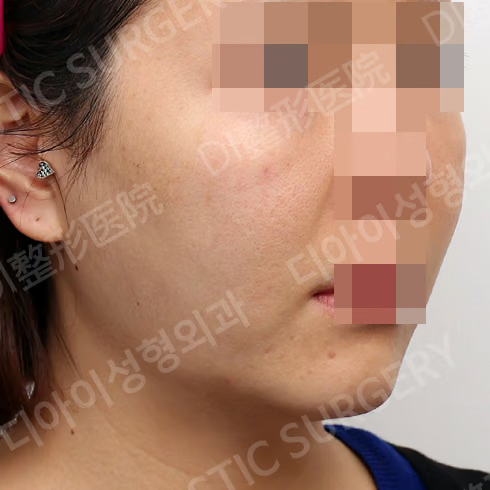 Before
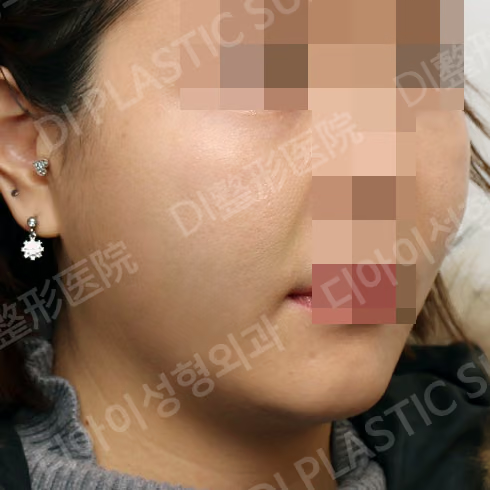 After
After