

A short-looking nose is a concern to assess, not a diagnosis
When researching short nose correction in Korea, describe the feature that bothers you before choosing an operation: a short-looking profile, an upward-pointing tip or nostril visibility from the front. These concerns may overlap, but they are not interchangeable. Ask what contributes to your appearance and which features you want to keep.
DI’s official procedure information discusses nasal length, tip support and tissue condition. It also distinguishes a naturally short nose from a nose that has become upturned after earlier surgery. A photograph or procedure name cannot establish the cause, the amount of change possible or your suitability. An in-person assessment is needed.
Separate overall length from tip and nostril position
Ask the surgeon to explain whether the proposed plan addresses nasal length, the direction of the tip, nostril position or several components. Raising the bridge is a different question from lengthening the nose. A low bridge and an upturned tip should not automatically lead to the same treatment.
DI describes tip extension, adjustment of raised nasal structures and cartilage support among its approaches. These are published options, not a menu from which to select your own technique. Ask which structure would be changed, why that change is proposed and what limitations the surrounding skin and soft tissue create. No universal nasal angle or length suits every face.
Discuss support without assuming that rib cartilage is necessary
DI’s page describes ear, septal and rib cartilage as possible autologous tissue sources. Their appearance on the page does not establish which material you need. Ask whether a graft is proposed, what it is meant to support and why that source is appropriate for your anatomy. Your own tissue does not make an operation risk-free.
If tissue would be taken from another part of the body, discuss the additional incision, possible donor-site problems and aftercare. Ask how available tissue, previous procedures and the condition of the nose influence the plan. Request an itemized estimate for the actual proposed operation rather than treating a general rhinoplasty price as a short-nose quotation.

Explain previous surgery and breathing symptoms separately
A nose that has changed after surgery needs a discussion of that history. Bring available information about the earlier operation, implants, grafts, injections and complications. DI lists postoperative contracture among possible reasons for an upturned nose; that does not mean every person with a short-looking nose has contracture or requires revision surgery.
Mention nasal breathing symptoms even if your main concern is appearance. Ask whether the proposed cosmetic work addresses any functional problem or whether a separate evaluation is needed. Keep the discussion focused on your examination and goals rather than inferring a diagnosis from an online comparison.
Understand the limits and risks before deciding
Possible rhinoplasty risks include anesthesia complications, infection, altered sensation, breathing difficulty, poor healing or scarring, swelling, dissatisfaction and further surgery. Discuss the risks relevant to your proposed plan and the arrangements for managing an unexpected problem. Alternatives may include a different approach or no surgery.
Suitability, expected effects, price and recovery all require individual assessment. A desire to extend nasal length does not establish how much change is achievable. A travel booking should not force a decision before you understand the trade-offs. Ask for explanations in a language you understand and time to consider them.
Put an original gallery example in context
The original 45-degree pair below is Case 529 from the designated DI Before & After gallery. Its displayed procedure is “Short-nose correction” and its follow-up is “2 months after surgery”. The gallery label does not identify the graft source, exact technique or complete medical history, and this article does not infer them.
The displayed two-month interval is a photographic follow-up, not a promise of final healing or a recommended stay in Korea. The original photographs and privacy masking are retained without cropping, retouching or overlays. Results and recovery vary; one individual case cannot predict your result.
Turn the consultation into a practical follow-up plan
For an overseas visit, confirm your consultation language, appointment location and the person responsible for answering questions. DI’s overview lists suture removal and follow-up visits while noting that recovery varies. Ask which visits your plan requires and how the schedule could change after examination or surgery.
Before arranging a return flight, ask the treating team about review, travel clearance, activity restrictions and contact after returning home. Follow your own postoperative instructions rather than borrowing another patient’s timetable. Review the medical team and use the consultation channel to organize questions; an online exchange does not replace the clinical assessment.
Information that helps us prepare a useful reply
When contacting the clinic, tell us the procedure or concern you would like to discuss, your preferred language, whether you have had related treatment before and the dates you could visit Seoul. International patients may also wish to include their arrival and departure dates so the team can explain when an in-person consultation and follow-up may fit into the trip.
Please do not send passport numbers, payment information or complete medical records through an initial website inquiry. A coordinator can explain which health information or photographs are relevant and how they should be shared. Online guidance is preliminary; suitability, technique and the final treatment plan are determined only after an appropriate medical assessment.
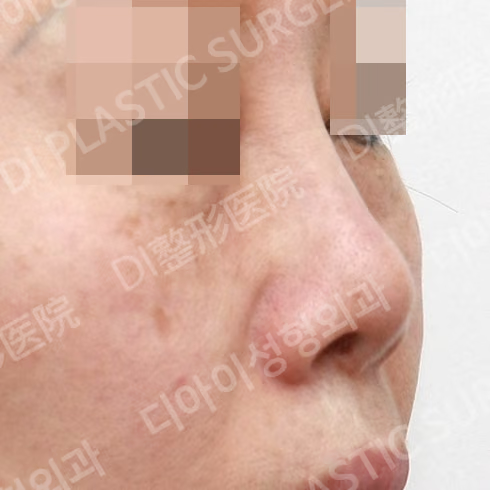 Before
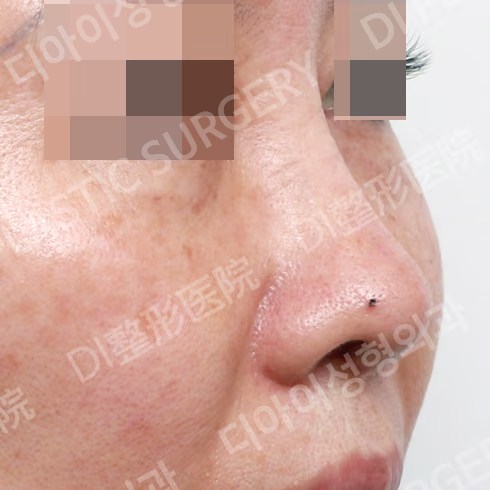 After
After