
Start with the concern you want assessed
A rhinoplasty consultation starts with your own concerns, not a universal ideal nose. Explain what you would like to discuss about the bridge, tip or overall appearance, and describe breathing symptoms separately. An in-person assessment is needed before a treatment plan can be confirmed.
Reference photographs can help communicate a preference, but another person's anatomy and result cannot be reproduced by choosing a picture. Ask what changes are feasible, what limitations apply, and whether surgery is appropriate at all.
Understand the assessment rather than chasing a fixed angle
DI's rhinoplasty overview discusses front and side views, including how the forehead relates to the bridge and how the tip relates to the upper lip. These are assessment topics, not fixed numerical targets for every face.
Ask Dr. Jung Yun Ik to explain which findings inform the recommendation. If breathing or prior surgery is relevant, ask what further evaluation is needed and which parts of an initial photo-based discussion remain provisional.
Discuss materials and their purpose
The DI overview introduces the patient's own ear, septal and rib cartilage, as well as dermal tissue, in its discussion of rhinoplasty materials. Mentioning a material does not mean it is required for your procedure, and dermis is not cartilage.
If a graft or implant is proposed, ask what it is intended to do, why it is being considered, what alternatives exist and what limitations or risks apply. Ask whether a donor area needs separate care. Material selection requires an individual assessment and is not a guarantee against complications.
Bring useful medical information
Prepare details of nasal injury, previous nasal operations or other treatment, medical conditions, allergies, prescribed medicines and supplements. If possible, ask the previous treating provider for operative information. Share records through the clinic's designated process.
Do not stop medication or arrange additional tests based only on online information. Ask the treating team what is needed for the examination. Make sure you understand the plan, consent information and postoperative instructions in your preferred language.

A gallery example is not a recommendation
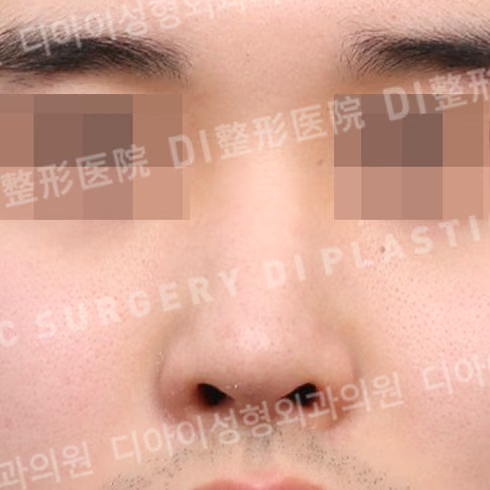
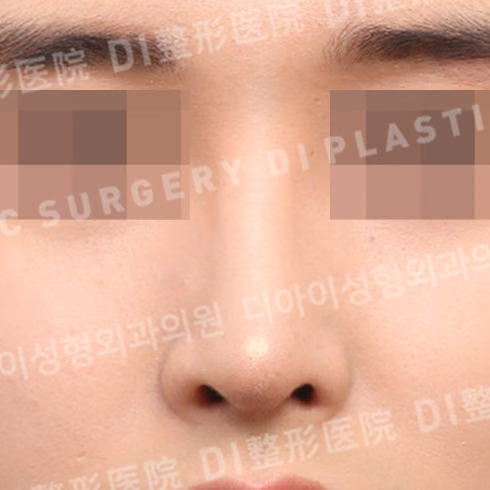
The original DI gallery labels case 719 as rhinoplasty with own rib cartilage and shows a 1-month postoperative photograph. The unchanged front-view Before and After pair is included as one example of that stated procedure.
Results vary. This early follow-up does not establish a final outcome, a standard recovery deadline, the need for rib cartilage in another patient or superiority over other approaches. Read the named procedure and timing before drawing conclusions from a photograph.
Review risks, alternatives and follow-up
The discussion should include anesthesia risks, infection, altered sensation, breathing difficulties, poor healing or scarring, dissatisfaction and possible additional surgery. The treating surgeon should explain which risks and alternatives apply to your proposed plan and health.
For visitors from abroad, ask which examinations and postoperative reviews require you to stay in Seoul, whom to contact urgently and how concerns after departure will be assessed. Procedure suitability, effects, price, recovery and return-to-flight advice depend on individual assessment; no fixed timetable or result is promised.

Use a consultation to make an informed decision
Review the medical-team and consultation pages, then bring your questions to the surgeon. The functional-rhinoplasty and autologous-rib-cartilage guides provide background for more specific issues without implying that those procedures are necessary for you.
This is general educational preparation, not a diagnosis or individualized recommendation. Its AI-generated scenes feature fictional people and do not represent actual consultations or surgical results. A consultation does not require a commitment to surgery.
Information that helps us prepare a useful reply
When contacting the clinic, tell us the procedure or concern you would like to discuss, your preferred language, whether you have had related treatment before and the dates you could visit Seoul. International patients may also wish to include their arrival and departure dates so the team can explain when an in-person consultation and follow-up may fit into the trip.
Please do not send passport numbers, payment information or complete medical records through an initial website inquiry. A coordinator can explain which health information or photographs are relevant and how they should be shared. Online guidance is preliminary; suitability, technique and the final treatment plan are determined only after an appropriate medical assessment.
 Before
 After
After