
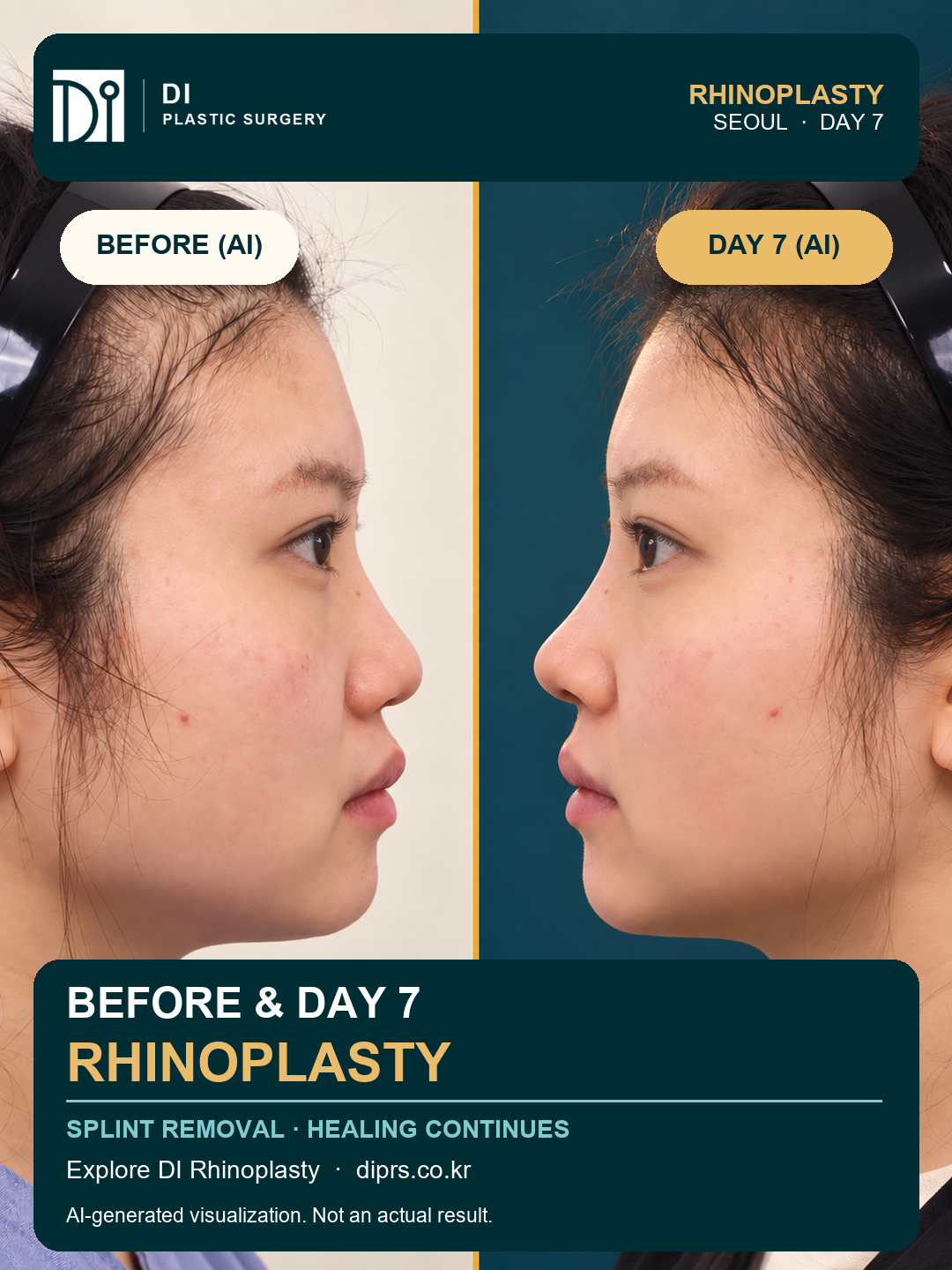
An early follow-up, not a final result
The reel shows a real patient at a Day 7 follow-up, including splint removal by the clinical team and an early look at her profile. Swelling is still present at this stage, and the nose can change as healing continues. A single video cannot predict another patient’s result or recovery schedule.
The cover is an AI-generated visualization based on the case’s general profile. It is not a clinical before-and-after photograph. The moving footage is from the original patient reel.
What a rhinoplasty consultation considers
At DI Plastic Surgery, the surgeon assesses the nose from the front and side, including the relationship between the forehead, bridge, nasal tip and upper lip. Facial structure, tissue condition, medical history and individual goals guide discussion of the proposed approach and alternatives. This reel does not establish which technique or graft materials were used for this patient.
Care after the splint comes off
Follow the instructions given by your own surgical team. A splint protects the nose from impact; if it comes off unexpectedly, do not reattach it yourself—contact the clinic. Swelling or bruising can make the early contour look uneven, and follow-up timing varies by person.
Ask about warning signs, restrictions on pressure or strenuous activity, and when to return for review. Rhinoplasty involves risks, including bleeding and infection. If you notice an unexpected change or symptom, contact your treating team rather than relying on an online comparison.
Information that helps us prepare a useful reply
When contacting the clinic, tell us the procedure or concern you would like to discuss, your preferred language, whether you have had related treatment before and the dates you could visit Seoul. International patients may also wish to include their arrival and departure dates so the team can explain when an in-person consultation and follow-up may fit into the trip.
Please do not send passport numbers, payment information or complete medical records through an initial website inquiry. A coordinator can explain which health information or photographs are relevant and how they should be shared. Online guidance is preliminary; suitability, technique and the final treatment plan are determined only after an appropriate medical assessment.