
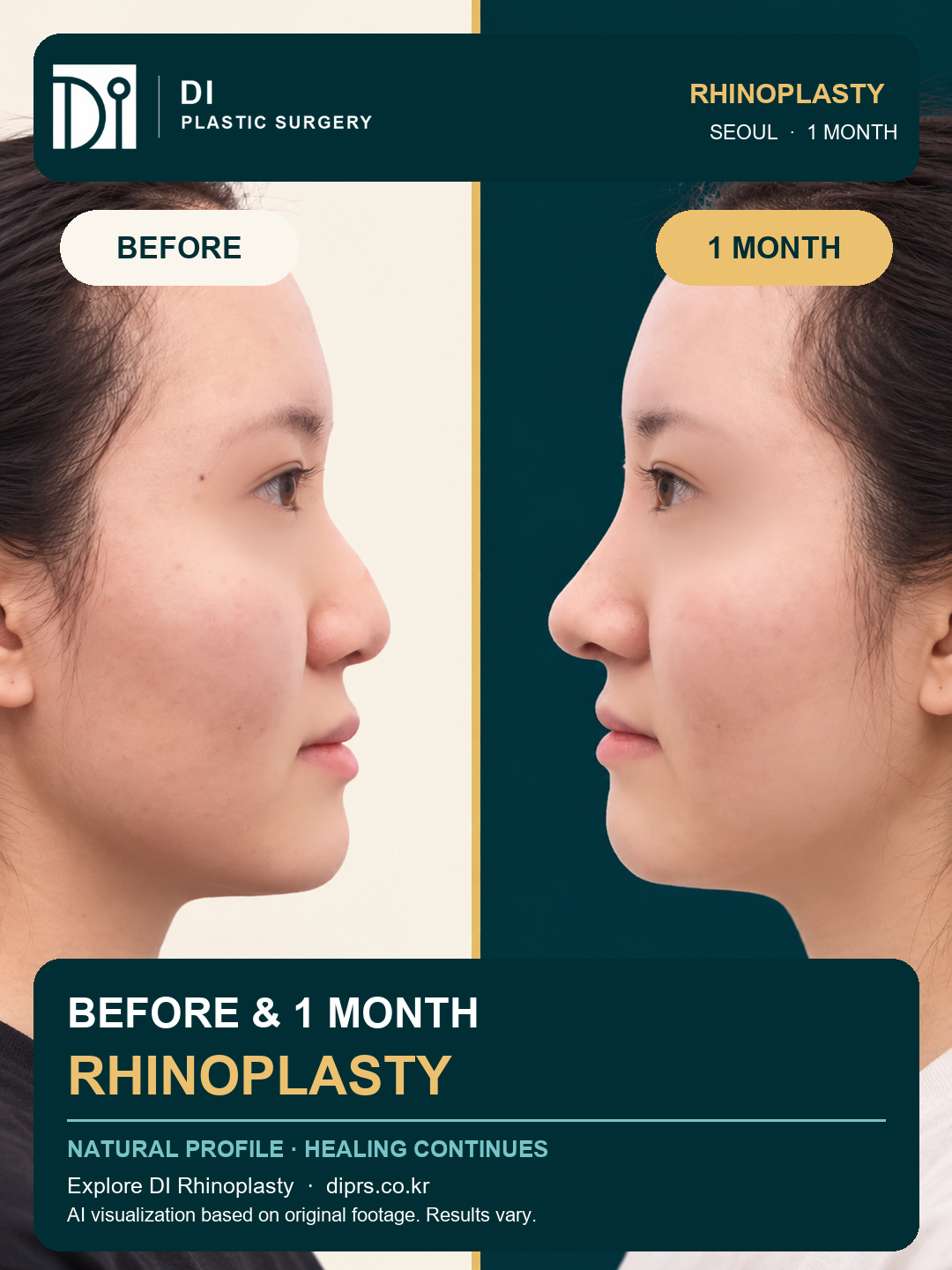
What the original reel shows
This English version uses the original patient footage from DI Plastic Surgery’s Korean-language reel and adds English graphic labels. It presents a before-surgery view and a one-month follow-up. The source describes attention to nasal bridge definition, tip contour and balance with the rest of the face.
The separate cover uses AI-generated, extended portraits informed by the source images. It is an illustrative design—not an unaltered clinical before-and-after photograph. Watch the video for the original case footage, and remember that differences in lighting, angle and expression can affect visual comparisons.
Why one month is not the final result
The appearance of the nose can continue to change as swelling settles. A one-month follow-up is an early milestone, not a promise of the final shape. Results and recovery differ between people and procedures.
A consultation should review your own anatomy, goals, nasal function, available options and realistic limitations. If you are travelling to Seoul, discuss follow-up appointments and travel timing before booking.
Questions to take to a consultation
Ask what approach may be suitable for your nasal bridge and tip, whether it could affect breathing, what risks and alternatives apply, and how follow-up care is arranged. A short reel cannot substitute for an individual examination.
Rhinoplasty carries risks, including bleeding, infection and breathing problems. The surgeon should explain the risks relevant to you, the expected recovery and what to do if unexpected symptoms occur. No particular result is guaranteed.
Information that helps us prepare a useful reply
When contacting the clinic, tell us the procedure or concern you would like to discuss, your preferred language, whether you have had related treatment before and the dates you could visit Seoul. International patients may also wish to include their arrival and departure dates so the team can explain when an in-person consultation and follow-up may fit into the trip.
Please do not send passport numbers, payment information or complete medical records through an initial website inquiry. A coordinator can explain which health information or photographs are relevant and how they should be shared. Online guidance is preliminary; suitability, technique and the final treatment plan are determined only after an appropriate medical assessment.