
Start with what was placed and what has changed
Bring the date, material or brand if known, the area treated, and information about any filler, implants or previous nasal operations. A timeline of when discomfort, visible threads, changes in shape or breathing problems began may help the clinician decide what to examine.
Seek prompt local medical assessment for worsening pain, spreading redness, pus or fever. If you can see a thread, avoid pulling or trimming it yourself. For a stable shape concern, the clinician can discuss whether observation or a planned procedure makes sense after assessment.

Separate removal from rebuilding support
A small study of seven patients treated for thread-rhinoplasty complications described visible or protruding threads and irregularities along the nasal bridge. When surgeons removed threads associated with complications, some patients also needed support or contour reconstruction. The patients were selected for revision, so the series cannot tell you how often problems arise after thread treatment or predict whether you will need grafting.
Ask which symptoms are attributed to the threads, how the clinician will assess position and support, and why any additional corrective work is proposed. DI’s price guide lists foreign-body removal as a separate item. Confirm how the clinic would categorize your treatment and what the written quote includes.

Plan your follow-up before arranging travel
Ask whether the plan could change after examination, who would provide urgent review, whether you need a local check before departure and what information you can take home. An outside photo may help show a change in shape. Any breathing symptoms also deserve their own assessment.
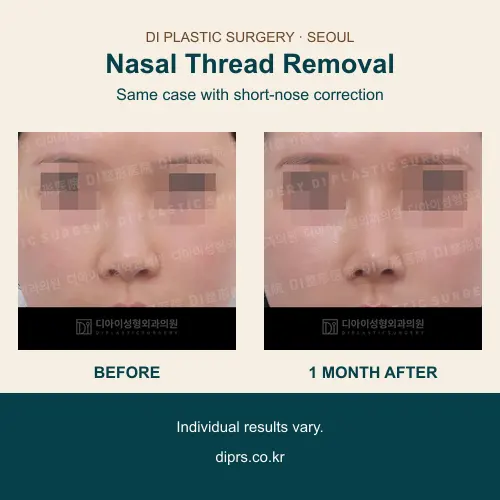
DI’s gallery case 314 involved removal and short-nose correction, with a photograph at one month. It cannot separate the effects of these treatments or show how the nose settles later. Use the example to ask about treatment components, timing and limitations.

Bring a short list to the consultation
Bring a record of all earlier nasal procedures, photographs if you have them, current medication and allergies, and travel dates. Ask for an explanation of observation, removal alone and combined correction where relevant. Before booking, confirm the clinician’s follow-up schedule, likely costs and whom to contact in your preferred language.
Information that helps us prepare a useful reply
When contacting the clinic, tell us the procedure or concern you would like to discuss, your preferred language, whether you have had related treatment before and the dates you could visit Seoul. International patients may also wish to include their arrival and departure dates so the team can explain when an in-person consultation and follow-up may fit into the trip.
Please do not send passport numbers, payment information or complete medical records through an initial website inquiry. A coordinator can explain which health information or photographs are relevant and how they should be shared. Online guidance is preliminary; suitability, technique and the final treatment plan are determined only after an appropriate medical assessment.