
Start with the bridge, not a material shopping list
If your main question is how to raise a low nasal bridge, the first consultation should clarify the part of the nose you want to change. Bridge height, the transition from forehead to nose and nasal tip support are related, but they are not the same treatment target. A material mentioned online is not automatically appropriate for every part of the nose.
Describe what matters to you from both front and side views, and what you want to preserve. A reference photograph can explain a preference; it cannot establish a safe height or promise the same profile. Read DI’s dedicated procedure information before comparing options.
Separate bridge augmentation from tip support
DI’s procedure page describes several bridge-material options and the use of the patient’s own cartilage for tip work. Ask the surgeon to explain the proposed bridge and tip components separately: what would be placed where, why it is needed and whether either part can be left unchanged. Do not assume that selecting a bridge material determines the entire operation.
A higher bridge is not necessarily a better fit for an individual face. Discussion should include overall proportions, tissue condition, previous treatment and your priorities. If breathing is a concern, raise it explicitly rather than assuming cosmetic augmentation will address it.
Ask what each material contributes—and what it costs you
The DI page discusses implant options and autologous tissue, including ear, septal and rib cartilage and dermis. These names describe different tissues and possible roles; dermis is not cartilage. Ask which material is being proposed for your bridge, tip or coverage, and why another option is not preferred in your situation.
When your own tissue is proposed, ask where it would be obtained and how donor-site care affects the plan. When an implant is proposed, ask about tissue coverage, possible complications and what would happen if removal or further surgery became necessary. No material is risk-free, and an option suitable for one person may be unsuitable for another.
Bring details of earlier nasal surgery, implants, grafts or injections if applicable. Ask for a written explanation that distinguishes the procedure, anesthesia, donor-site care and follow-up charges. This article does not quote a universal price or recommend a particular material.

Review limitations and risks before consenting
Rhinoplasty can involve infection, bleeding, anesthesia complications, scarring, altered sensation, breathing difficulty, an appearance that does not meet expectations and further surgery. Ask how your personal health, tissue characteristics and the proposed materials affect the discussion of risk.
Suitability, expected effect, price and recovery all require individual assessment. Ask about alternatives, including no surgery, and give yourself time to decide. DI describes structural assessment on its website; this does not establish that every visitor needs the same examination or imaging.
Read the gallery label without inferring a technique
The original pair below is Gallery Case 659, labelled “Low-bridge rhinoplasty · Bulbous-nose correction”, with a front-view follow-up marked “1 month after surgery”. This is a combined-procedure case, not evidence of an isolated bridge operation. The gallery does not identify its graft or implant material, so none is inferred here.
One month is a photographic follow-up point, not proof of completed healing. Original images and privacy masking are preserved without cropping, retouching or added overlays. Individual results and recovery vary; these photographs cannot predict your appearance or establish your suitability.
Confirm follow-up before booking a Seoul visit
Prepare medical history, medication and supplement lists, allergies, nicotine use and previous procedure information. Ask how the consultation will address your stated bridge goal, tip support and any breathing symptoms. Review the surgeon’s profile and discuss communication needs in advance.
Before making travel commitments, confirm review visits, any splint or suture care, pressure restrictions such as glasses, and how to obtain help for unexpected symptoms. Your treating team should determine travel clearance and activity guidance. An early review and a long-term result assessment serve different purposes.
Information that helps us prepare a useful reply
When contacting the clinic, tell us the procedure or concern you would like to discuss, your preferred language, whether you have had related treatment before and the dates you could visit Seoul. International patients may also wish to include their arrival and departure dates so the team can explain when an in-person consultation and follow-up may fit into the trip.
Please do not send passport numbers, payment information or complete medical records through an initial website inquiry. A coordinator can explain which health information or photographs are relevant and how they should be shared. Online guidance is preliminary; suitability, technique and the final treatment plan are determined only after an appropriate medical assessment.
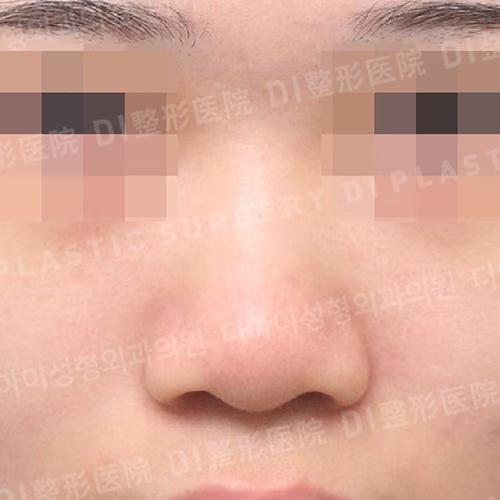 Before
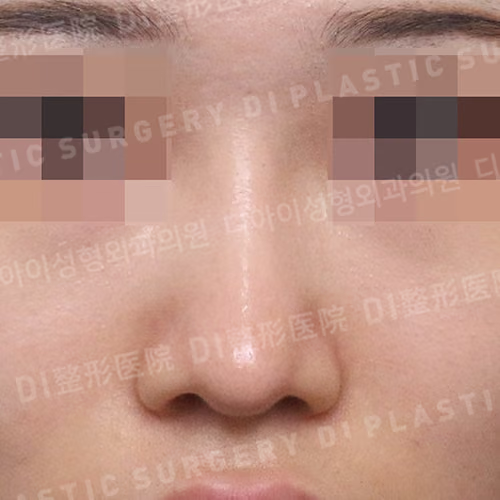 After
After