
Does “without implants” mean that no graft is used?
No. A label about implants does not tell you whether the surgeon plans to reshape existing structures, add a graft, or use material for support or fixation. Ask what “implant-free” means in the proposed plan. If a graft is proposed, ask where it comes from, where it will be used and what purpose it serves.
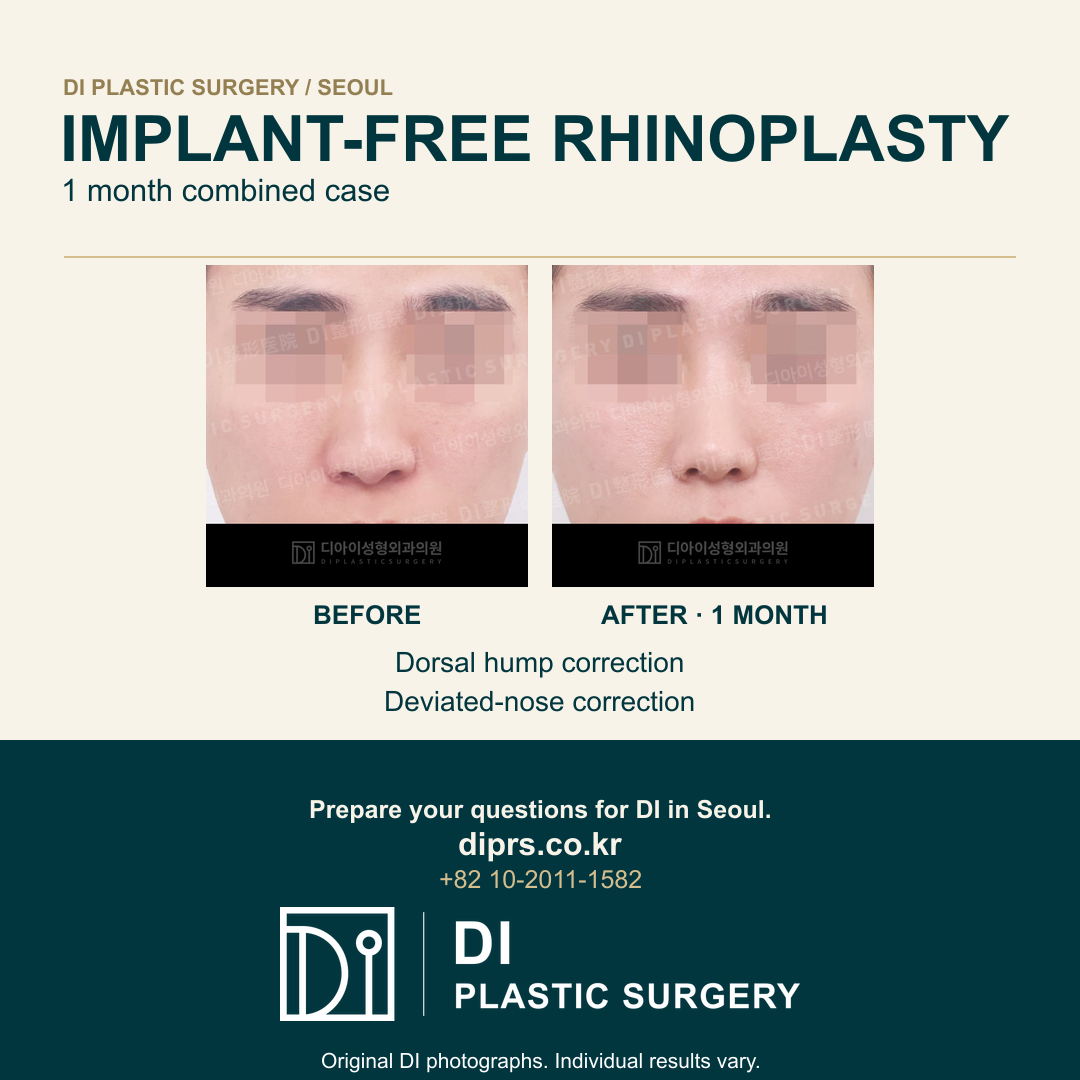
DI’s official case 061 lists rhinoplasty without implants, dorsal hump correction and deviated-nose correction. It does not disclose the graft source, fixation method or operative details. The one-month front-view photographs cannot answer those questions.
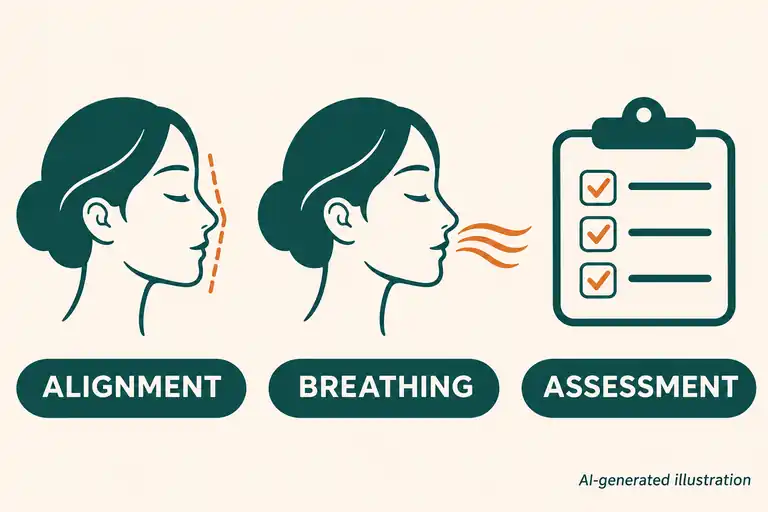
Separate alignment, a dorsal hump and nasal breathing
Ask the clinician to identify which part of the plan addresses the visible curve or asymmetry and which part addresses the dorsal hump. Bring previous procedure records and note injuries or changes in symptoms. If breathing is a concern, describe when and where you notice obstruction; a straight-looking photograph does not measure airflow.
A discussion of appearance can still include function. Ask what examination is needed, whether a breathing assessment would change the plan, and which concern might remain after surgery. Do not infer a diagnosis, procedure or expected result from a gallery label.
Get the materials in writing
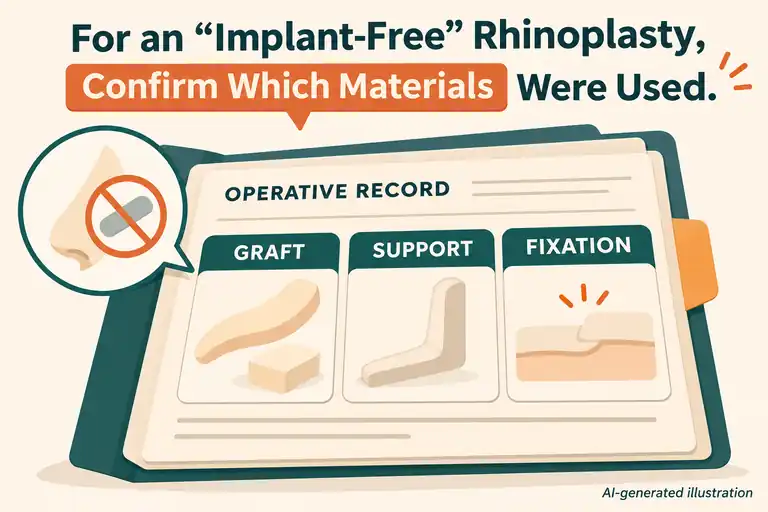
Instead of relying on the word “implant,” ask for a written list of what would be moved or reshaped, what may be added and how support would be maintained. Tell the clinician about previous filler, grafts and implants; bring the records you can obtain.
For each proposed material, ask what it is, why it is needed and what could change during surgery. Clarify how unexpected findings and reasonable alternatives will be explained before consent.
| Part of the plan | What to confirm |
|---|---|
| Existing structures | Which structures may be reshaped or moved, and for which goal? |
| Graft | If needed, what is its source, and is there a donor site? |
| Support and fixation | What supports the framework, and is anything intended to remain? |
| Alternative | What changes if a graft is declined or the plan changes? |
| Operative record | How will the final technique and materials be documented? |
Ask about surgery and donor-site risks separately
ASPS describes possible rhinoplasty risks including breathing difficulty, infection, poor healing, altered sensation, septal perforation, an unsatisfactory appearance and further surgery. Omitting an implant does not remove these risks. Your surgeon should explain the risks that apply to your procedure and history.
If cartilage is to be harvested, ask about the additional site, its care and potential problems. Ask who will handle unexpected symptoms and who will see you if alignment or breathing remains a concern. A list of risks cannot estimate individual likelihood or guarantee a particular outcome.
Plan a handover before returning home
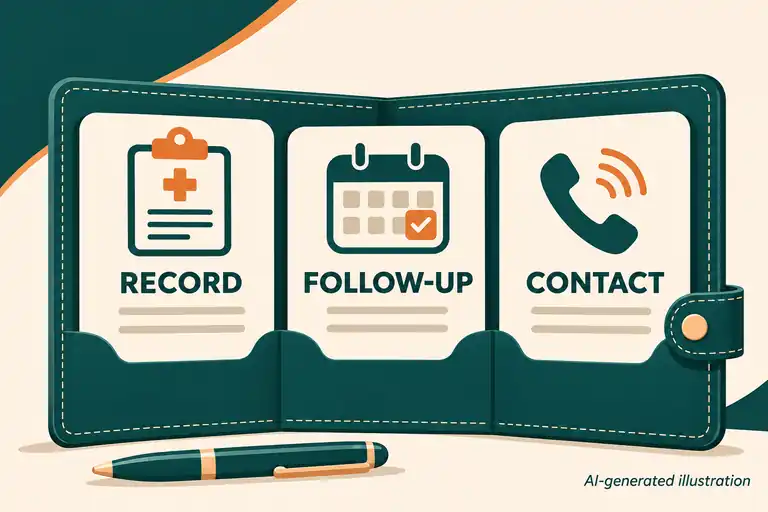
Request the planned in-person reviews and a written summary of the final procedures, graft or material details, any donor site, and instructions for urgent or out-of-hours concerns. Ask how you would obtain follow-up after returning home. Keep the contact method and records available while travelling.
Ask when your own clinical team can assess readiness for travel, not whether another patient’s photo matches a day count. Compare itemized estimates that identify the actual work, anesthesia, materials and follow-up. For a Seoul appointment, DI is at 12F, Seosan Building, 441 Gangnam-daero, Seocho-gu, near Gangnam Station.
Read the one-month DI case as a limited observation
The official case 061 front-view pair is labeled before surgery and one month after surgery. The gallery lists three procedures together, so the pair cannot isolate an effect, identify grafts or demonstrate a lasting change in shape or breathing. Individual results vary.
The illustrations in this guide organize questions for consultation. They do not depict an operation or a predicted result. Sources below distinguish DI’s published services and case labels from professional safety information.
#ImplantFreeRhinoplasty #DeviatedNose #DIPlasticSurgery
Information that helps us prepare a useful reply
When contacting the clinic, tell us the procedure or concern you would like to discuss, your preferred language, whether you have had related treatment before and the dates you could visit Seoul. International patients may also wish to include their arrival and departure dates so the team can explain when an in-person consultation and follow-up may fit into the trip.
Please do not send passport numbers, payment information or complete medical records through an initial website inquiry. A coordinator can explain which health information or photographs are relevant and how they should be shared. Online guidance is preliminary; suitability, technique and the final treatment plan are determined only after an appropriate medical assessment.