
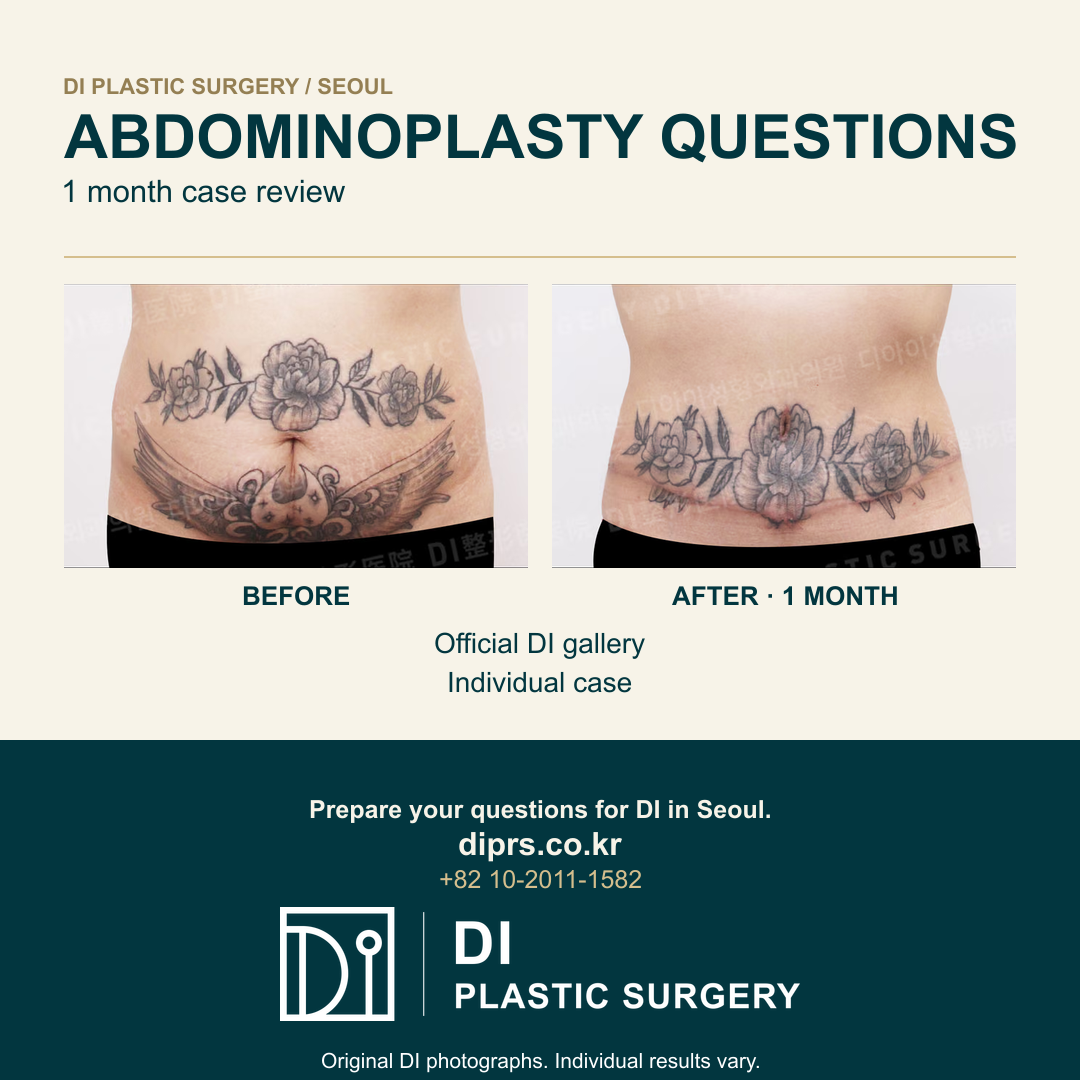
A case label is the starting point, not a diagnosis
The official DI gallery identifies case 025 as full abdominoplasty with umbilical repositioning and labels the follow-up one month after surgery. Those are the facts reported by the source. The photographs cannot establish another person’s skin laxity, abdominal wall condition, health risks or suitability for a full or mini operation.
The original clinical images preserve the visible scar, body features, masking and watermark. We have not altered the result or reconstructed clinical areas. A one-month photograph is not a final-scar forecast or a universal recovery deadline. This guide helps organize a discussion about procedure scope; it does not select an operation for the reader.
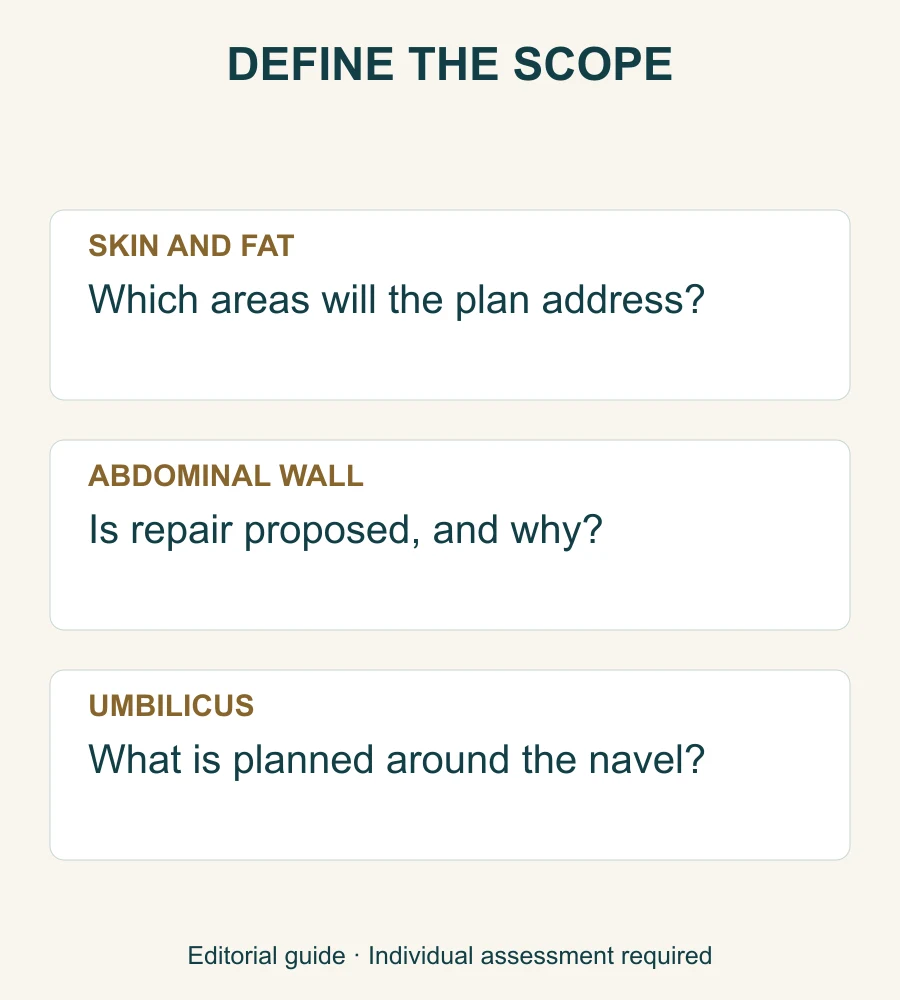
Separate the concern from the name of the operation
The American Society of Plastic Surgeons describes tummy tuck surgery as removing excess skin and fat and, in many cases, restoring weakened or separated muscles. It also notes limits: it is not a substitute for weight loss or an appropriate exercise program. The elements that apply to an individual plan require assessment and discussion with the treating surgeon.
Instead of asking only whether a full or mini tummy tuck is better, describe the areas that concern you. Ask what an examination can establish about skin, fat and the abdominal wall. Discuss the likely benefits, limits and alternatives, including no surgery. A procedure name alone does not explain which tissues will be addressed or the full extent of the proposed operation.
| Topic | Question to ask |
|---|---|
| Treatment area | Which parts of my abdomen are included in this proposed operation? |
| Abdominal wall | Is muscle repair proposed, and what assessment supports it? |
| Umbilicus | What, if anything, is planned around the navel? |
| Incisions and scars | Where are the planned incisions and how might the scars change? |
| Additional procedures | Is liposuction or another procedure separate, and why is it proposed? |
Ask for a description of the actual planned scope
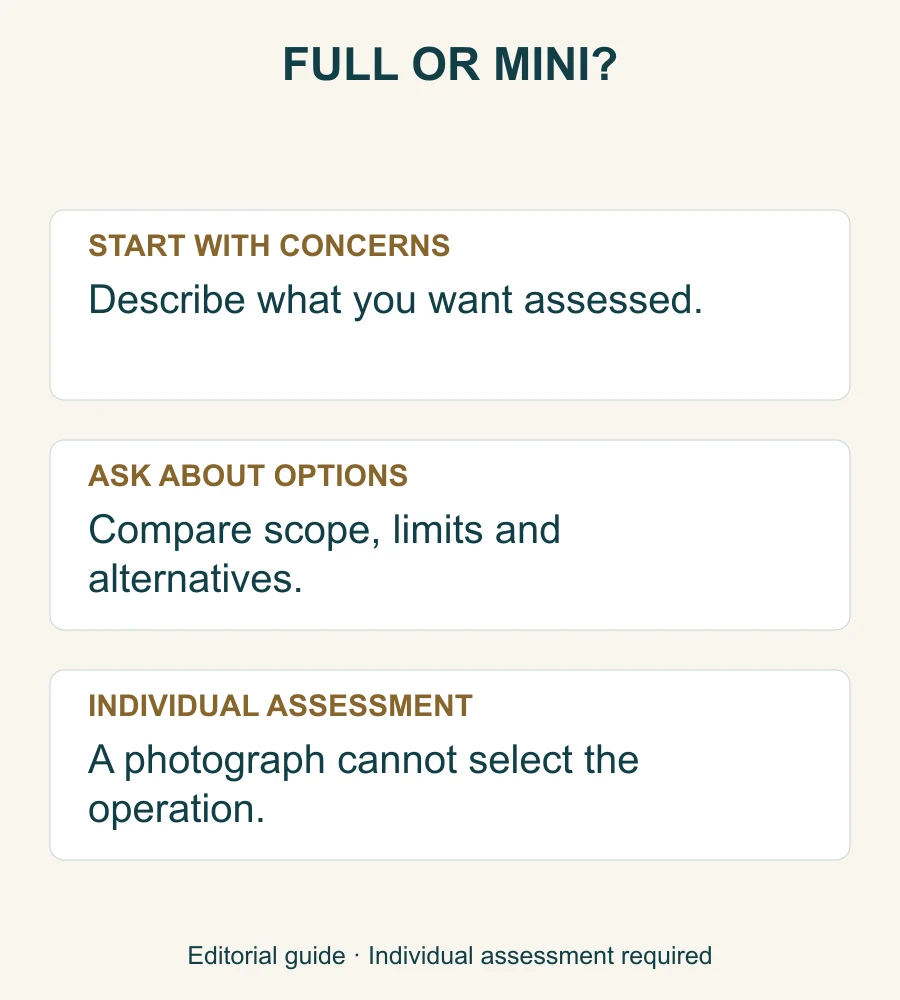
Full and mini are useful discussion labels, but ask the surgeon to explain the specific plan in plain language. Clarify the area of skin removal, any abdominal wall work, the proposed incision and the plan for the umbilicus. If an additional procedure is considered, ask for its separate purpose, risks and costs.
The source label for case 025 includes umbilical repositioning. It does not disclose the person’s full operative report or establish which exact technique would be used for someone else. Do not assume that a smaller-sounding procedure has no meaningful risks, or that a more extensive procedure is automatically more appropriate. The decision requires an individual medical assessment.
Include scars and risk discussion before consent
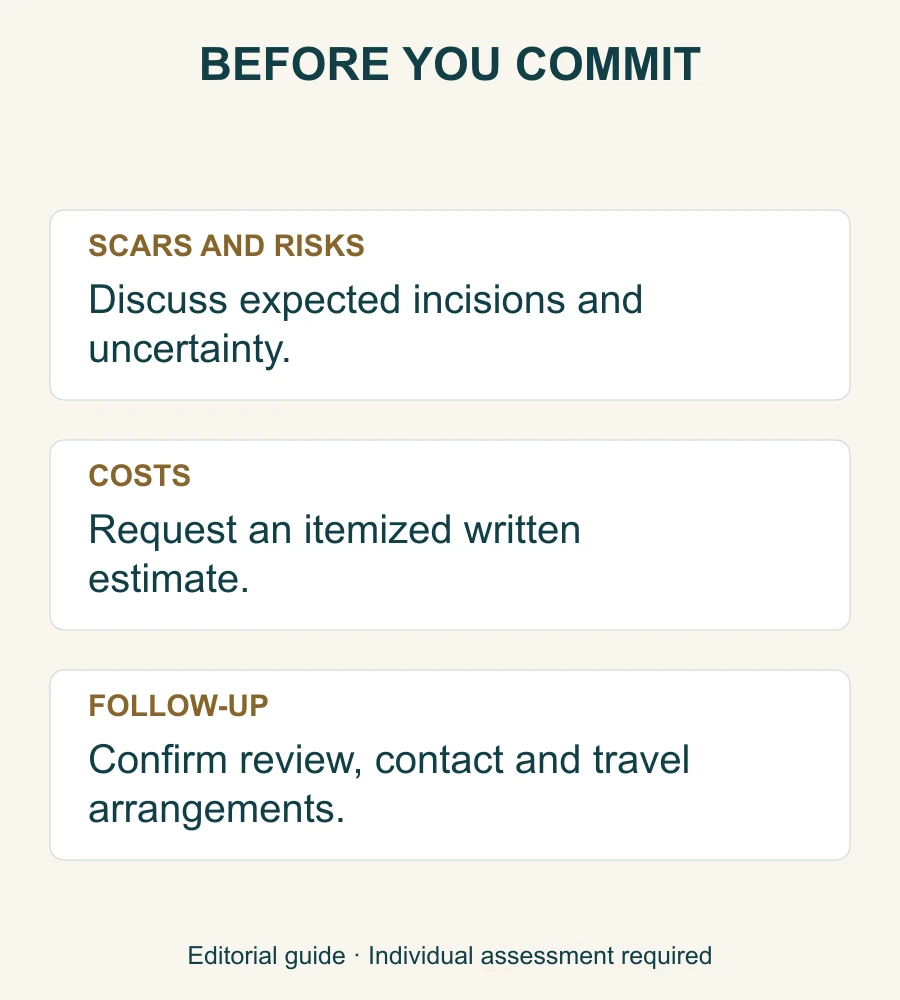
Ask where the scars are expected to lie, what factors can affect healing and how follow-up will assess them. The visible scar in a one-month case photograph is part of the record and should not be removed to make a result seem more complete. The treating clinician should explain how scar appearance may evolve and what remains unpredictable.
The ASPS tummy tuck safety information lists risks including bleeding, infection, fluid accumulation, poor wound healing, changes in skin sensation, unfavorable scarring and blood clots, among others. Ask which risks matter for your health and proposed procedure, how they are managed and when to seek review. A gallery image cannot show that these risks were absent or estimate your personal risk.
Plan follow-up and travel before arranging surgery
Ask what assistance you may need, which activity restrictions apply, when follow-up is planned and who to contact with a concern. The ASPS recovery material discusses individual postoperative instructions and follow-up. These instructions should come from your own treating team; this article does not prescribe a garment, drain schedule, medication or return-to-work date.
For an overseas visit, ask how long you should remain near the clinic for the reviews your surgeon recommends and how a change in recovery would affect travel. Confirm a local care route after returning home. The one-month label in this case does not provide flight clearance, a typical length of stay or permission to resume a particular activity.
Bring a decision checklist to DI
Your consultation checklist can be short: the concern being assessed, the proposed scope, alternatives, incision and scar discussion, risks, an itemized estimate and the follow-up plan. Ask what is included in the quote and which taxes or other charges are separate. Do not decide from a before-and-after photo or a procedure name alone.
DI is at 12F, Seosan Building, 441 Gangnam-daero, Seocho-gu, Seoul. Confirm appointment and language arrangements before travel using the consultation and directions links below. This is an editorial question guide based on the official case and referenced professional information; it does not claim a new medical review. Individual results and recovery vary.
Information that helps us prepare a useful reply
When contacting the clinic, tell us the procedure or concern you would like to discuss, your preferred language, whether you have had related treatment before and the dates you could visit Seoul. International patients may also wish to include their arrival and departure dates so the team can explain when an in-person consultation and follow-up may fit into the trip.
Please do not send passport numbers, payment information or complete medical records through an initial website inquiry. A coordinator can explain which health information or photographs are relevant and how they should be shared. Online guidance is preliminary; suitability, technique and the final treatment plan are determined only after an appropriate medical assessment.