
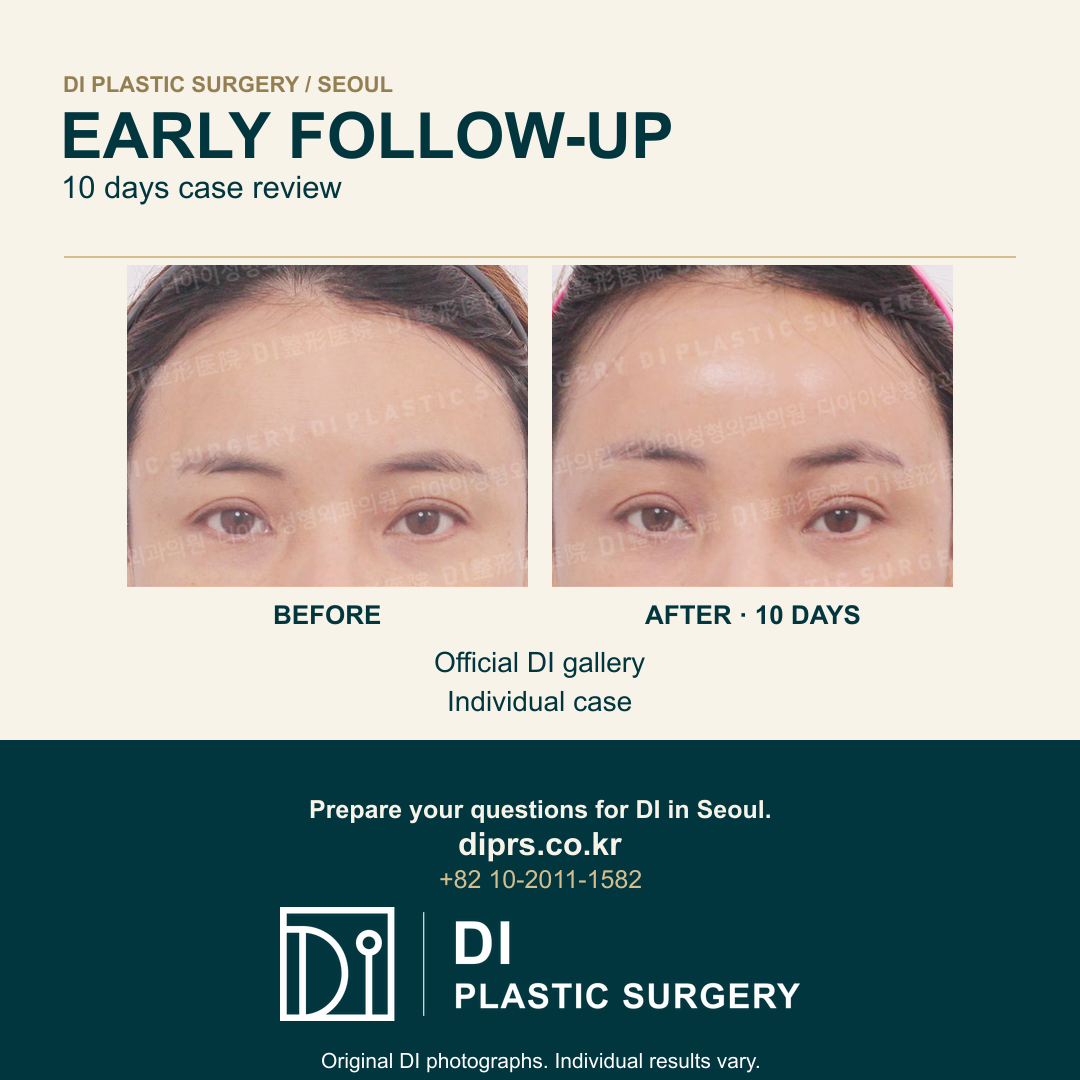
What the 10-day case actually tells you
The official DI gallery identifies case 035 as a forehead lift and labels the comparison 10 days after surgery. The source photographs and their embedded watermark are retained. They document an individual appearance at that interval; they do not reveal the operative technique, wound condition, sensation or later course. Individual results vary.
A photograph is a useful conversation reference when its limits are explicit. You can ask which part of the proposed change relates to brow position and which features need separate assessment. Do not infer that a similar-looking concern has the same cause, that all swelling has resolved, or that this patient’s interval predicts your own recovery.
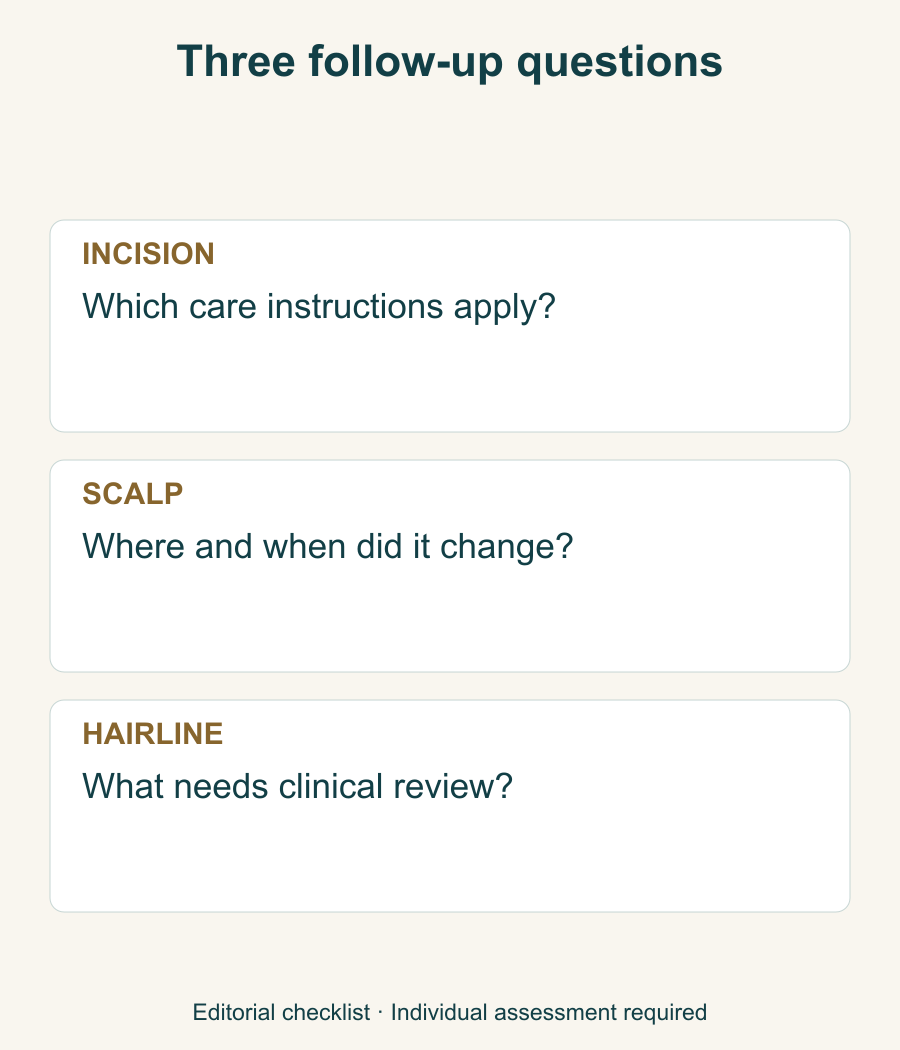
Keep three follow-up questions separate
For the incision, ask where the actual incision was placed, what wound-care instructions apply and who will review it. For the scalp, describe the location and course of altered sensation in your own words. For the hairline, ask which changes the surgeon is monitoring. Do not label a sensation as normal or permanent based on an online picture.
The ASPS safety information includes altered sensation or itching, hair changes around incisions and unfavorable scarring among possible risks. That list is a basis for consent and questions, not a diagnosis of a symptom or an estimate of its likelihood in an individual. Ask how the clinician will distinguish expected recovery from a concern requiring assessment.
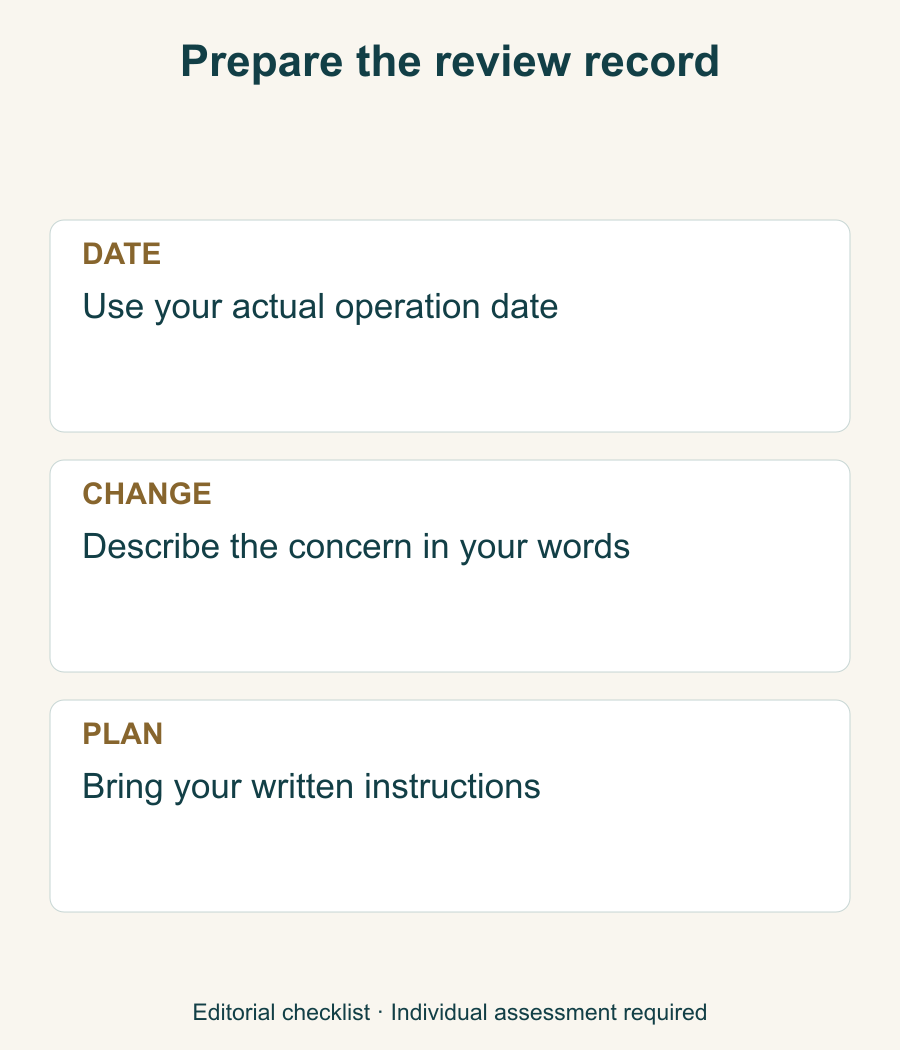
A practical record for the appointment
1. Write the operation date and the exact procedure name from your own records. 2. Record when a concern started, where it occurs and whether it has changed. 3. Bring your current written care instructions and medication list through the clinic’s agreed private route. Keep previous medical advice distinct from your own observations.
Ask the clinic whether any record or image is needed before sending it. Do not post identifiable photographs or medical documents in public comments. If the clinic requests a comparison, ask how it should be prepared; an editorial checklist does not replace an examination or authorize changing your dressing, medication or care.
Activity and wound care need individual instructions
ASPS recovery guidance distinguishes early wound healing from the longer course of swelling and scar refinement. It also advises patients to ask about medication, dressings, stitches, normal activities and follow-up. A single return-to-work date does not settle all those questions. Obtain the restrictions and review dates that your own surgeon gives you.
Make a short written checklist: what care is permitted, which activities remain restricted, when the next review is due and how to contact the team if a concern develops. Ask specifically about the forehead rather than importing instructions from an eyelid, thread-lift or other procedure. Do not use this case’s 10-day label to decide when to remove anything or resume exercise.
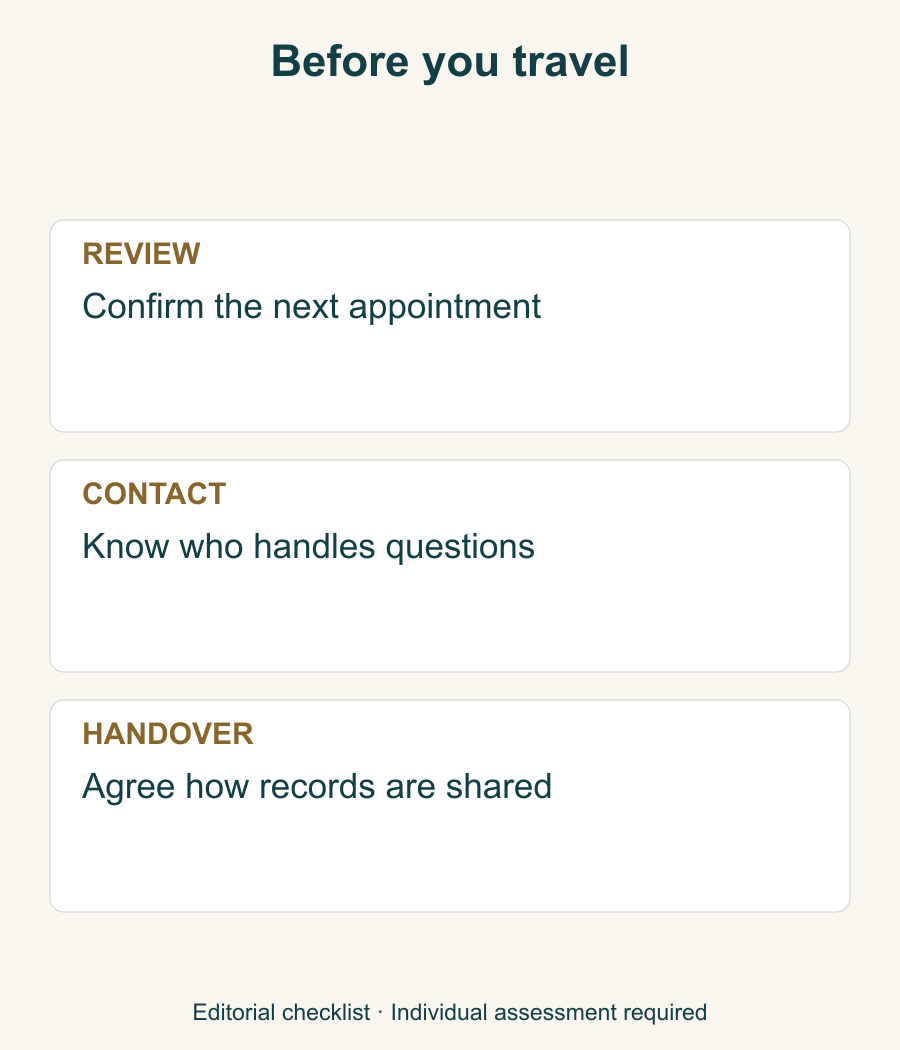
Before leaving Seoul, confirm the handover
If follow-up will continue elsewhere, clarify who remains responsible for questions, what information a local clinician would need and what to do if you cannot attend a planned review. Ask the team to explain which concerns require prompt contact or urgent local care. A routine travel plan should not be treated as medical clearance.
For costs, use the dated DI price guide as a starting point and ask what the proposed quotation includes. Confirm separately any review, medication, examination or other charges that may apply. A published procedure amount is not proof that every follow-up service is included, and an inquiry does not confirm an appointment.
Sources and editorial scope
This page combines the labelled DI gallery case with ASPS patient information about brow-lift recovery and risks. The comparison is educational: it does not establish the clinician’s technique, diagnose a complication, promise an outcome or claim that ASPS is affiliated with DI.
Prepared as an editorial guide on 29 October 2026. No new physician review is claimed. Use DI’s published medical-team information, the original gallery and the consultation route to prepare an individualized discussion. The source interval and the current consultation plan remain separate pieces of information.
Information that helps us prepare a useful reply
When contacting the clinic, tell us the procedure or concern you would like to discuss, your preferred language, whether you have had related treatment before and the dates you could visit Seoul. International patients may also wish to include their arrival and departure dates so the team can explain when an in-person consultation and follow-up may fit into the trip.
Please do not send passport numbers, payment information or complete medical records through an initial website inquiry. A coordinator can explain which health information or photographs are relevant and how they should be shared. Online guidance is preliminary; suitability, technique and the final treatment plan are determined only after an appropriate medical assessment.