
A crooked appearance is a starting point, not a diagnosis
If your nose appears tilted from the front, the useful first question is which structures contribute to that appearance. DI’s crooked-nose procedure page describes deviation involving nasal bones, cartilage or the septum, including concerns after injury or previous surgery. These patterns cannot be distinguished reliably from a single selfie.
The consultation should separate your appearance goals from breathing symptoms and examine the nose in the context of your facial proportions. A surgeon may recommend further assessment, a different approach or no operation. Perfect symmetry is not a realistic guarantee.
Explain when the change started and how you breathe
Prepare a short history: whether the deviation has been present since childhood, followed an injury, or appeared after a previous procedure. Bring available operative reports and information about existing implants or grafts through the clinic’s agreed secure channel. List medications, supplements, allergies and relevant medical conditions.
Describe obstruction in your own words, including which side feels blocked and when. An external tilt does not by itself prove an internal cause. DI describes structural assessment and the use of 3D CT on its procedure page; ask which examination or imaging is necessary for your case and why. Do not assume every patient needs the same tests.
Ask what each proposed step is intended to change
DI’s published information distinguishes milder contour concerns from deviation that may require repositioning nasal bones or addressing cartilage and the septum. Ask the surgeon to explain the structures being treated, incision approach, whether bone work is proposed and how the plan protects nasal support. This is a consultation framework, not a surgical instruction.
If an implant or your own tissue is discussed, ask why it is appropriate, what alternatives exist and what additional donor-site care may be needed. Previous rhinoplasty can change the available tissue and planning. Correcting a crooked appearance does not guarantee that all breathing symptoms will improve.
Discuss risks alongside the desired change
Rhinoplasty carries risks, including bleeding, infection, anesthesia complications, scarring, altered sensation, breathing problems, an unsatisfactory appearance and possible further surgery. Septal perforation is a less common but important risk to discuss where relevant. Residual or recurrent unevenness may remain despite treatment.
Ask which risks matter most in your situation, how concerns will be monitored and who to contact outside regular appointments. The consultation should leave room to consider alternatives and decide not to proceed. Suitability, expected benefit, price and recovery require individual assessment.

Plan follow-up before booking the return flight
Ask for a personal plan covering dressings or splints, suture removal, review appointments and restrictions on glasses, activity and travel. DI lists follow-up visits on its procedure page, but published estimates are not a promise of medical clearance or a fixed stay for every patient.
The original gallery pair below is Case 002, labelled “Dorsal hump correction · Osteotomy · Deviated-nose correction” and photographed 2 weeks after surgery. It is an early combined-procedure case, not a final result or evidence of what crooked-nose correction alone achieves. The original files and privacy masking are retained without editing. Individual results and healing vary.
Information that helps us prepare a useful reply
When contacting the clinic, tell us the procedure or concern you would like to discuss, your preferred language, whether you have had related treatment before and the dates you could visit Seoul. International patients may also wish to include their arrival and departure dates so the team can explain when an in-person consultation and follow-up may fit into the trip.
Please do not send passport numbers, payment information or complete medical records through an initial website inquiry. A coordinator can explain which health information or photographs are relevant and how they should be shared. Online guidance is preliminary; suitability, technique and the final treatment plan are determined only after an appropriate medical assessment.
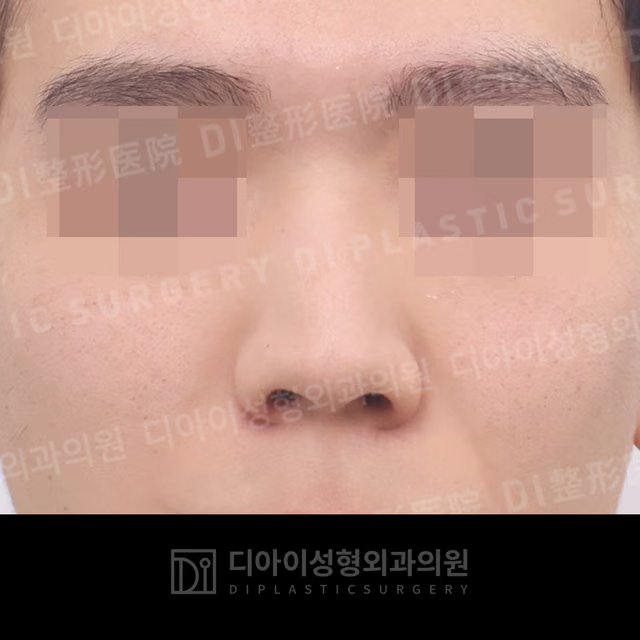 Before
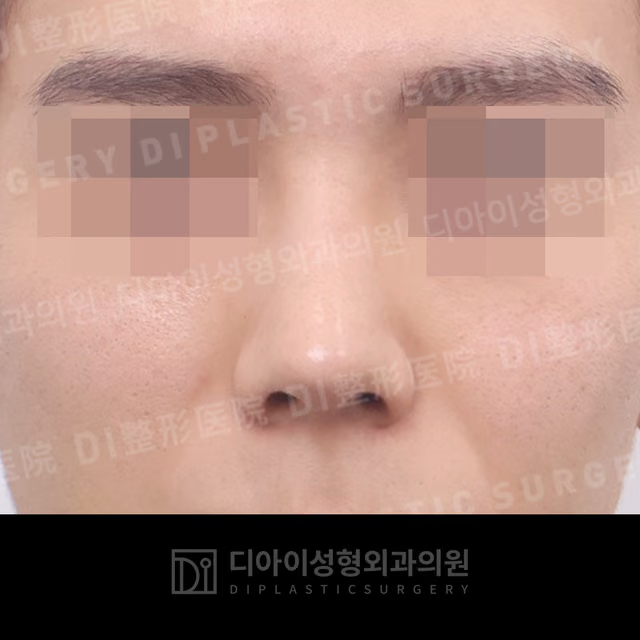 After
After