
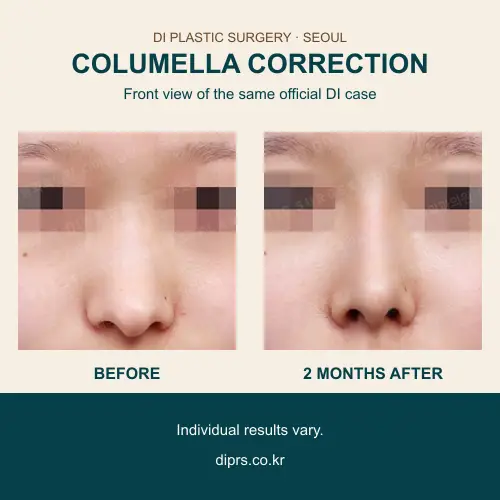
Start with the structure that creates the concern
The outline under the nose depends on the relationship between the columella and the alar rims, which form the outer edges of the nostrils. A raised nostril rim can make the central tissue look more exposed in profile. A retracted columella can make the same central area look less visible. Similar photographs may therefore lead to different assessments.
Take or bring neutral front, profile and underside views with similar lighting. If the concern is most visible when you smile or speak, describe that clearly. An online picture helps explain what you notice, while the consultation can examine support, symmetry and breathing.

Compare the questions to ask in each situation
Prominent central tissue: Ask whether the columella itself sits lower, whether one or both rims are higher, and how the plan accounts for visible asymmetry.
Less visible central tissue or a high rim: Ask which tissue lacks support, whether the appearance follows a prior injury or procedure, and what would remain unchanged after any proposed correction.
Breathing concern: Tell the surgeon which side feels obstructed and when it changes. Ask whether a separate functional assessment is needed. An appearance change does not establish a breathing benefit.

Bring records if you have already had nasal surgery
Bring the operative report, dates, material or graft details if available, and photographs from before the previous procedure. At the visit, ask the surgeon to mark on your photographs which area they think is causing the outline and what alternatives they would consider.
DI lists columella correction in its published procedure guide. Ask for an itemized quote after assessment, especially if the consultation identifies a separate revision, support or functional issue. The procedure listing alone does not describe an individual treatment plan.

Discuss tradeoffs and plan review before you travel
Ask how the proposed plan accounts for bleeding, infection, scarring, persistent asymmetry and changes in breathing. Previously operated tissue and existing support can affect what can be changed. Ask what you should do if symptoms worsen and where to seek help once you return home.
Before booking return travel, request written instructions on review visits, whom to contact, and which records can be shared with a clinician at home. The official DI cover case is shown at two months and depicts one person at that point in follow-up.
Information that helps us prepare a useful reply
When contacting the clinic, tell us the procedure or concern you would like to discuss, your preferred language, whether you have had related treatment before and the dates you could visit Seoul. International patients may also wish to include their arrival and departure dates so the team can explain when an in-person consultation and follow-up may fit into the trip.
Please do not send passport numbers, payment information or complete medical records through an initial website inquiry. A coordinator can explain which health information or photographs are relevant and how they should be shared. Online guidance is preliminary; suitability, technique and the final treatment plan are determined only after an appropriate medical assessment.