
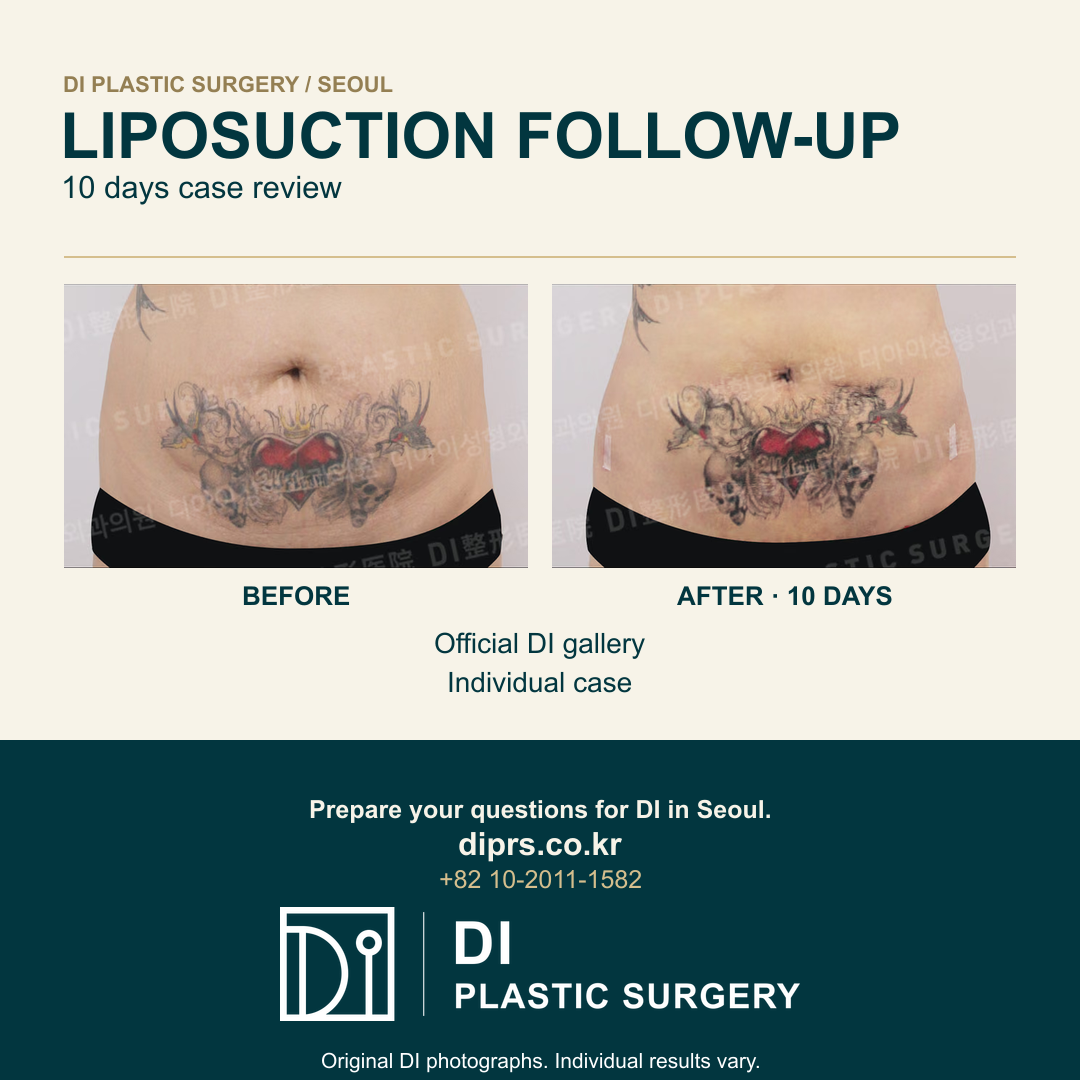
What a 10-day photograph can and cannot answer
DI's official gallery labels case 026 as abdominal liposuction, photographed 10 days after surgery. The cover reproduces that same individual's before and follow-up photographs. It documents an observation at a stated time; it does not establish a final result, a recovery deadline or what another person will experience. Individual results vary.
A photograph does not show the complete examination, operative record, medications, symptoms or care instructions. Do not infer that a visible contour change means the person has permission to exercise, stop a garment or take a flight. Ask the treating team how it will assess your progress and what information it needs at the next review.
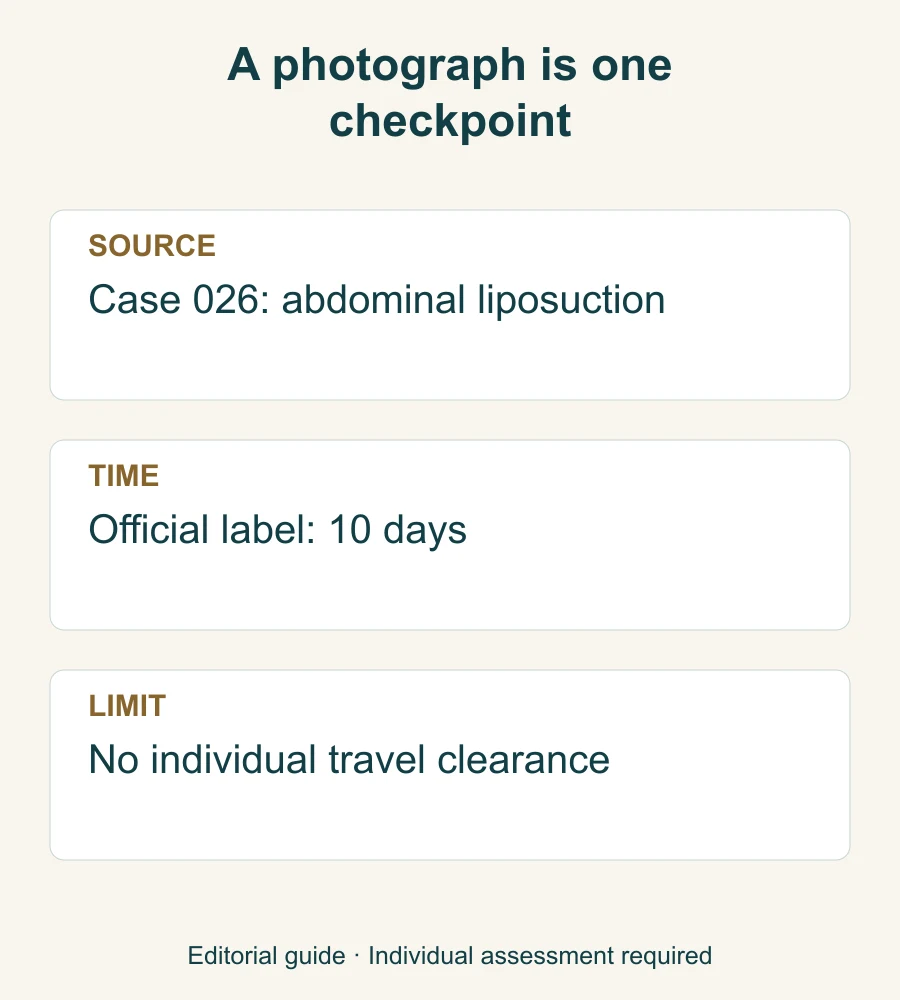
Start with the exact procedure and treatment area
Before discussing recovery, confirm what is actually planned. Ask the surgeon to identify the treatment areas and explain whether the proposal is liposuction alone or includes another operation. A case described simply as abdominal liposuction does not establish the method, amount removed, anesthesia or additional procedures for your own treatment.
The American Society of Plastic Surgeons describes liposuction as removing excess fat from specific body areas. That description is not a promise of weight loss or a substitute for examining skin, underlying structures and your medical circumstances. If your concern is loose skin as well as volume, ask what the proposed procedure can address, what it cannot address and what alternatives are reasonable.
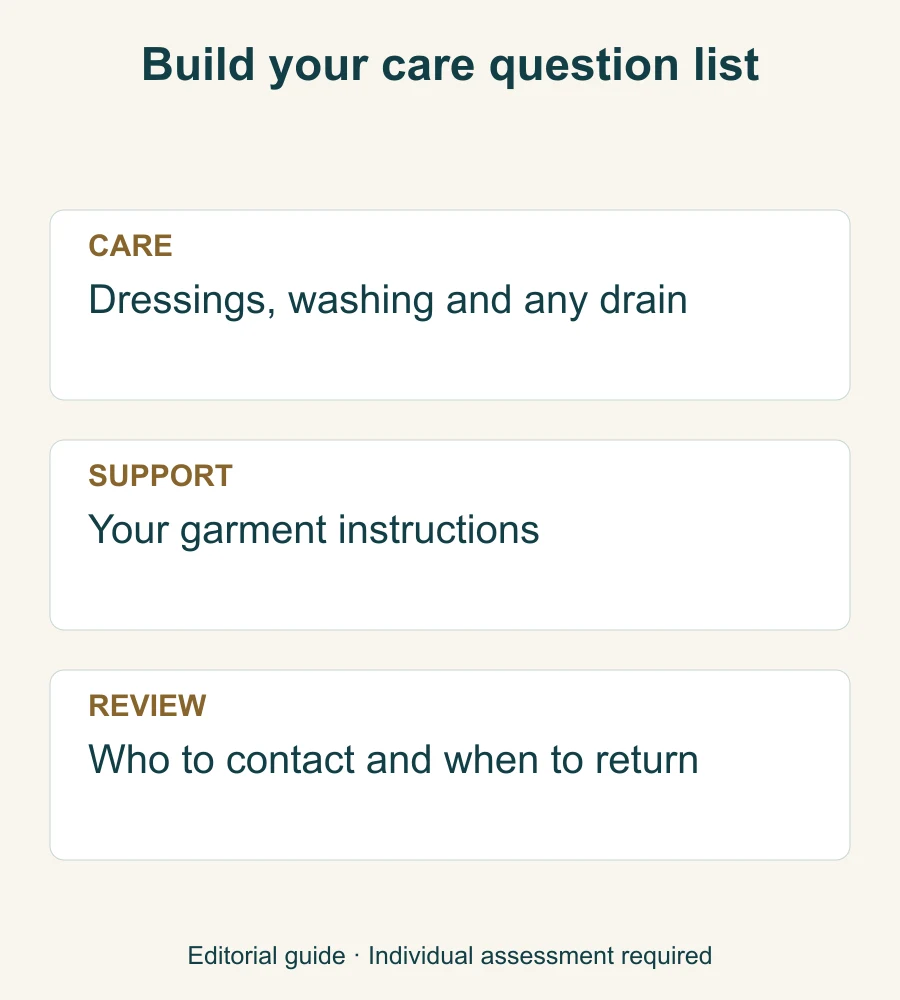
Turn discharge instructions into a usable checklist
ASPS explains that patients receive specific instructions about caring for the treated area, medication, concerns to watch for and follow-up. At your appointment, request those instructions in a form you can understand and use after leaving the clinic. Ask who can clarify a question if the wording is unclear.
A practical checklist should identify who to contact, how to care for any dressings, which prescribed medicines to use and when to return. If a drain is part of your actual plan, ask for its specific monitoring and review instructions. Do not assume that every patient has a drain, the same dressings or the same care schedule. The checklist below organizes questions; it does not prescribe treatment.
Questions about compression, washing and activity
ASPS notes that a compression garment or elastic support may be used during liposuction recovery. Ask which item, fit and wearing instructions apply to your operation. Confirm how the team wants you to manage washing, dressing changes and any discomfort with the garment. Do not choose a duration from a photograph or a general social media post.
Describe your actual work and daily activities. A desk-based job, lifting equipment, caring for a child and strenuous exercise involve different demands. Ask the clinician what restrictions apply and how those restrictions will be reviewed. A generic week-by-week overview can help you form questions, but cannot clear you for a particular activity.
Planning a visit to Seoul around actual reviews
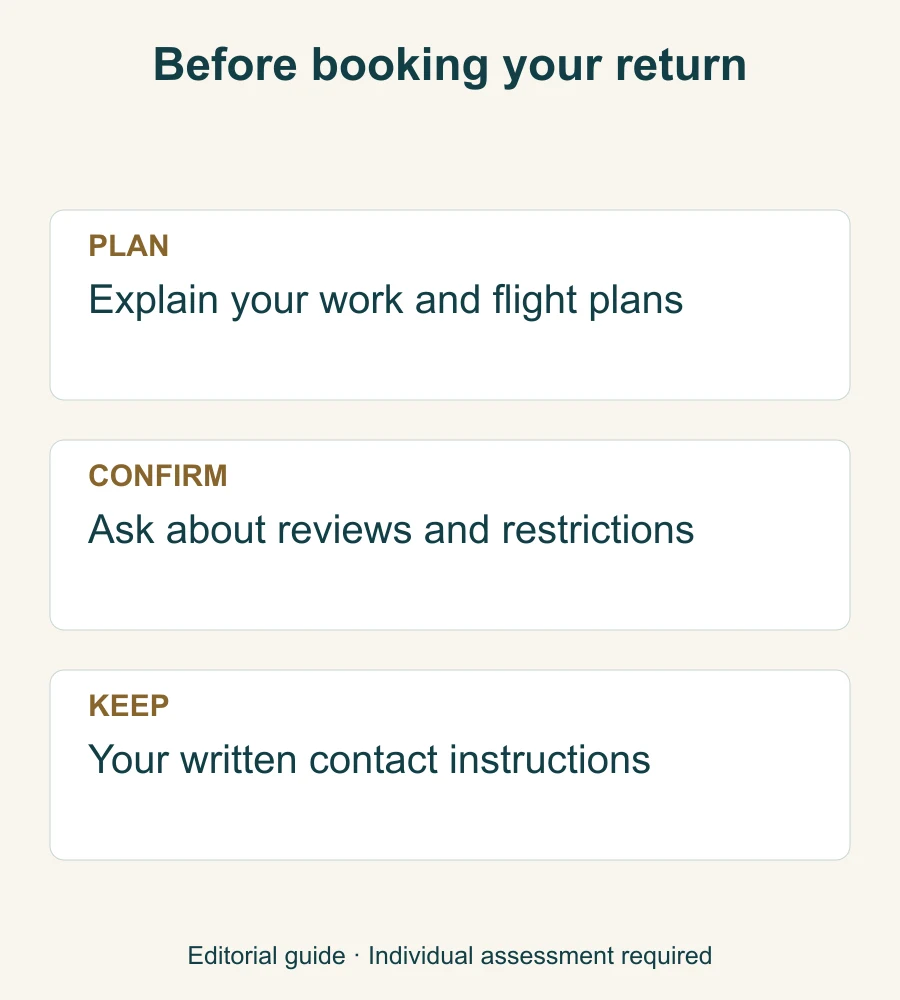
Before booking travel, confirm your consultation, expected review arrangements and the contact route if concerns arise after you leave. Explain where you intend to stay and how you would return to the clinic if asked. Ask the treating team about your particular flight and activity plans rather than assuming a short visit will be suitable.
The official case's 10-day label is not a recommended length of stay. The relevant decision is whether the team has assessed your condition and agreed the next steps. An online inquiry can help organize a conversation, but does not confirm surgery, an appointment, travel clearance or a final quotation.
A question table to take to the clinic
Use the table to make your own notes during the consultation. Record the answer and who provided it; leave unanswered items open for confirmation rather than filling them with a guess.
| Topic | Question to confirm | What to keep |
|---|---|---|
| Treatment scope | Which abdominal areas and procedures are included? | The named procedure and written plan |
| Care at home | What applies to dressings, washing and any drain? | Your discharge instructions |
| Garment | Which garment and wearing instructions apply? | The clinic's individual guidance |
| Activity and travel | What needs review before work, exercise or a flight? | Restrictions and review arrangements |
| Contact | Who should I contact with a concern? | Clinic and out-of-hours instructions |
Cost, consent and the limits of this guide
Request a written, itemized estimate for the actual procedure and ask which services, materials, anesthesia, medication and follow-up are included or charged separately. DI's published price guide identifies amounts exclusive of VAT; confirm applicable VAT and the final individual quotation. A general price line cannot define the cost of an unconfirmed combination of treatments.
Discuss risks, alternatives and the option of not proceeding with the surgeon. Ask what concerns should prompt urgent help and follow the clinic's specific instructions; this article cannot assess a symptom or replace emergency care. The case photographs are source material for a planning discussion, not a diagnosis or a guarantee.
Information that helps us prepare a useful reply
When contacting the clinic, tell us the procedure or concern you would like to discuss, your preferred language, whether you have had related treatment before and the dates you could visit Seoul. International patients may also wish to include their arrival and departure dates so the team can explain when an in-person consultation and follow-up may fit into the trip.
Please do not send passport numbers, payment information or complete medical records through an initial website inquiry. A coordinator can explain which health information or photographs are relevant and how they should be shared. Online guidance is preliminary; suitability, technique and the final treatment plan are determined only after an appropriate medical assessment.