
Start by naming what you see
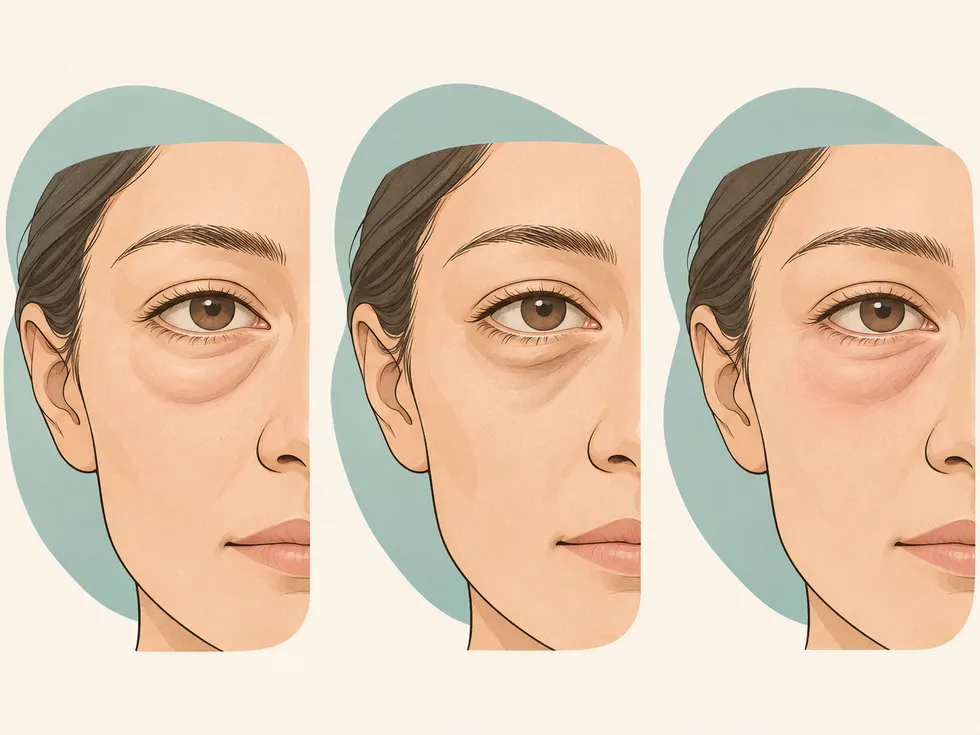
The phrase “under-eye filler” can describe different goals. Some people are asking about adding a small area of fullness close to the lower eyelid. Others want to reduce a hollow or shadow. Persistent puffiness, pigmentation and a hollow are different findings, even when they appear similar in a photo. Ask for an in-person assessment before deciding whether adding volume would help.
DI lists dermal filler in its treatment guide and labels an individual gallery case “Under-eye fullness filler.” That case label does not specify the product or establish that the technique is the same as treating under-eye hollows. Confirm the exact area and current options directly with the clinic.
Discuss these different concerns before choosing an option
Compare relaxed and smiling photos, without relying on a filter. Note whether the appearance changes during the day, especially if there is puffiness, and tell the clinician about any previous eyelid or filler treatment.
| What you notice | What to ask |
|---|---|
| Fullness seen mainly with expression | Which feature is involved and would adding volume fit my goal? |
| A hollow or shadow below the eyelid | How much comes from volume, lighting, pigment or surrounding structures? |
| Puffiness or swelling that changes | Could adding volume make the appearance more noticeable? What else should be checked? |
| Existing filler, lower-eyelid surgery or irritation | What records do you need, and is it better to wait? |
Ask about product labeling and complications
The US FDA approved a specific product, Restylane Eyelight, for infraorbital hollows in adults age 21 and older. That approval does not apply to every filler or lower-eyelid augmentation goal. It does not establish what DI uses or what is approved in Korea. Ask to see the label for the proposed product and area.
A retrospective study of periorbital hyaluronic acid filler reported lasting concerns such as lower-eyelid or cheek swelling, blue-gray discoloration and contour irregularity. Its selected patients and follow-up do not provide an individual risk estimate. Vascular blockage is a serious potential complication. Seek immediate medical attention for sudden vision changes, unusual pain, a pale, gray or blue skin change, or stroke symptoms following filler.

Make a care plan you can use after leaving Seoul
Ask who will evaluate swelling, lumps or color changes before departure and how you can reach an appropriate clinician after returning home. Bring the names and dates of any previous fillers or eyelid procedures. Request a written summary of the treatment, alternatives, itemized fees, and the clinic’s urgent-care and referral arrangements.
#UnderEyeFiller #ConsultationQuestions #DIPlasticSurgery #Seoul

Information that helps us prepare a useful reply
When contacting the clinic, tell us the procedure or concern you would like to discuss, your preferred language, whether you have had related treatment before and the dates you could visit Seoul. International patients may also wish to include their arrival and departure dates so the team can explain when an in-person consultation and follow-up may fit into the trip.
Please do not send passport numbers, payment information or complete medical records through an initial website inquiry. A coordinator can explain which health information or photographs are relevant and how they should be shared. Online guidance is preliminary; suitability, technique and the final treatment plan are determined only after an appropriate medical assessment.