
What does DI’s PRP catalogue entry establish?
DI’s published price schedule lists PRP injection at KRW 120,000, excluding VAT. The schedule is dated 11 September 2026; its VAT policy was updated on 24 October 2026. This is a dated catalogue amount, not a current personal quotation. It does not specify every preparation method, treatment area, injection volume or combination that a clinician might discuss.
If you found DI while searching for PRP facial treatment in Seoul, begin by describing the concern you want assessed. Ask whether DI offers PRP for that concern and how the proposed use relates to the available research. A general price entry does not establish that a facial-rejuvenation, hair-loss or scar protocol is offered or suitable for you.
Understand the material before comparing treatment names
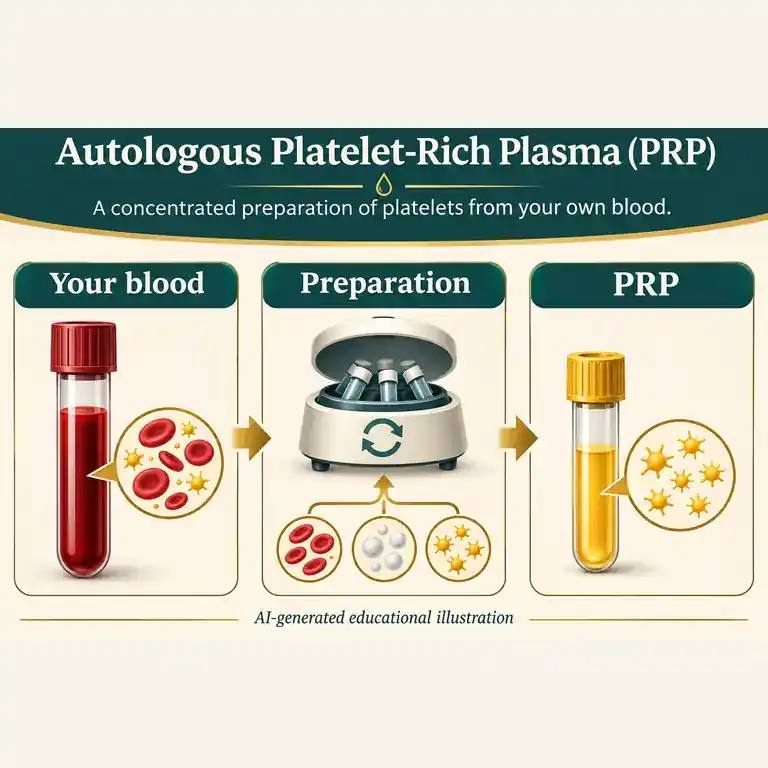
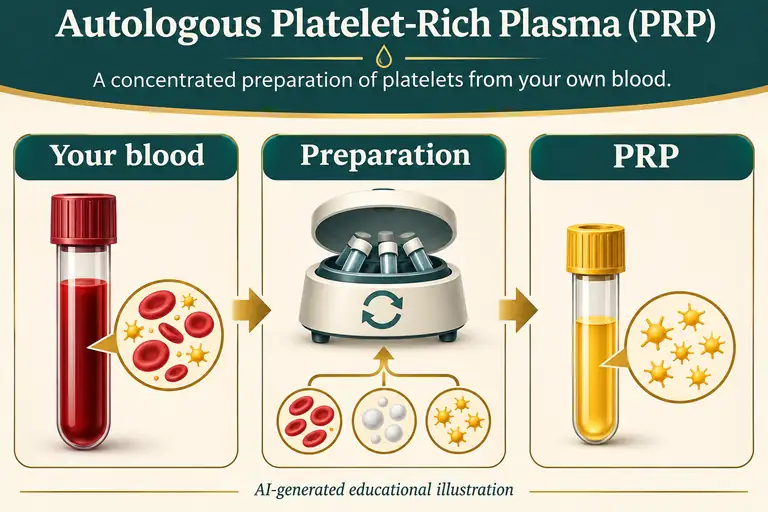
Platelet-rich plasma is a preparation obtained from the patient’s blood, with platelets concentrated through processing. It is different from a manufactured dermal filler, a polynucleotide product or botulinum toxin. The nickname vampire facial can refer to different combinations; it does not reliably describe what will be performed.
Ask the clinician to name each part of the plan. A discussion involving PRP alone is different from one involving microneedling, a laser or a separate injectable. If several treatments are proposed, ask which goal belongs to each, what each adds to the quotation, and whether the plan could be simplified.
What the clinical evidence does—and does not—show
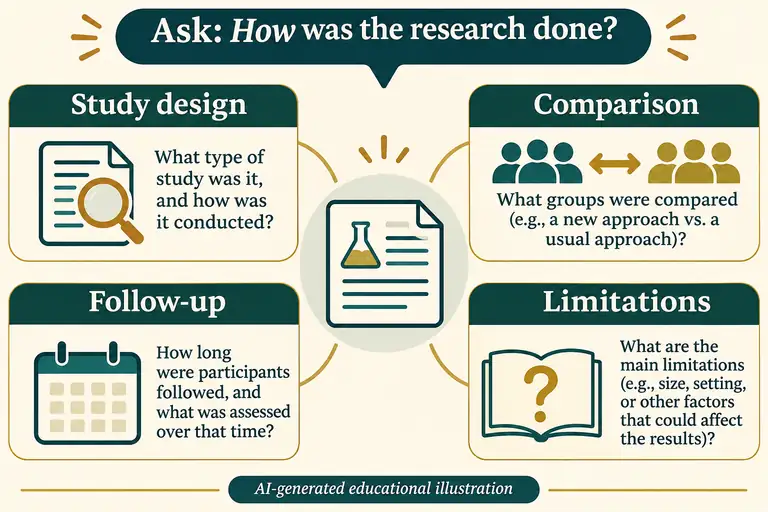
A 2018 randomized split-face trial enrolled 27 participants and analyzed 19. The masked dermatologists’ photographic assessments did not show a statistically significant difference between PRP and saline on the reported photoaging scores. Participants reported greater improvement in some self-rated texture and wrinkle measures at six months. These are different findings, and neither should be reduced to a guaranteed before-and-after promise.
A 2021 systematic appraisal included 36 studies, with many small studies and differing preparations or combined treatments. Its conclusion described the clinical evidence as very limited and called for stronger studies and agreed outcome measures. This review does not establish an optimal protocol or predictable result for an individual DI visitor. Ask how any suggested benefit is supported for your specific concern.
| Evidence question | Why it matters |
|---|---|
| Who was studied? | Facial-aging findings do not automatically answer hair-loss or scar questions. |
| What was compared? | A controlled comparison answers a different question from a patient testimonial. |
| Was PRP used alone? | A combined-treatment result cannot establish PRP’s separate contribution. |
| What changed and when? | Patient ratings, photographs and long-term outcomes are different measures. |
Own blood still requires identity checks and sterile handling
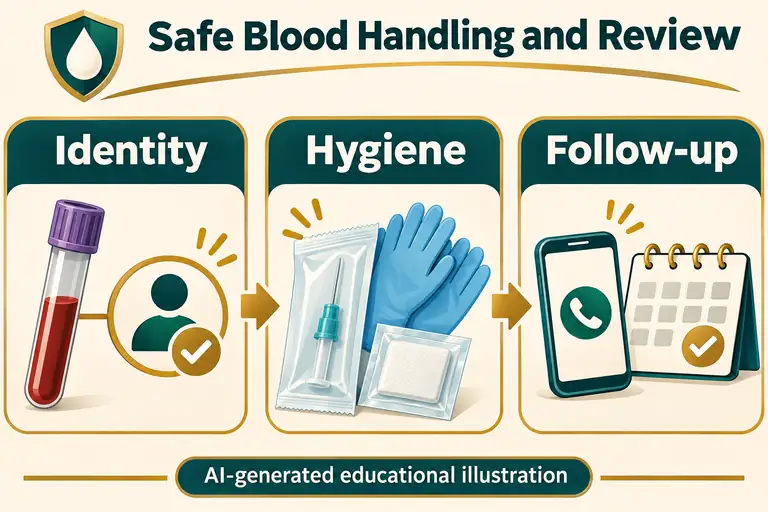
The American Academy of Dermatology describes pain, swelling and bruising as possible short-term reactions and emphasizes sterile handling and ensuring that the patient receives their own blood preparation. Being derived from your blood does not make an injection risk-free.
At the consultation, ask how collection, preparation and patient identification are managed, which supplies are single use, and who performs the treatment. Ask what symptoms should prompt a call or urgent assessment, and obtain a contact route that remains usable after leaving Korea. These are questions to verify with the clinic, not claims that this article has audited DI’s blood-processing procedures.
Prepare your history without changing medicines yourself
Bring a complete list of prescribed medicines, nonprescription products and supplements, together with relevant diagnoses, bleeding or blood-related conditions, previous treatment and past reactions. Ask the clinician whether any aspect of your history affects assessment or the proposed treatment.
Do not stop a prescribed medicine, including a blood thinner, because an online cosmetic checklist suggests doing so. Any change should be discussed with the clinician who manages that medicine and the treating clinician. An online inquiry can help organize a visit; it cannot determine eligibility or replace an in-person assessment.
Compare the complete quote and review arrangements
Request a written quotation for the exact plan. Confirm the current PRP amount and VAT, the proposed number of visits, whether another treatment is separate, and how consultation, medicines or reviews are charged. Do not multiply a catalogue price by an assumed course length and present it as a confirmed package.
For travel planning, ask how many appointments need to occur in Korea and what flexibility is needed for review. There is no universal recovery or flight-clearance interval in this guide. Avoid arranging treatment immediately before an inflexible departure; obtain an individual plan and clarify who will assess a concern after you return home.
Your next step in Seoul
DI Plastic Surgery is at 12F, Seosan Building, 441 Gangnam-daero, Seocho-gu, Seoul, in the Gangnam Station area. Before travelling, confirm appointment availability, fees and language or interpreter arrangements through the official consultation page. An inquiry does not confirm a booking.
The illustrations explain concepts and questions. They show no clinical result, product approval or actual DI blood-processing equipment. This article is an editorial information guide, updated 6 November 2026, not a newly certified medical review. Results vary and choosing not to proceed remains an option. #DIPlasticSurgery #PRP #Seoul
Information that helps us prepare a useful reply
When contacting the clinic, tell us the procedure or concern you would like to discuss, your preferred language, whether you have had related treatment before and the dates you could visit Seoul. International patients may also wish to include their arrival and departure dates so the team can explain when an in-person consultation and follow-up may fit into the trip.
Please do not send passport numbers, payment information or complete medical records through an initial website inquiry. A coordinator can explain which health information or photographs are relevant and how they should be shared. Online guidance is preliminary; suitability, technique and the final treatment plan are determined only after an appropriate medical assessment.