


DI PLASTIC SURGERY
DI Autologous Rib Cartilage Rhinoplasty
Strong support · Durable cartilage
What is rib cartilage rhinoplasty?
Rib cartilage is the patient's own cartilage harvested from the rib area.
A 1.5–2 cm incision allows the required amount of cartilage to be harvested. It provides greater structural support than septal or ear cartilage, and may be used in primary, revision or reconstructive rhinoplasty, depending on the patient's nose.
Surgery information
- Surgery duration
- 3 hours
- Anesthesia
- Sedation / general anesthesia
- Hospital admission
- Not usually required
- Recovery period
- Varies by individual
- Suture removal
- Required
- Follow-up visits
- 2–3 visits
Bleeding, infection, inflammation, bruising, swelling and pain may occur. Satisfaction and outcomes vary between individuals.

DI PLASTIC SURGERY
Through a detailed assessment
A considered approach to a balanced nasal profile
The nose may appear simple from the outside, but its internal anatomy is complex. DI considers the overall balance of the nose and face, and assesses the internal cartilage and bone with 3D-CT imaging and analysis before planning surgery.
Types of rib cartilage rhinoplasty
Rib cartilage rhinoplasty is used in two main settings.

Autologous rib cartilage
Primary rhinoplasty
- Patients seeking a more defined nose
- A weak septum or limited septal cartilage
- Correction of a short or upturned nose
- Patients who prefer to avoid synthetic implants
- Septal damage following two-jaw surgery

Autologous rib cartilage
Revision surgery
- Insufficient remaining septal or ear cartilage
- A saddle nose after repeated operations
- An upturned tip associated with capsular contracture
- A drooping nasal tip after surgery
- Limited improvement of a short or upturned nose
DI PLASTIC SURGERY
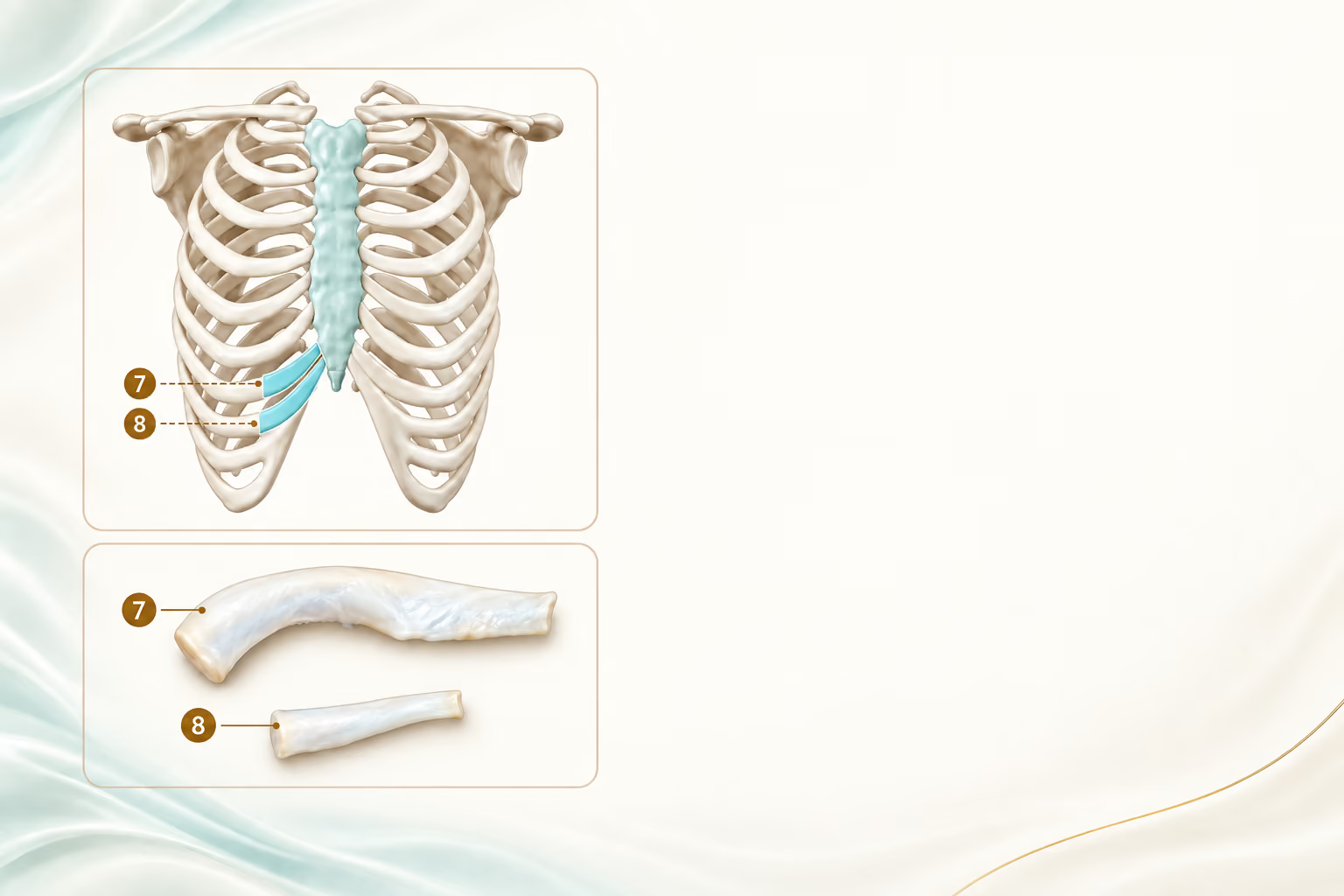
DI rib cartilage harvesting site
The 7th and 8th rib cartilages are commonly used for rhinoplasty. DI generally prefers the 7th–8th rib cartilage. The incision is placed at the side of the chest or below the breast. The incision is approximately 1.5–2 cm long. Harvesting time varies with the thickness of the patient's tissues, and is generally within 30 minutes.
7th rib cartilage
8th rib cartilage
7th rib 8th rib
How rib cartilage is used
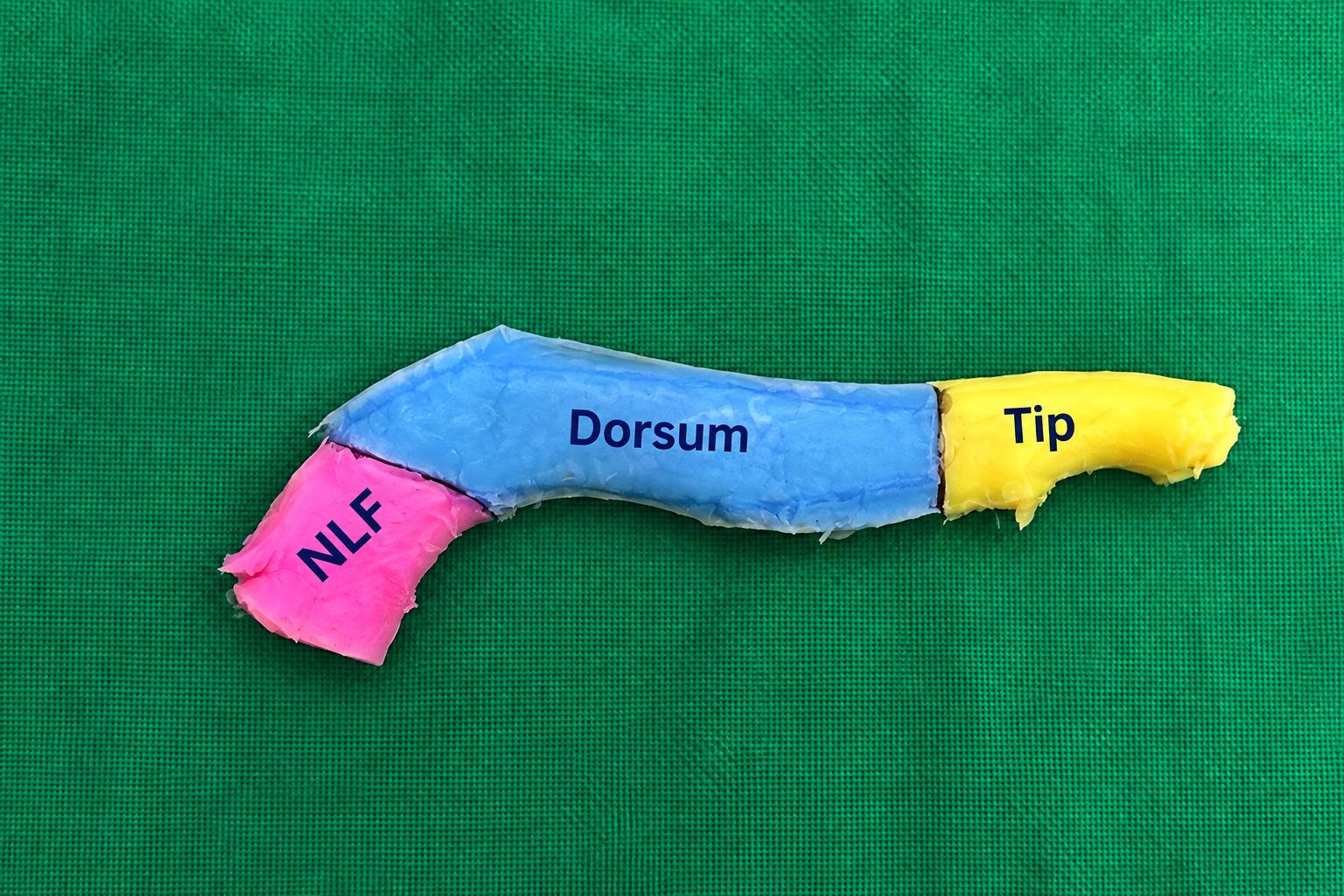
The amount of cartilage and surgical method vary with each patient's nasal anatomy.
Educational illustrationBeautiful, because it is DI!
DI rib cartilage rhinoplasty: the surgical process
Harvesting the cartilage
Through an incision at the side of the chest or below the breast, cartilage is harvested from the 7th–8th rib.
The incision is approximately 1.5–2 cm to limit the extent of scarring.
Shaping the cartilage
The harvested cartilage is shaped to suit the patient's nose.
The amount of cartilage and surgical method vary with each patient's nasal anatomy.
Placing the cartilage
According to the patient's nasal anatomy, the shaped cartilage is placed at the bridge, tip or columella.
Autologous rib cartilage
The surgeon's experience matters.
How cartilage is used for each patient's anatomy is an important part of surgical planning.
Harvesting the cartilage
Harvesting cartilage for the patient's nose.
Shaping the cartilage
Shaping cartilage to suit the patient's nose.
Placing the cartilage
Positioning and securing cartilage according to the surgical plan.
Results and satisfaction can vary with the procedure and the individual.
A nasal profile
that complements your face
Straight profile
A straight line when viewed from the side
A profile often requested by men
Gently curved profile
A slight curve compared with a straight profile
A profile often requested by women
Curved profile
A more pronounced curve
Upturned profile
An elevated tip with a low bridge

DI PLASTIC SURGERY
Rib cartilage rhinoplasty
Who may consider this procedure?
Patients with limited available cartilage elsewhere An upturned nose caused by postoperative contracture A very small, upturned nose A saddle nose following repeated revision procedures

DI PLASTIC SURGERY
Rib cartilage rhinoplasty Why consider DI?
Individual planning considers facial shape, personal features and internal nasal anatomy. Experience in harvesting rib cartilage supports surgical planning and execution. Cartilage and subcutaneous tissues are assessed before surgery. 3D-CT is used to examine nasal structures.

DI PLASTIC SURGERY
An option chosen by DI patients
Using your own cartilage for nasal tip surgery
New-material implants
Artificial implants
Synthetic cartilage materials may be associated with inflammation and other adverse effects
Structural support and durability help support the planned nasal profile
A sufficient amount of cartilage can be harvested for different surgical uses

Rhinoplasty aftercare
Follow your surgical team’s individual instructions. Recovery and follow-up schedules vary.
- 01
Incision care
Keep the surgical area dry and clean until stitches are removed. On the day of removal, wash gently with water; use soap from the following day.
- 02
Nasal discharge
A little bleeding or blood-tinged discharge may occur for 3–4 days. Do not blow your nose; gently wipe away discharge.
- 03
Tape and splint
Tape helps maintain implant position and limit blood pooling. The splint protects against impact. If it comes off, do not reattach it yourself; contact the clinic and protect your nose.
- 04
Cold and warm compresses
Use cold compresses for the first 3 days, then warm compresses from day 4, as instructed by your surgical team.
- 05
Swelling and bruising
Swelling and bruising generally take about 2 weeks to settle. Swelling may temporarily make the nose look uneven, tilted or depressed.
- 06
Glasses
Avoid glasses and sunglasses for at least one month to prevent pressure that could affect the nasal shape.
- 07
Protect your nose
Do not blow your nose forcefully or do activities that strain or put pressure on your nose.
- 08
Ear cartilage donor site
If cartilage was taken from your ear, avoid pulling or pressing the ear firmly.
- 09
Recovery habits
Avoid alcohol and smoking for one month. Avoid strenuous exercise and excessive stress, which can interfere with recovery.